Contractors, utility companies, and homeowners planning work that disturbs Stratford, CT public roads must secure a Highway Excavation License Bond, a three-party financial guarantee protecting the town from repair costs and promoting accountability. This bond ensures the community never bears the financial burden of substandard road restoration or unsafe conditions.
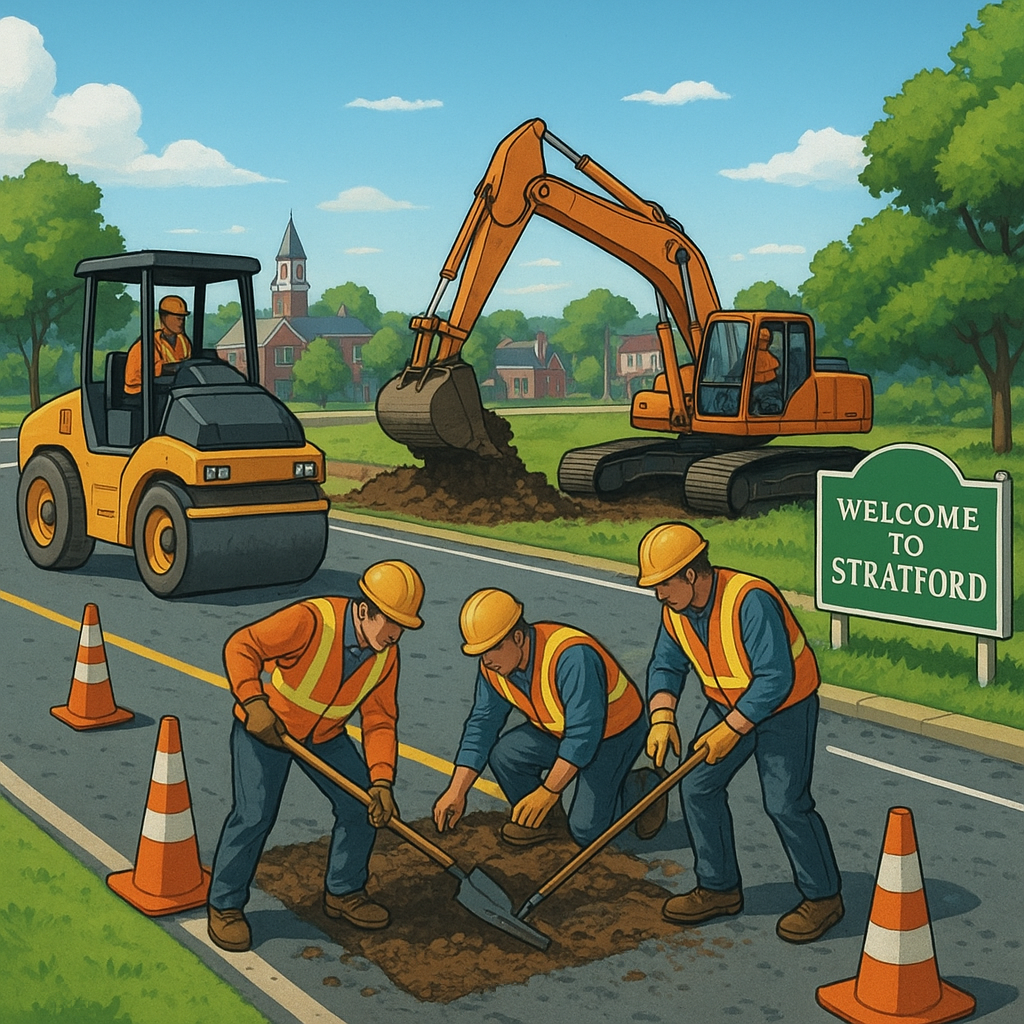
So, you’re a contractor, a utility company, or maybe a homeowner thinking about a big driveway project that bumps right up against the town road. You know you need a permit, but then someone in the Town Hall mentions a “Highway Excavation & Maintenance License Bond.” It sounds like a whole lot of official jargon, right? Don’t worry—it’s not as scary as it sounds. Think of it as a promise you make to the Town of Stratford, backed up by a financial safety net.
If you’re planning any work that involves cutting into, digging up, or even just temporarily encroaching on a public highway in Stratford, Connecticut, understanding this bond is step one. Let’s break it all down in plain, everyday language so you can get back to focusing on the actual job.
What Exactly Is a Stratford CT Highway Excavation License Bond?
At its core, this bond is a three-party guarantee. The first party is you, the contractor or entity doing the work (the Principal). The second party is the Town of Stratford (the Obligee), asking for the promise. The third party is the surety company (the backing), which says, “We trust this person will follow the rules, and if they don’t, we’ll pay to make it right up to a certain amount.”
It’s not insurance for your business. It’s a financial tool designed specifically to protect the town and its taxpayers. If you open up Stratford’s beautiful roads and don’t patch them back to the town’s high standards, or if you leave a dangerous hole overnight without proper signage, the bond is there to cover the cost of the town stepping in to fix the mess. You can almost picture the bond as a pre-funded savings account held for the town, just in case your patch job sinks six months later.
Why Does the Town of Stratford Require This Bond?
Picture the miles of public roadway in Stratford, weaving through historic neighborhoods and bustling commercial areas like Barnum Avenue or Main Street. Every single road is a shared asset, paid for by the community. When someone cuts into that pavement, it’s a little bit like performing surgery on a community artery. The town needs a guarantee that the surgeon—you—will close up the incision perfectly.
Without a bond requirement, a contractor could do a sloppy repair, go out of business, and leave the town holding a $20,000 bill for asphalt restoration. The highway excavation and maintenance license bond ensures that the financial burden never falls on the local residents. It also promotes accountability. Knowing a claim could be made against your bond gives you a strong incentive to pull out your best compaction roller and pay attention to every detail of the trench restoration.
Who Needs This “Highway Encroachment” Bond?
You might need to secure a Stratford public highway excavation bond if you fall into any of these categories:
- Utility Contractors: If you’re running a new gas line, laying fiber optic cable, or repairing a water main that just broke under a town road.
- General Excavators: Any company digging a trench that extends from a property boundary into the public right-of-way.
- Driveway Installers: Yes, even replacing a driveway apron where it meets the town street often triggers this requirement because you are technically disturbing the highway’s shoulder or curb line.
- Landscaping & Hardscaping Firms: Installing major drainage pipes that need to connect to the municipal storm system under the road.
A good question to ask yourself is simply: “Will my shovel, backhoe, or jackhammer touch public pavement or the ground directly beneath it over the next few weeks?” If the answer is yes, you will almost certainly be sitting down with the Town of Stratford Engineering Department to talk about a license and a bond.
How the Bond Works Hand-in-Hand with the Excavation Permit
Let’s walk through a real-world scenario. Assume you’re a plumber who needs to replace a century-old sewer lateral for a home on Wilcoxson Avenue. The old pipe runs right under the street. You head down to Stratford Town Hall and apply for a Public Highway Excavation & Maintenance License. The town reviews your plans and says, “Great, you’re approved. Now, before we issue the permit to dig, we need proof of your official bond.”
You contact a surety bond agency, pay a small percentage of the total bond amount, and receive a bond form. You hand that document over to the town alongside your traffic control plan. Only then do you get the green light to set up the cones and start cutting the pavement. The bond stays on file, valid for the duration of your license term, and typically covers all the jobs you do during that year under a single blanket bond rather than requiring a new one for each small patch.
How Much Does a Highway Excavation Bond Cost in Stratford?
Now for the part everyone wants to know: the price. Notice I didn’t say, “How much is the bond?” because that question is tricky. The bond has a face value—often set by the town based on the scope and scale of your typical work. You might see a requirement for a $10,000 bond, a $25,000 bond, or even $100,000 for larger infrastructure players like the gas company.
The good news is that you don’t pay that face value. You pay a premium, which is a small fraction of the total. If your credit is solid, you’re looking at a rate often between 1% and 5% of the bond amount. That means a $10,000 bond might cost you just $100 to $500 for the entire year. It’s an incredibly affordable way to buy the town’s trust and unlock your permit. Even with so-so credit, special programs exist to get you bonded so your business doesn’t hit a dead end.
What Affects the Price You Really Pay?
Surety companies look at a few simple personal and business factors:
- Personal Credit Score: Because a bond is a form of credit extension, a higher score usually means a lower premium.
- Business Financials: For larger bond amounts, the surety might peek at your business balance sheet or cash flow statement.
- Industry Experience: A seasoned excavator with a spotless record in Stratford is a less risky bet for the surety.
The Claim Process: What Happens When a Repair Fails?
Let’s be honest—even with the best intentions, things can go wrong. A trench settles into a pothole a month after you’ve packed up your machinery. A resident complains, and the town sends out an inspector. The inspector will usually give you a reasonable window to return and fix the defect at your own expense. The bond is the backup plan for the worst-case scenario: you refuse, you disappear, or your repair simply doesn’t meet the Town of Stratford’s highway encroachment standards.
If the town spends $3,000 to bring in a paving crew to fix the hazard, they’ll file a claim against your bond. The surety company will cut a check to the town for $3,000. But remember, this isn’t a gift. The surety will then turn around and demand reimbursement from you for every penny they paid out, plus legal fees. This is why protecting your bond is just as important as protecting your tools. You don’t want a claim following your business around.
Walking Through the Application Steps in Stratford, CT
Feeling a little more comfortable with the idea? Good. Here is the practical, step-by-step path you’d actually walk to get your Town of Stratford Connecticut Public Highway Excavation & Maintenance License Official Bond in hand:
1. Determine Your Bond Amount. Don’t guess. Call the Stratford Department of Public Works or the Engineering Department directly. Tell them the nature of your excavation work, and ask what dollar amount of bond is required for your specific license.
2. Gather a Few Details. You’ll need your business name, your address, and possibly a federal employer identification number. If you’re a sole proprietor, your social security number will be needed for the credit check.
3. Apply with a Surety Agency. You can do this online in about five minutes. A good agency specializing in Connecticut contractor bonds will shop your application around to find you the lowest possible premium.
4. Pay the Premium and Get Your Bond Form. Once approved, you pay the small annual fee, and you’ll instantly receive the official bond document. It will have the seal of the surety company on it.
5. File It with the Town. Bring or email the bond to the permitting office. Once it’s on file and your full highway excavation and maintenance license application is approved, you can start pulling individual dig permits.
Keeping Your Bond and Your Reputation Intact
Think of this license bond as your silent partner in keeping Stratford beautiful. Every time you repave a trench cut and stripe it perfectly flush with the existing road, you’re not just avoiding a claim—you’re building a reputation. The town inspectors will start to recognize your trucks. They’ll know that when they see your name on a dig ticket, the public right-of-way is in good hands.
It’s also smart to know your maintenance window. Many municipal excavation permits require you to guarantee your patch for a set period, sometimes up to two years. Keep your contact information current with the town. If they call you about a sinking spot eighteen months later, answering that phone and fixing it quickly saves your bond and saves you a headache.
Common Misunderstandings, Cleared Right Up
There’s a fair bit of confusion that floats around the trades regarding bonding. Let’s tackle a couple of myths head-on:
- “My general liability insurance covers this.” It almost never does. Insurance protects you against sudden, accidental damage occurring while you work. The bond specifically guarantees the quality and permanence of your restoration of public property long after you’ve driven away.
- “I only need this if I’m doing state highways.” This is a common trap. In Stratford, any town-maintained road falls under this requirement. It’s not limited to Route 1 or the Merritt Parkway. If the town plows it in the winter, you need a bond to dig it up.
Why This Process Ultimately Helps Everyone
Filling out bond paperwork might feel like one more barrier between you and the first shovelful of dirt. But step back and look at the bigger picture. This system lets the Town of Stratford streamline permits for qualified contractors without putting taxpayer funds at risk. It filters out operators who aren’t capable of permanently restoring pavements. For you, a legitimate professional, it’s your ticket to work. It demonstrates your credibility and financial stability without tying up your cash in a large cashier’s check or a deep escrow account.
From Barnum’s historic connection to the modern bustle of the Stratford train station area, the roads are what keep the town connected. The highway excavation license bond simply makes sure that when work is done, the roads remain as safe and smooth for the next family as they were for the last. It’s a fair trade—a small annual premium in exchange for the privilege of working within a community that values quality and accountability.
So grab that permit application with confidence. Now that the fog has cleared on what the bond is, why it’s required, and how easily you can secure it, you’re ready to dig in.