Hartford requires sidewalk, curb, and driveway contractors to secure performance and payment bonds, which guarantee project completion and payment to subcontractors and suppliers, as a condition for obtaining permits. These bonds, often bundled with third-party liability coverage, protect the city and property owners from financial loss due to unfinished work or damage to outside parties.
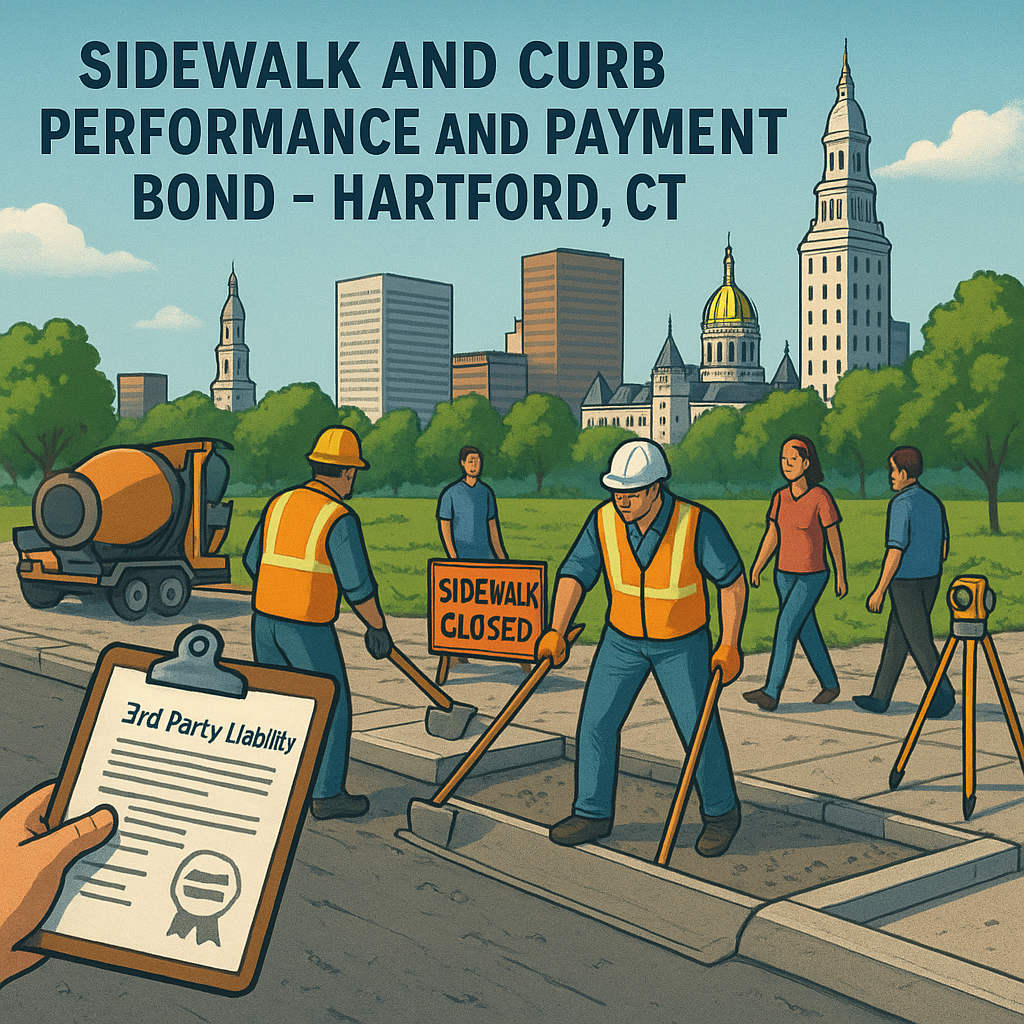
Have you ever strolled down a tree-lined street in Hartford, Connecticut, and noticed a crew tearing up an old, cracked sidewalk? Maybe you’ve hired someone to pour a new driveway. These projects keep our neighborhoods safe and beautiful, but they also come with a layer of protection you might not see: a contractor bond. If you’re a contractor looking to work on sidewalks, curbs, or driveways in Hartford, or a homeowner wondering what all the paperwork means, this guide breaks down everything you need to know about the city’s performance and payment bond requirements in plain, everyday language.
What Exactly Is a Performance and Payment Bond?
Let’s keep this simple. Think of a bond as a three-way safety net. The first party is you, the contractor. The second party is the City of Hartford (or sometimes a homeowner). The third party is a surety company that backs up the contractor’s promises. When a sidewalk or driveway project starts, the city wants to be absolutely sure two things will happen: the job gets done right, and everyone gets paid.
A performance bond guarantees the work will be completed according to the agreed-upon plans and city codes. If a contractor walks away mid-project or does shoddy work, the bond can step in to cover the cost of fixing or finishing it. A payment bond guarantees that subcontractors, material suppliers, and laborers get paid. Nobody wants a lien on their property because the concrete supplier didn’t receive a check. Together, these two protections often come bundled as a single “performance and payment bond.”
Why Hartford Requires Bonds for Sidewalk and Driveway Work
Hartford’s streets and walkways see everything from brutal New England winters to the constant hum of daily foot traffic. The city takes public safety and infrastructure seriously. When a contractor digs into a public sidewalk or creates a driveway approach that crosses a public right-of-way, the work doesn’t just affect one property owner. It touches the entire community. A poorly poured concrete ramp could become a tripping hazard. An unpaid supplier might file a lawsuit that slows down other city projects.
By requiring a specific Sidewalk and Curb Performance and Payment Bond, the City of Hartford creates a financial cushion. It makes sure contractors have skin in the game. This bond isn’t a suggestion; it’s a condition of getting the permit. Skip it, and you’re not breaking ground.
Third-Party Liability: The Missing Piece of the Puzzle
You’ll often see the phrase “3rd Party Liability” attached to these bond discussions. While a performance bond covers the work itself, it doesn’t typically cover damage to something or someone outside the immediate contract. That’s where third-party liability comes in. Imagine a worker’s jackhammer accidentally cracks a neighboring property’s foundation, or a pile of debris injures a passerby. That’s a third-party claim.
In Hartford, many permit requirements bundle the bond with proof of general liability insurance. The city wants to see that if something goes wrong beyond the curb line, there’s insurance to handle medical bills or property repairs. This isn’t technically part of the bond, but the two requirements travel hand-in-hand. Contractors often need to carry a certain amount of liability coverage, say $1 million or $2 million, naming the city as an additional insured. So, when you hear “sidewalk contractor – 3rd party liability,” think of it as a complementary shield that protects random passersby and neighboring properties from accidents.
What Does the City of Hartford Specifically Look For?
Let’s get down to brass tacks. The exact dollar amount of the bond can vary depending on the project’s scope. A small residential driveway might need a $10,000 bond. A major commercial curb replacement along a downtown street could require a much higher figure. The Department of Public Works or the Engineering Division typically spells out the required bond amount when you apply for an excavation or street opening permit.
Here’s what usually appears in the fine print for a Hartford sidewalk and curb contract:
- Bond form must be issued by a surety company licensed in Connecticut.
- The bond must name the City of Hartford as the obligee (the protected party).
- It should remain in force until the city formally accepts the completed work and releases the bond, which could be months after the concrete sets.
- If a payment bond is separate, it must cover all labor and materials and protect the city from liens.
You’ll also need to maintain the property owner’s interest if you’re working on private property adjacent to the public right-of-way. The city cares about the driveway approach, that strip between the street and the property line. The bond often covers that entire transition zone.
Residential vs. Commercial Projects
Not all concrete work is created equal. A homeowner getting a new driveway apron might trigger a smaller bond or even a cash deposit option. Large-scale commercial sidewalk replacement, however, moves into a different tier. The city often floats a “blanket” bond program for contractors who do a lot of work in Hartford. Instead of getting a new bond for every little job, a qualified contractor can secure an annual bond that covers multiple projects, saving time and paperwork.
Who Needs This Bond? A Quick Checklist
If you answer yes to any of these, you’ll likely be knocking on a surety company’s door soon:
- You’re a general contractor bidding on a city-contracted sidewalk repair program.
- You’re a concrete specialist pouring a new driveway that connects to a public street.
- You’re a landscaper installing a walkway that crosses a utility easement.
- You’re replacing a curb cut for better accessibility compliance.
Even if you’re a subcontractor working under a prime contractor, you may need proof that the prime’s bond covers your scope. Don’t get caught without it. The city’s inspectors will ask.
How to Get a Hartford Sidewalk and Curb Bond
Securing a performance and payment bond doesn’t have to feel like a root canal. The process usually goes like this:
1. Know your numbers. Find out the required bond amount from your permit application. This comes from the city’s estimate of the work’s value.
2. Approach a surety broker. An independent insurance agent who specializes in bonds can shop your profile around. You’ll complete an application sharing details about your business, finances, and project history.
3. Underwriting review. The surety company checks your credit score, business assets, and experience. They’re sizing up the risk. If you’ve successfully completed similar jobs without claims, you’re golden.
4. Pay the premium. Once approved, you pay a percentage of the total bond amount. For a $20,000 bond, a rate of 1-3% might mean a premium of $200 to $600. That’s not the face value; it’s the yearly cost to keep the bond active.
5. File the bond with the city. The surety gives you the official bond form. Hand it over with your permit paperwork, and the clock starts ticking toward shovels in the ground.
What Does It Cost, and Can You Lower the Price?
Bond premiums are heavily influenced by personal credit. A contractor with a credit score above 700 can often snag a rate near 1% of the bond amount. Someone with bruised credit might see quotes of 5% or more. Business history matters too. A brand-new LLC with no track record will pay more than an established company with audited financials.
To keep costs down, consider these tips:
- Improve your personal credit before applying.
- Build a solid relationship with one surety broker who understands Hartford’s municipal requirements.
- Ask if the city offers an alternative to bonding for very small projects, such as a cashier’s check or letter of credit, which might be cheaper upfront.
Common Pitfalls and How to Dodge Them
We’ve all heard horror stories about a bond claim. A contractor gets halfway through tearing out an old curb, gets into a payment dispute with a supplier, and suddenly the city receives a claim against the bond. To avoid this mess, communicate relentlessly with your crew and vendors. Pay your material suppliers on time. If a delay happens, document it and notify the city inspector immediately. A performance bond claim is nobody’s friend—it raises your future bond rates and tarnishes your reputation.
Another trap: letting the bond expire before the city issues a final acceptance. If your project finishes in October but the city doesn’t accept the work until the following spring after a frost-thaw inspection, you might need to extend the bond. Missing that extension can invalidate your permit and freeze your ability to take on new jobs.
Looking at the Bigger Picture
Bonds may seem like just another bureaucratic hoop, but they serve a noble purpose. They keep Hartford’s walkways safe and contractors accountable. For a homeowner, knowing the crew working on your driveway apron is bonded means you’re less likely to face a lien or an abandoned job site. For a contractor, carrying the proper bond signals professionalism and opens doors to city-funded work that unbonded rivals can’t touch.
So, whether you’re about to pour a new patio walkway that kisses the city sidewalk, or you’re bidding on a large-scale curb replacement contract for the Parkville neighborhood, understanding the performance and payment bond landscape puts you miles ahead. Read the city’s current permit bulletin, call DPW if the bond amount seems fuzzy, and partner with a surety pro who knows the ins and outs of municipal bonding.
Frequently Asked Questions, Plain and Simple
Does a homeowner need to buy the bond? Almost always, no. The contractor obtains the bond. A homeowner should, however, ask for proof of bonding and liability insurance before signing any contract. It’s a red flag if a contractor can’t provide it.
Can a cash deposit replace a bond? In some small-scale Hartford projects, the city might accept a cash bond or certified check held in escrow. This is decided on a case-by-case basis. Check with the permitting office.
Is the bond the same as insurance? No. Insurance protects the contractor from their own losses. A bond protects the city and the property owner from the contractor’s failure to perform or pay. If a claim hits the bond, the contractor must reimburse the surety company.
How long does the bond last? It remains active until the city releases it. That could be one year or two, depending on warranty periods set by the city engineer.
Moving Forward with Confidence
Hartford’s brick and mortar charm is worth preserving, one sidewalk slab at a time. Bond requirements aren’t roadblocks; they’re guardrails. They keep everyone moving in the right direction—contractors paid, projects finished, and public spaces intact. Next time you see fresh concrete glowing in the sun near Bushnell Park, you’ll know there’s a sturdy promise behind it. And if you’re the one wielding the trowel, that promise starts with a properly filed performance and payment bond.