Hartford, Connecticut, has updated its street excavation and pavement restoration procedures, requiring permits and often a financial bond to ensure proper repairs. The process protects public roads and holds contractors accountable for quality workmanship.
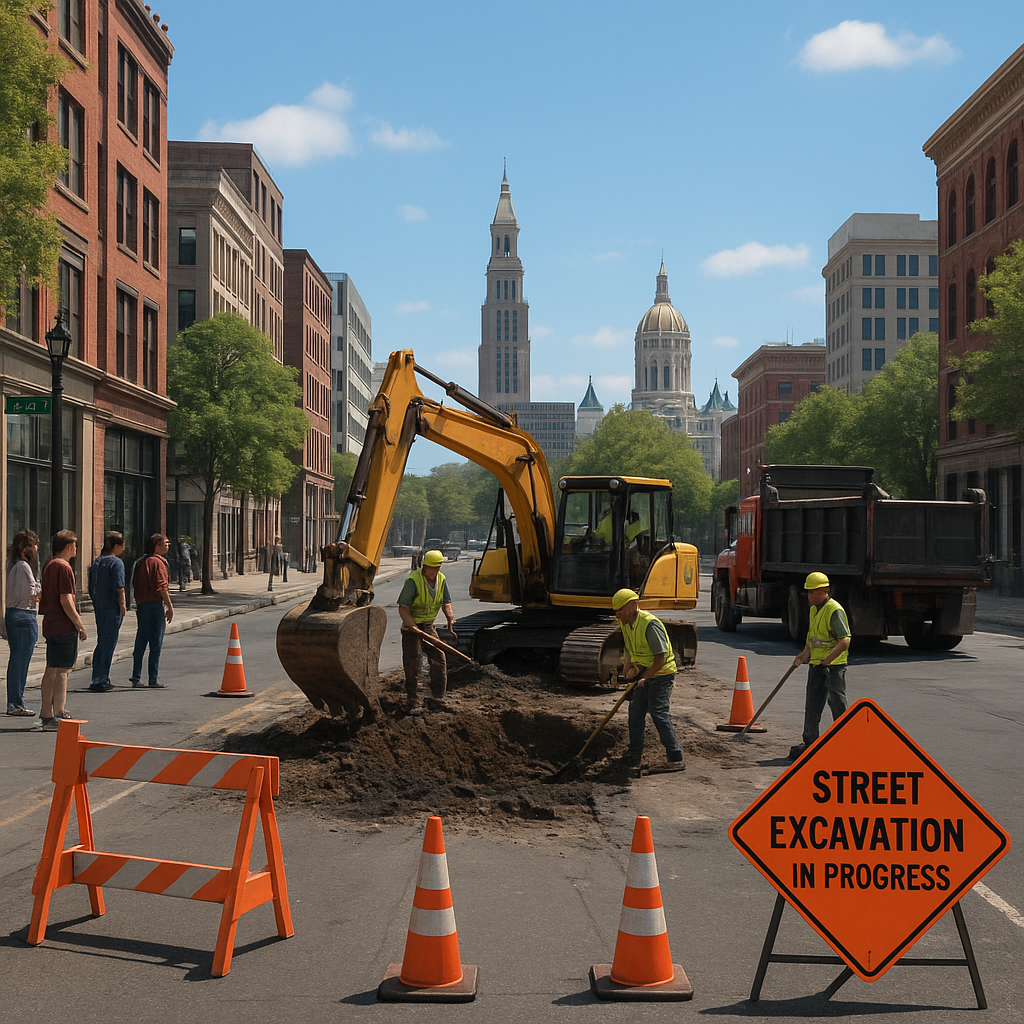
So, you’re planning a project in Hartford, Connecticut, that involves digging into the street or sidewalk. Maybe you need to repair a sewer line, run new water service, or install underground utilities. Whatever the reason, you’ve probably heard whispers about something called a “street excavation and pavement bond.” It sounds intimidating, but it doesn’t have to be.
Hartford recently updated some of its processes around street cuts and pavement restoration. The goal? To make sure our roads stay safe and well-maintained while giving contractors and homeowners a clear path to get their work done. If you’re feeling a bit lost in the paperwork, you’re in the right place. Let’s walk through the new procedures together, step by step, in plain English.
What Exactly Is a Street Excavation Permit and Why Do You Need One?
Think of the city’s streets as shared property. They belong to all of us, but the City of Hartford is the caretaker. Any time someone needs to cut into that asphalt or concrete, they’re borrowing that public space. A street excavation permit is simply official permission from the city to open up the road or sidewalk. It’s like asking your neighbor nicely before you dig up their flower bed—except the neighbor is the city, and the flower bed is a busy roadway.
In Hartford, you need this permit for almost any subsurface work in the public right-of-way. This includes water line repairs, sewer connections, gas line installations, electrical conduit work, and more. Without a valid permit, you risk getting fined, having your work stopped, and being on the hook for any damage. Not a fun scenario.
Where Does the Pavement Bond Come In?
Here’s where things get a little more specific. A pavement bond is a financial guarantee. When you cut a trench and patch it up, the city wants to be absolutely sure that patch holds up over time. They’ve seen too many sunken trenches and potholes from shoddy restorations. So, Hartford requires most permit holders to post a bond before breaking ground.
Imagine it as a security deposit for the street. You do the work, you restore the pavement properly, and you get your bond released. If the patch sinks or cracks prematurely, the city can use that bond money to fix it without chasing you down. It’s a protection for taxpayers and a motivator for contractors to do the job right the first time.
Is a Bond Always Required?
Not necessarily for the tiniest jobs, but the threshold is pretty low. Most excavation work that extends beyond a small service connection or minor repair will trigger the bond requirement. Even if you’re a homeowner doing a DIY sewer repair, you might need to secure a bond. The Hartford Department of Public Works makes the final call based on your permit application. When in doubt, assume you’ll need one—it’s safer than getting a stop-work order.
Hartford’s Updated Process: How to Apply Without the Headache
The city has been working to streamline its permitting journey. A few years ago, you might have had to visit three different offices downtown. Today, much of the process starts online, though you’ll still need to submit some physical paperwork. Here’s the general flow for getting your Hartford street excavation permit and pavement bond in hand.
Step 1: Gather Your Project Details. Before you even touch a form, get your ducks in a row. You’ll need a clear description of the work, the exact address, a site plan showing where you’ll dig, the dimensions of the trench or excavation, and the duration of the project. If it’s a larger utility install, you’ll likely need stamped engineering plans.
Step 2: Complete the Permit Application. Head to the Hartford Department of Public Works or their online portal. The application will ask for your contractor’s license info (if applicable), insurance certificates, and the scope of work. Be thorough. Incomplete applications are the number one reason for delays. The city wants to see proof of liability insurance and, in many cases, workers’ compensation coverage.
Step 3: The Traffic Control Plan. This is a big one that trips people up. Hartford takes pedestrian and vehicular safety seriously. If your dig will affect traffic flow, bike lanes, or sidewalks, you must submit a traffic control plan. This shows how you’ll redirect cars, protect pedestrians with barriers, and place warning signs. The plan needs to comply with the Manual on Uniform Traffic Control Devices (MUTCD). Sometimes a simple sketch will do; for major streets, you may need a professional to draft it.
Step 4: Bond Calculation and Submission. Once the city reviews your application, they’ll calculate the required bond amount. It’s typically based on the square footage of the excavation and the type of road (arterial streets cost more to restore than a quiet residential lane). The bond can be in the form of a surety bond from an insurance company, a certified check, or an irrevocable letter of credit. You’ll submit the bond along with your permit fee. The permit fee itself is separate and covers administrative costs and inspection time.
Step 5: Inspection and Pre-Construction Meeting. For larger jobs, the city might call for a pre-con meeting. An inspector will walk the site with you to confirm the limits of excavation and note any existing pavement conditions. This protects you too, so you aren’t blamed for cracks that were already there. After that, you’ll get the green light—and your physical permit must be on-site at all times.
What Happens After You Dig? The Pavement Restoration Standards
Hartford’s “new” procedures place a heavier emphasis on permanent restoration. In the past, temporary patches sometimes lingered for months. Now, the city requires a more timely and robust final repair. Let’s break it down.
First, you’ll backfill the trench with approved material—no dumping in loose dirt and calling it a day. The fill must be compacted in lifts to prevent settlement. Then you’ll apply a temporary asphalt patch to reopen the road quickly. But here’s the crucial part: within a specified timeframe (often 30 to 60 days), you must return to cut out the temporary patch and install a permanent restoration. That means saw-cutting neat edges, applying a tack coat, and placing hot mix asphalt that matches the surrounding pavement grade perfectly.
Why the two-step dance? Settlement. The ground needs time to stabilize after being disturbed. Rushing a permanent patch often leads to a sunken mess. Hartford’s inspectors will check the compaction and the final surface for smoothness. If it doesn’t pass, you’ll be doing it again—and your bond is still on the line.
Special Rules for Concrete Sidewalks and Curbs
If your dig touches a sidewalk, curb, or driveway apron, the restoration rules get even more specific. Concrete work must match the existing color and finish. You can’t just slap down a gray patch on a red-tinted walkway. Forms must be straight, joints must align, and the surface must be broom-finished for slip resistance. The city engineer’s office will have the precise specs, but always expect a close inspection.
Common Mistakes That Will Slow You Down (and Cost You Money)
We’ve talked to a few local contractors and pulled together the most frequent pitfalls. Avoid these, and your Hartford street excavation permit will feel like a breeze.
- Underestimating the bond amount. Always check with Public Works before purchasing a bond. The calculator on the city website is a guide, but the final number may shift after plan review.
- Forgetting about utility notifications. Before you even apply, you must call 811 (Call Before You Dig). Hartford won’t issue a permit without the Dig Safe number. It’s free and it’s the law.
- Skimping on traffic control. A vague note saying “we’ll use cones” won’t fly. Draw a detailed plan, even if it’s hand-drawn. Include signage, arrow boards, and flaggers if needed.
- Leaving a temporary patch too long. The city keeps track. If you blow past the deadline for permanent restoration, expect daily penalties and a black mark on your contractor record.
- Working without an active permit on-site. An inspector will stop by, and if the permit isn’t visible, you’ll be told to cease operations immediately. Keep it in the windshield or posted nearby.
Do Homeowners Need to Worry About All This?
Yes and no. If you hire a licensed, insured contractor to handle your sewer line replacement or water main repair, they should manage the entire permit and bond process on your behalf. It’s part of their service. However, you as the homeowner are ultimately responsible for the work on your property line. Always verify that your contractor has pulled the proper street excavation permit. Ask to see a copy. If they cut corners, the city could come after you for damages. A quick conversation could save you from a nasty surprise.
If you’re the hands-on type planning to do the work yourself, you’ll need to follow the exact same steps as a contractor. Yes, that includes securing a pavement bond. Hartford doesn’t distinguish much between a pro and a homeowner when it comes to street integrity. The bond amounts might be smaller for a single residential repair, but the principle stands.
How Long Does It All Take? Planning Your Timeline
A straightforward residential permit application might get approved in a week or two, assuming all your paperwork is flawless. Larger commercial projects can take a month or more. The bond acquisition can be quick—many surety companies issue bonds within days once they have the city’s bond form. Plan for the entire process (application to permit-in-hand) to take at least 10 to 14 business days for a small job. For major road openings, give yourself at least a month.
Don’t forget that the excavation itself is just one piece. The permanent restoration deadline will stretch your involvement out weeks or months beyond the dig. Budget your time and money accordingly. Rushing leads to mistakes, and mistakes lead to bond claims.
Keeping Hartford’s Streets in Great Shape—Together
It might seem like a lot of red tape, but these procedures exist because we all want smooth, pothole-free roads. Every improperly patched trench is a future headache for drivers, cyclists, and the city’s budget. By following Hartford’s street excavation and pavement bond requirements, you’re playing a vital role in keeping our community safe and looking sharp.
Still have questions? The Hartford Department of Public Works is surprisingly friendly over the phone. They’d rather you ask upfront than discover a problem after you’ve broken ground. And if you’re ever unsure about the bond paperwork, a local surety bond agency can walk you through the exact city forms. They deal with Hartford all the time.
So, take a deep breath, gather your plans, and start the conversation. The pavement beneath your feet is more than just asphalt—it’s a shared responsibility. And with the new, clearer procedures in Hartford, doing your part is easier than ever.