Contractors, utility companies, and homeowners digging into public streets or rights-of-way in Norwalk, CT, must secure a Street Opening and Encroachment Permit Bond, a surety that guarantees repair costs for any damage or unfinished work. This bond shifts financial risk from the city to the permit holder, ensuring taxpayers aren’t left footing the bill for restoration.
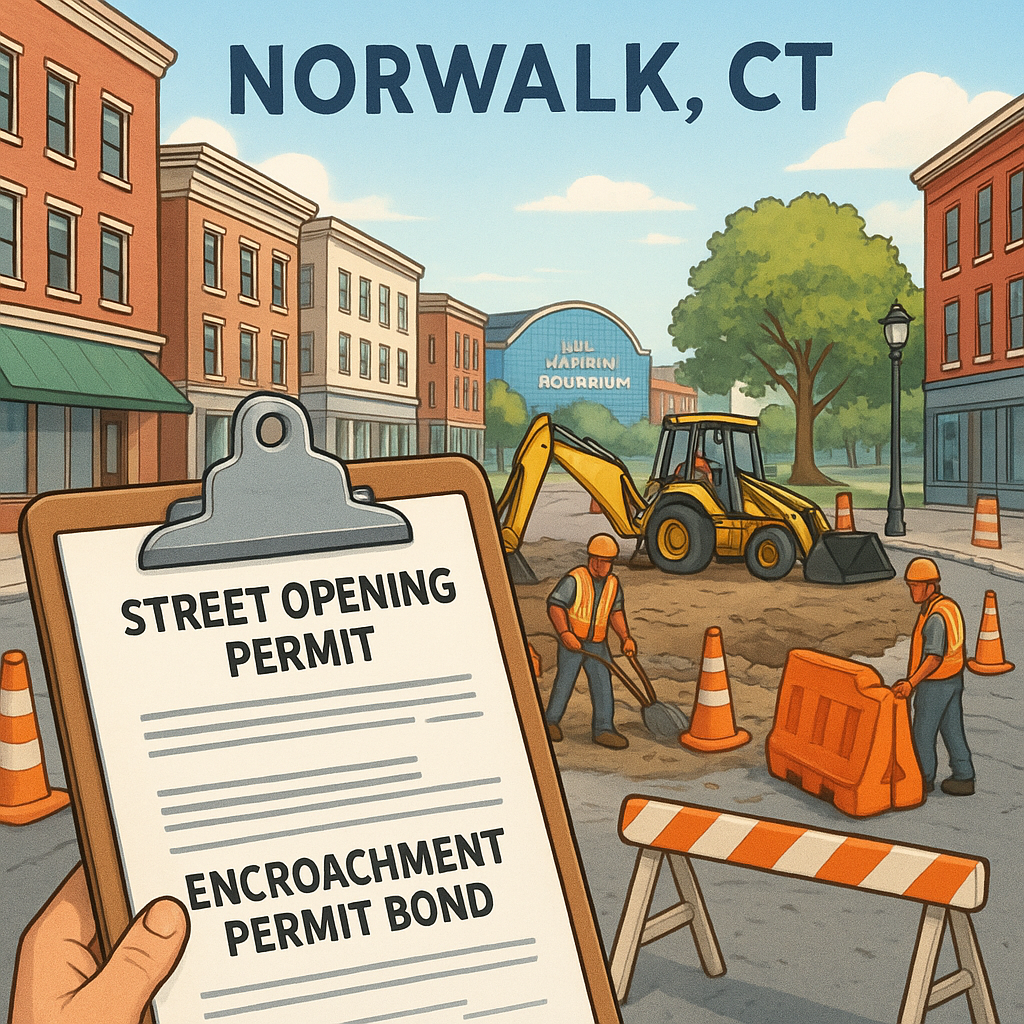
If you’re a contractor, utility company, or even a homeowner planning to dig into the ground in Norwalk, Connecticut, you’ve probably stumbled across the term “Street Opening and Encroachment Permit Bond.” It sounds like a mouthful, doesn’t it? But don’t worry—by the time you finish reading this, you’ll know exactly what it is, why it exists, and how it affects your project.
What Exactly Is a Street Opening and Encroachment Permit Bond?
Think of this bond as a financial promise. It’s a type of surety bond required by the City of Norwalk before anyone can cut into a public street, sidewalk, or right-of-way. The bond guarantees that if you cause damage or leave the job unfinished, funds are available to fix the mess. In simple terms, it’s like a security deposit for the city, but instead of handing over a stack of cash, you purchase a bond through a surety company.
The bond covers two main activities: street openings (that’s when you dig up pavement to access underground utilities) and encroachments (when something like a fence, sign, or construction equipment extends into the public right-of-way). Both actions can disrupt traffic, threaten public safety, and damage public infrastructure. The bond helps make sure the city isn’t stuck footing the repair bill.
Why Does Norwalk Require This Bond?
Imagine a neighborhood where a contractor digs up the road to repair a water main, but they do a poor job repaving it. Three months later, potholes form, and rainwater starts pooling. The city has to step in and fix it, using taxpayer dollars. That’s exactly the scenario Norwalk wants to avoid. The bond shifts the financial risk back onto the person or company doing the work.
Beyond that, Norwalk’s streets are a shared resource. When you break ground, you’re not just working in a vacuum—you’re affecting commuters, school buses, emergency vehicles, and local businesses. The bond requirement ensures that permit holders take their restoration responsibilities seriously. It’s a layer of accountability that says, “We trust you to do the work, but we’re going to make sure you have skin in the game.”
Who Needs to Get a Street Opening Bond in Norwalk CT?
You might assume this only applies to huge construction firms, but the net is wider than you’d think. Here’s a quick list:
- Utility companies installing gas lines, fiber optic cables, or water mains.
- General contractors connecting new buildings to sewer or power lines.
- Plumbing and excavation specialists tackling underground repairs.
- Homeowners who need to extend a driveway apron, install a new sewer lateral, or work within the city’s right-of-way.
If your project involves breaking the surface of a public street, alley, or sidewalk within Norwalk city limits, you’ll almost certainly need the bond as part of your permit application. The city’s Department of Public Works is the go-to authority for exact requirements, and they can tell you what bond amount applies to your specific job.
How Does the Bond Work in the Real World?
Let’s break it down with a practical example. Say you’re a plumber hired to replace a collapsed sewer line under a residential street in Norwalk. You pull the permit and secure the necessary street opening bond—let’s say it’s a $10,000 bond. You dig the trench, replace the pipe, and backfill the hole. But six weeks later, the pavement sinks, creating a hazard. The city inspects the site and determines your backfill wasn’t properly compacted. They give you a chance to fix it, but if you don’t, they can make a claim against your bond. The surety company pays the city up to the bond limit to hire someone else to restore the road properly. Afterward, the surety comes to you for reimbursement. That’s a key point: a bond is not insurance for you—it’s protection for the city and the public.
The Connection Between Encroachment Permits and Bonds
An encroachment happens when a private structure or material enters public space. Picture a restaurant setting up outdoor seating on part of the sidewalk, a construction fence that spills over the curb, or scaffolding that hangs above a public alley. These situations require an encroachment permit, and yes, they often require a bond too. The city wants to be certain that if that café abandons its patio and leaves broken bricks behind, there’s money to restore the area to its original condition. The bond acts like a cleanup guarantee.
How Much Does a Norwalk Street Opening Bond Cost?
There’s no one-size-fits-all answer. The required bond amount depends on the scope and location of the project. A small sidewalk replacement might need a bond of a few thousand dollars, while a major utility installation could require $50,000 or more. The good news? You don’t pay the full face value upfront. You pay a premium—usually a small percentage of the bond amount, often between 1% and 5% for applicants with strong credit. So for a $10,000 bond, your out-of-pocket cost might be as low as $100 to $500.
Your credit score, business financials, and past bond claims (if any) influence that rate. A contractor with a long history of successful jobs and great credit might snag a low 1% premium, while a new business owner might pay a bit more. It pays to shop around and work with a surety agency that understands Connecticut’s municipal requirements.
Getting the Bond: The Step-by-Step Process
Ready to move your project forward? The process is pretty straightforward, but each step matters. Here’s how it typically goes:
- Confirm your permit needs: Contact Norwalk’s Public Works or Engineering Department. They’ll tell you whether you need a street opening permit, an encroachment permit, or both, and the exact bond amount required.
- Gather your paperwork: You’ll need business details, the permit application, and sometimes a project description or site plan.
- Apply for the bond: Work with a licensed surety bond provider. Many offer online applications with quick turnaround.
- Pay the premium: Once approved, pay the premium and you’ll receive the bond document.
- File the bond with the city: Submit the original bond form alongside your permit application. Keep a copy for your records.
It’s wise to start this process early. While you can often get bonded in a day or two, city permit reviews take their own time. Waiting until the last minute could delay your groundbreaking.
Common Misconceptions That Trip People Up
You wouldn’t believe how many people confuse a permit bond with liability insurance. Let’s clear the air. The bond protects the city’s property and ensures you follow the rules. Liability insurance protects you if a third party gets hurt or property gets damaged outside the immediate work area. You may need both, but they serve completely different purposes.
Another myth? “I’m just a homeowner digging a small trench—I don’t need this.” If your project touches the public right-of-way, even planting a tree near the sidewalk could trigger a bond requirement in some cases. Always check with the city first. It’s far cheaper to get a small bond upfront than to pay fines and restoration costs later.
What Happens If You Skip the Bond?
Trying to dodge the bond requirement is a recipe for trouble. The city can issue a stop-work order, levy hefty fines, and even revoke your permit. Beyond that, if you cause damage without a bond in place, you’ll be personally on the hook for repairs. That could mean a five-figure bill for asphalt replacement, concrete work, or sidewalk repairs. Considering how affordable a bond premium is, the risk just isn’t worth it.
Keeping Your Project—and Your Bond—Claims-Free
A bond claim can be a black mark that follows your business. So how do you avoid one? It boils down to meticulous work and clear communication.
- Follow the city’s specs for trench depth, backfill material, and compaction to the letter.
- Take “before” photos of the worksite to document pre-existing conditions.
- Notify the city promptly if you encounter unexpected underground conditions.
- Don’t rush the restoration phase. Let the ground settle, and patch pavement smoothly.
- Keep the public safe with proper signage, barricades, and lighting during the work.
Think of the bond as a silent partner. You don’t want to have a conversation with it—you just want it to sit quietly in the file until the permit is closed out successfully.
How the City of Norwalk Benefits—and So Do You
While the bond requirement can feel like extra red tape, it actually streamlines projects in the long run. The city doesn’t have to fight with contractors to pay for shoddy repairs because the bond provides a clear enforcement mechanism. For conscientious contractors, it levels the playing field, ensuring that competitors can’t underbid a job by cutting corners on restoration. Homeowners and business owners sleep better knowing the infrastructure will be restored properly. It’s a system that, when everyone plays by the rules, keeps Norwalk’s streets safe, smooth, and fully functional.
Questions You Might Still Be Wondering
Still have doubts? That’s okay. Let’s tackle a few final thoughts.
Do I need a separate bond for each project? Often, yes. The city typically requires a bond that’s tied to a specific permit and location. Some contractors, though, may qualify for an annual blanket bond if they do frequent work in Norwalk. Ask the city about that option.
Can the bond amount ever be refunded or reduced? No, the bond itself isn’t refunded. You pay a non-refundable premium for the bond period. However, once the city inspects your restored work and signs off, the bond obligation ends. Make sure to formally close out your permit to release your liability.
Is this bond the same in every Connecticut town? Not exactly. While the concept is similar across the state, each municipality sets its own bond amounts, permit fees, and specific rules. Never assume another town’s bond will cover Norwalk work. Always check locally.
Wrapping It All Up
Navigating permit bonds doesn’t have to feel like an uphill battle. The Norwalk CT Street Opening and Encroachment Permit Bond exists for a clear, common-sense reason: keeping public spaces safe and well-maintained while giving the city a financial safety net. Whether you’re a seasoned contractor or a first-time homeowner taking on a big project, understanding this bond means you can plan your budget, avoid delays, and build a reputation for reliable, responsible work. When in doubt, lean on the folks at Norwalk Public Works and a knowledgeable surety bond professional—they’ll guide you toward the right bond for the right job, without all the stress.