Somerville, Massachusetts requires sign and awning contractors to secure a Sign Hanger Compliance Bond, a three-party agreement ensuring adherence to local building codes and zoning laws. This compliance-only bond protects the city from safety hazards and code violations, serving as a financial guarantee that contractors follow regulations without the need for general liability coverage.
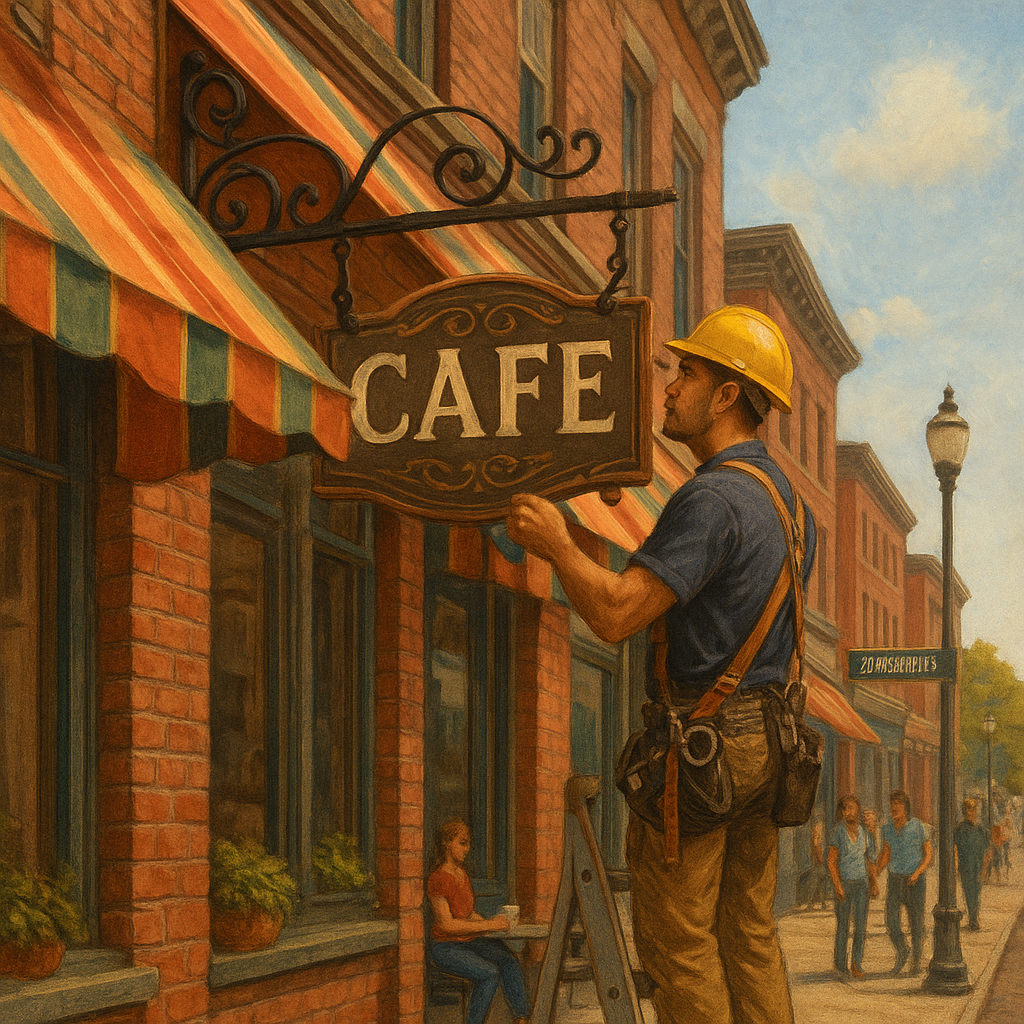
So you’re getting ready to hang a bright new sign or install a sturdy awning in Somerville, Massachusetts. Maybe you’ve already lined up a client, picked the perfect materials, and mapped out the installation date. Then someone mentions the words “sign hanger bond,” and suddenly the whole process feels like you’ve stumbled into a tangle of red tape. Don’t worry—it’s a lot simpler than it sounds.
In the City of Somerville, anyone performing sign and awning work must follow specific rules designed to keep the community safe and looking its best. At the heart of those rules is a requirement that often catches contractors by surprise: the Sign Hanger Compliance Bond. If you’ve seen the phrase “City of Somerville MA Bond Signs and Awnings Bond Sign Hanger – Compliance Only” float across a license application, this post is your straightforward guide.
We’ll unpack what this bond actually is, why Somerville insists on it, how much it costs, and exactly what you need to do to get bonded without the headache. Whether you’re a seasoned sign contractor or just stepping into the world of awnings and storefront displays, you’ll walk away ready to tackle the compliance piece with confidence.
What Is a Sign Hanger Bond, in Plain English?
Let’s strip away the legal jargon. A sign hanger bond is a three-party agreement that acts like a financial promise. Picture it as a safety net that the City of Somerville can tap into if a sign contractor breaks the rules. The parties involved are:
- The Principal – That’s you, the sign or awning contractor who needs the bond.
- The Obligee – The City of Somerville, which requires the bond to protect public interests.
- The Surety – The bonding company that issues the bond and guarantees payment if a valid claim is made.
When people say this is a “Compliance Only” bond, they mean it focuses solely on making sure you follow Somerville’s local laws, building codes, zoning ordinances, and license regulations. It’s not the same as general liability insurance that covers broken windows or sprained ankles on the job site. Instead, this bond guarantees that you’ll play by the city’s rulebook while putting up signs and awnings.
Think of it like a deposit you leave behind to show you’ll clean up after a party. The city holds the bond as a kind of promise that your work will meet code, your permits will be in order, and you won’t leave a mess of code violations behind. If you don’t deliver on that promise, the bond kicks in to set things right.
Why Does the City of Somerville MA Require This Bond?
You might wonder, “Why me? Why this city?” Somerville is a dense, vibrant place where storefronts, residential buildings, and busy sidewalks sit shoulder to shoulder. A poorly installed sign or an awning that’s not anchored correctly isn’t just an eyesore—it can be dangerous. The city wants to make sure that every piece of exterior signage meets strict safety and aesthetic standards without piling extra costs onto taxpayers when something goes wrong.
The Somerville sign and awning bond acts as a tool for enforcement. If a contractor skips the required permits, ignores weight limits, or installs a sign that doesn’t comply with the city’s detailed zoning bylaws, the bond is there to cover fines and corrective measures. This system protects:
- Public safety – ensuring signs won’t fall during a nor’easter.
- Neighborhood character – keeping the skyline from turning into a cluttered mess of oversized advertisements.
- Honest contractors – leveling the playing field so everyone who follows the rules isn’t undercut by those who cut corners.
In short, the bond is how Somerville says, “We welcome your business, but our streets and sidewalks come first.” It’s a local requirement that echoes similar mandates in other Massachusetts municipalities, but Somerville’s version is tied specifically to “Signs and Awnings Bond Sign Hanger – Compliance Only,” meaning there’s no ambiguity about what’s covered.
How Does a Compliance-Only Bond Work in Real Life?
Let’s paint a quick picture. Say you install a beautiful new awning for a café on Davis Square, but you forget to file the required structural inspection paperwork. A city inspector notices the oversight and determines the awning supports need rework because they aren’t up to code. The city notifies you of the violation. If you refuse to fix the problem or pay the related penalties, the city can file a claim against your sign hanger bond.
At that point, the surety company investigates. If the claim is legitimate, the surety pays the city up to the full bond amount. But here’s the kicker: you’re still on the hook for every penny. The bonding company will come back to you for reimbursement because a bond is not insurance for your mistakes—it’s an extension of credit. That’s a crucial distinction. The city gets protected, and you’re incentivized to stay on the straight and narrow.
This “compliance only” designation means the bond doesn’t help a private client who might be unhappy with the color of the sign. Those disputes belong in the realm of contract law, not in this specific bond’s territory. Its sole purpose is to uphold the City of Somerville’s regulatory framework.
What Does a Somerville Sign Hanger Bond Cost?
Good news: you don’t need to shell out the entire bond amount from your own pocket. The bond penalty—the maximum the city can recover—is set by local ordinance. While exact amounts can shift depending on the type and value of the work you perform, sign hanger bonds in Somerville are often issued in amounts like $5,000, $10,000, or sometimes higher for larger contractors handling heavy structural signs.
Your out-of-pocket cost, called the premium, is a small percentage of that penalty amount. Contractors with solid credit might pay as little as 1% to 5% annually. Someone with rocky credit could see higher premiums, but even then, bond programs exist to accommodate a wide range of financial backgrounds. For a typical $5,000 compliance-only bond, many sign contractors in Massachusetts find themselves paying just a few hundred dollars a year.
Here are a few factors that influence your premium:
- Personal credit score and business financial history.
- Experience and number of years operating as a sign contractor.
- Any previous claims or bond cancellations on your record.
- The bond amount required by the City of Somerville for your specific license class.
Remember, this is an annual expense. You’ll need to renew the bond as long as you hold an active sign or awning license in Somerville. Factor it into your business budget just like you would a trade permit fee or vehicle registration.
Getting Bonded: A Simple Step-by-Step Path
It’s easier than you think. Instead of getting tangled in paperwork for weeks, most bonding companies can turn a simple application around in less than 24 hours. Here’s the path:
- Confirm the exact bond requirement. Reach out to the City of Somerville’s licensing department or check their website. You want the correct form name—likely “City of Somerville MA Bond Signs and Awnings Bond Sign Hanger – Compliance Only”—and the precise penalty amount.
- Gather your business information. You’ll need your legal business name, contact details, license number if already issued, and Social Security number or EIN for the application.
- Apply with a trusted surety bond provider. Look for a company that specializes in contractor license bonds in Massachusetts. They’ll understand Somerville’s specific forms and can often submit the bond directly to the city on your behalf.
- Review and pay the premium. Once approved, you’ll sign the indemnity agreement and pay the premium. The surety then issues the bond, complete with the official seal and signatures.
- File the bond with the city. Keep a copy for your records, but make sure the original gets to the clerk’s office or licensing board. Your license won’t be activated until they have that bond on file.
And just like that, you’re compliant. Post the bond, and you can focus on what you do best—creating signs and awnings that make Somerville’s squares and neighborhoods pop.
Common Questions Contractors Ask Before Getting Bonded
Is this the same as a sign installer license bond?
Essentially, yes. A “sign hanger bond” and a “sign installer license bond” serve the same purpose in Somerville. The city may use these terms interchangeably. What matters is that you obtain a compliance-only bond specifically naming the City of Somerville as the obligee for Signs and Awnings work.
What happens if I let the bond lapse?
Don’t. If your bond expires and you haven’t secured a renewal, the city can suspend your license to operate. Working without a valid bond could lead to fines, stop-work orders, and a stain on your professional record that makes future bonding more expensive. Treat renewal dates as sacred as a tax deadline.
Can a client ask me to cover something beyond what the city requires?
Absolutely. Many commercial property owners want additional protection. This bond is for the city’s benefit only. For third-party clients, you may need general liability insurance or a separate performance bond. Keep that conversation separate from the compliance bond discussion so expectations stay crystal clear.
Overcoming the Fear of the “Bond Maze”
Walking into a bonding conversation can feel like entering a maze with no map, especially if you’re an independent contractor or a small sign shop owner. The phrase “Compliance Only” sometimes throws people off because it sounds restrictive. In reality, it’s freeing—it zeroes in on exactly what the city demands without confusing overlap with insurance policies you might already carry.
If you’ve ever wasted time trying to decipher whether a requirement is about safety or financial responsibility, this distinction is your friend. It means you don’t have to guess. The City of Somerville wants you to prove you’ll follow the municipal code, and the bond is your vehicle to do that. No more, no less.
When you talk to a bonding agent, you can say, “I need the Somerville sign hanger compliance bond for signs and awnings,” and they’ll know exactly which form to pull up. That little bit of clarity saves you hours of back-and-forth emails with city hall.
A Quick Look at the Bigger Picture
Massachusetts has a rich history of protecting its built environment, from the cobblestone streets of Beacon Hill to the dynamic murals of Union Square. Somerville fits right into that tradition with a modern twist. The city recognizes that signs and awnings are more than functional—they’re a huge part of what makes neighborhoods feel alive. But without standards, that vibrancy can tip into chaos.
By requiring a bond, Somerville essentially says, “We trust you to add to our city’s beauty, and we’ll hold you accountable to a simple set of rules.” For contractors who do great work, this bond is just a formality—a small administrative step that reinforces your reputation as a pro who does things the right way.
So whether you’re about to hang a sleek metal sign for a tech startup in Assembly Row or craft a classic fabric awning for a family bakery on Broadway, your bond says you’re serious about your craft and respectful of the community you serve. That’s a message worth hanging on to.
Ready to Tackle Your Bond and Get to Work?
Now that the mystery is unwrapped, the path forward is straightfoward. Start by confirming the required bond amount and exact form with Somerville’s licensing authority. Then, reach out to a Massachusetts-based surety bond specialist who can walk you through the application, offer competitive pricing, and make sure the paperwork lands where it needs to go.
Remember, this isn’t a one-time hurdle—it’s an ongoing part of being a responsible sign and awning professional in one of the most dynamic cities in the Greater Boston area. Keep your bond active, your permits in order, and your focus on creating installations that make drivers look up and pedestrians smile.
With the compliance piece checked off your list, you’ll be free to do what you love: bringing visibility, shelter, and a splash of personality to the storefronts of Somerville.