Hiring an uninsured contractor for driveway or sidewalk work in East Hartford puts homeowners at financial risk, making a Driveway, Curb & Walk Layer's Bond essential for protection. This bond acts as a legal safety net, ensuring compensation for subpar work, code violations, or damage to third-party property.
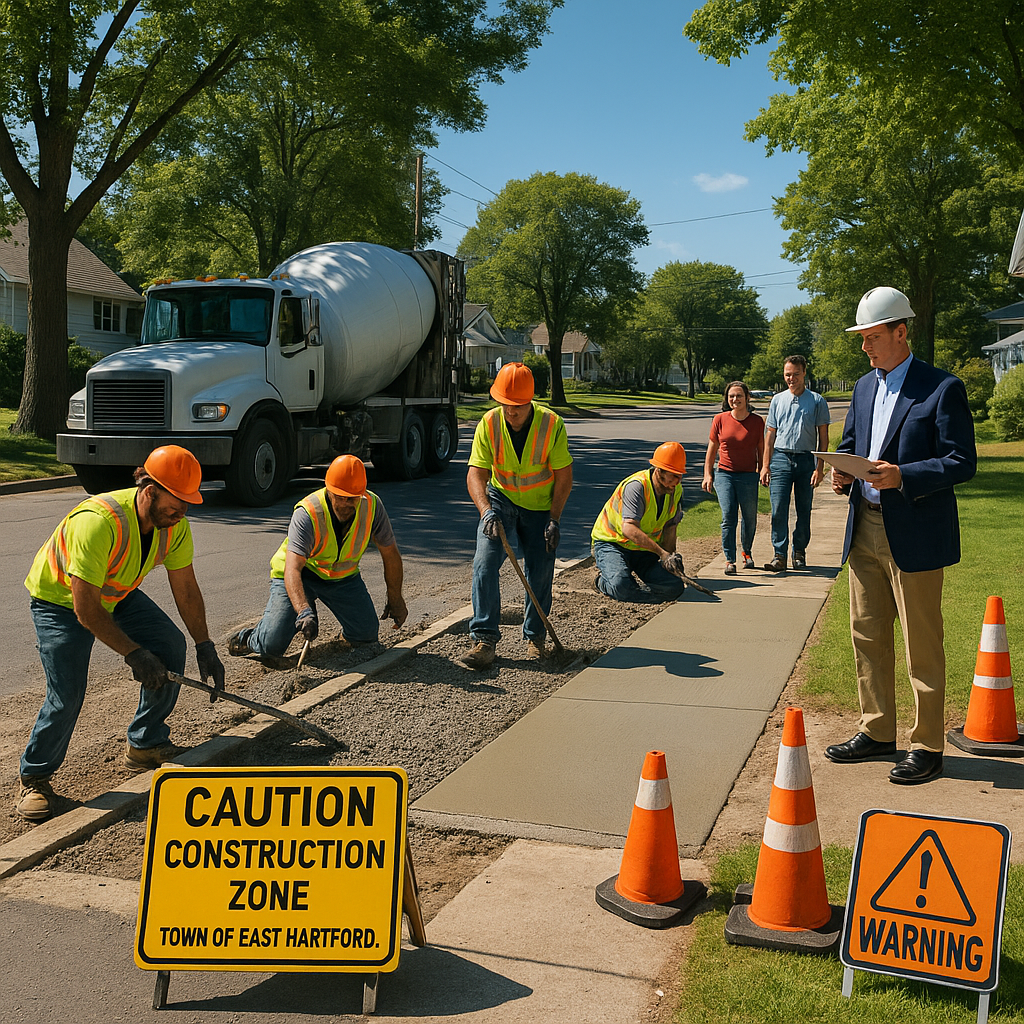
So, you’ve decided it’s time to give your East Hartford home a fresh new look with a new driveway, or maybe those cracked sidewalks have finally pushed you to take action. That’s exciting! But before the cement starts pouring, there’s one behind-the-scenes detail that can make or break your entire project. It’s not about the color of the stone or the pattern in the concrete. It’s about a little piece of paper called a Driveway, Curb & Walk Layer’s Bond. If you live in East Hartford, Connecticut, this isn’t just fancy paperwork—it’s your financial safety net.
Why Your East Hartford Sidewalk Project Needs More Than Just a Handshake
Hiring a contractor can feel a bit like online dating. Everyone looks great in their profile pictures, but you want to know they’re reliable before inviting them to work on your property. In the Town of East Hartford, local regulations require anyone doing specific exterior concrete work to carry a specialized bond. This rule is there for a reason: to protect you. A handshake agreement might feel friendly, but a bond is a legal promise that you’ll be taken care of if things go sideways.
Think of a bond as a third-party referee holding a deposit. The contractor puts money up front to guarantee they’ll play by the rules. If they don’t, the money is there to make things right for you.
What Exactly Is a Driveway, Curb & Walk Layer’s Bond?
Let’s strip away the jargon. A Driveway, Curb & Walk Layer’s Bond is a specific type of surety bond required by the Town of East Hartford for contractors who pour concrete for driveways, curbs, and sidewalks. It’s a three-way agreement between the contractor, the town, and a bonding company. The contractor pays for the bond, but it doesn’t protect them—it protects you, the homeowner, and the public.
Imagine you’re building a treehouse and you ask a friend to hold onto $100 from the builder. You tell the builder, “If the ladder breaks because you didn’t follow the safety rules, I’m keeping the $100 to fix it.” That’s essentially what the bond does, just with much larger amounts and legally binding terms. If a contractor does subpar work, violates East Hartford’s building codes, or leaves a mess that damages public property, a claim can be made against the bond to recover costs.
The 3rd Party Liability Connection
You’ll often see the term 3rd Party Liability tied to these bonds. It simply means the protection extends beyond just the contractor and the town. You are the third party. If a worker’s stray shovel damages your neighbor’s fence while installing your new walkway, or if the new curb crumbles a month after it’s poured, you don’t have to rely on the contractor’s goodwill. The bond offers a clear path to getting compensation without having to go to court immediately.
How Does All This Protect You, the East Hartford Homeowner?
Life is full of surprises, and not all of them are pleasant. Here’s a common scenario we hear about. A family on Burnside Avenue hires a “guy with a truck” to replace their cracked walkway. The price is unbeatable. He pours the concrete, it looks okay for two weeks, then the first freeze comes. The surface starts flaking off because the mix was wrong. The contractor’s phone number is suddenly disconnected. Without a bond, that family has to pay a second contractor to tear out the bad work and start over. With a bonded contractor, they could file a claim to cover the cost of the fix.
The bond acts as a pre-funded insurance policy against work that fails to meet East Hartford’s codes and standards. It covers you for incomplete work, code violations, and damage caused by the contractor’s operation.
Why the Town of East Hartford Created This Requirement
Towns don’t create rules just for fun. East Hartford, like many careful municipalities in Connecticut, requires a Driveway and Sidewalk Contractor bond to keep public spaces safe and neighborhoods looking great. A poorly poured public sidewalk is a tripping hazard. A driveway apron that doesn’t meet specifications can interfere with drainage on the street. The bond ensures that the job is done right the first time, protecting the town’s infrastructure and your property value.
It’s a quality control measure. When a contractor has a bond, they are tying their financial reputation to their work quality. They’re essentially saying, “I stand behind my craft so fully that I’ll put money on the line.”
Red Flags: How to Spot a Risky Contractor
Now that you know how vital a bond is, spotting a risky operator becomes much easier. Trust your gut and watch for these warning signs:
- The “Too Good to Be True” Price: A quote that’s half the cost of everyone else usually means they’re cutting corners—and likely haven’t paid for a bond or proper insurance.
- Hesitation to Show Proof: If you ask, “Can I see your Town of East Hartford Driveway, Curb & Walk Layer’s Bond certificate?” and they get defensive or tell you “it’s not a big deal,” walk away. A professional will be proud to show you their credentials.
- Large Cash Deposits Up Front: A bonded, established East Hartford contractor has the financial standing to buy materials without risking half your project budget. Asking for a huge cash deposit before starting is a classic danger signal.
- Vague Paperwork: A contract written on a napkin won’t protect you. A legitimate contractor will have a detailed contract that references their bonding and insurance information.
What to Ask a Potential Driveway or Sidewalk Contractor
You don’t need to be a construction expert to hire one. You just need to ask the right questions. Treat the initial meeting like an interview. Here’s a cheat sheet:
- “Are you licensed and bonded specifically for work in the Town of East Hartford?” This is non-negotiable. A state license is great, but the local bond is what the town requires.
- “Can I get a copy of your bond certificate with my name and address listed?” Some contractors can add you as a “certificate holder,” giving you direct proof of the bond’s validity.
- “What does your general liability insurance cover, and how does it work alongside the bond?” While the bond covers code compliance and performance, insurance covers personal injury or accidental damage during the project. They work hand-in-hand.
- “Have you completed similar projects in my neighborhood?” A local track record means they’re familiar with East Hartford’s soil, drainage patterns, and, most importantly, the town inspectors.
The Simple Truth About 3rd Party Liability Coverage
We touched on this earlier, but it deserves its own spotlight. The phrase “3rd party liability” might sound like something only lawyers care about, but it’s a beautiful thing for a homeowner. Imagine a contractor is cutting a new curb, and debris flies off and chips your car’s windshield. You are the third party. The bond (and often the liability insurance) steps in to pay for the repair. It separates you from the financial mess. Without that safety net, you’d be arguing with the contractor and hoping they’ll pay out of pocket, which can be a battle of its own.
Putting It All Together for Your Project
Getting your dream driveway or a safe new sidewalk in East Hartford shouldn’t keep you up at night. The process becomes remarkably straightforward when you filter candidates through the bond lens. You’ll weed out the uncommitted and be left with the pros who respect the town’s rules and care about your peace of mind.
Think of choosing a bonded contractor as building a three-legged stool. The first leg is craft, the second is fair pricing, and the third is the legal safeguard of the bond. Without that third leg, the stool topples over the moment any pressure is applied.
Taking the Next Step with Confidence
You deserve to enjoy your home improvements, not stress over them. Next time you talk to a contractor about a concrete project, remember this small but mighty piece of paper. The East Hartford CT Driveway, Curb & Walk Layer’s Bond isn’t a bureaucratic hurdle—it’s a promise that your hard-earned money is protected. It’s the town’s way of helping you separate the true professionals from the fly-by-night operators.
So go ahead, start getting those quotes. Ask the tough questions. Check that bond certificate. Your sidewalk or driveway is something you’ll walk on every single day, and it should be built on a foundation of trust, quality, and solid financial protection.