Meriden, Connecticut requires drain layers to obtain a compliance bond, a three-party surety agreement guaranteeing adherence to local codes and regulations. This bond protects the city by providing financial recourse for violations, and it is a mandatory prerequisite for licensing and permits.
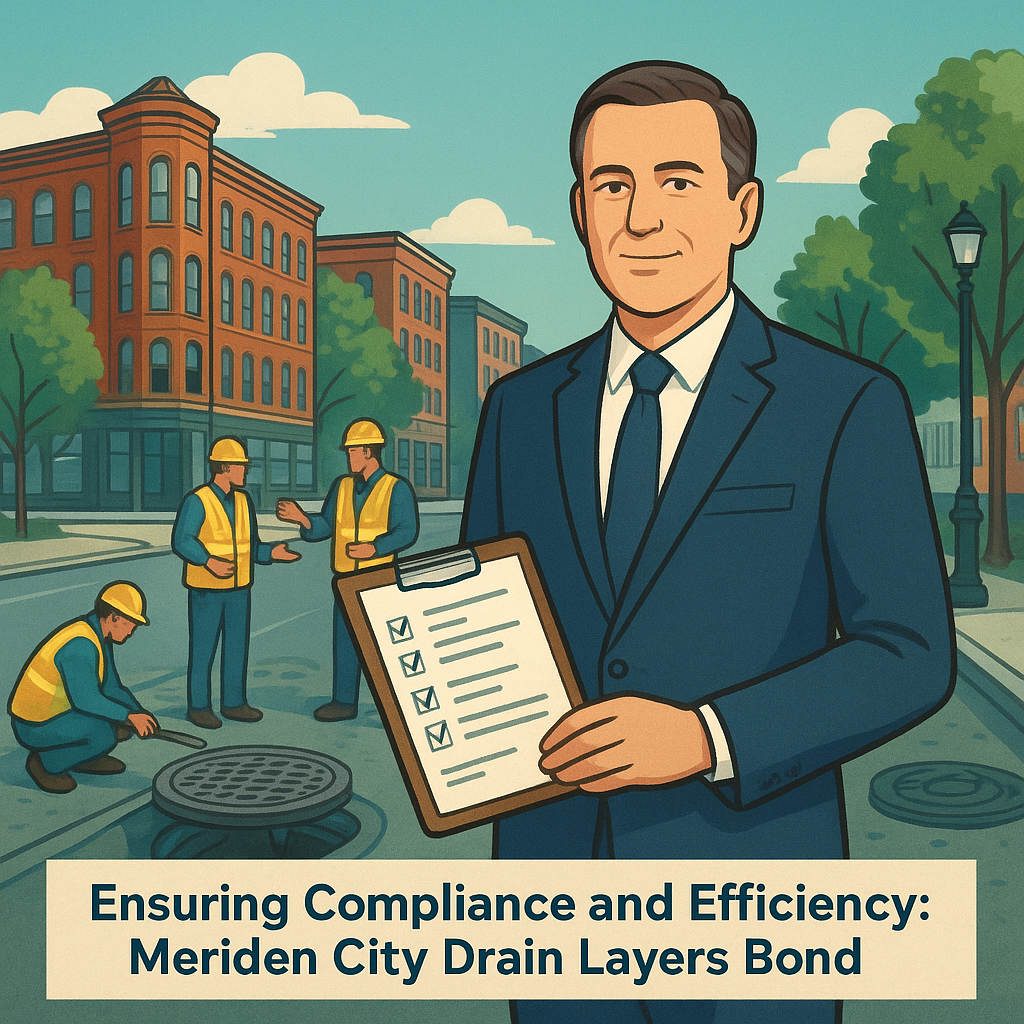
If you’re a drain layer working in Meriden, Connecticut—or thinking about starting that kind of work—you may have come across something called a compliance bond. It might sound like just another confusing piece of paperwork, but understanding it can save you a lot of headaches down the road. Think of it as a promise you make to the city, backed by a financial guarantee, that you’ll do things the right way. Let’s break down what this bond is all about, who requires it, why it exists, and how it actually benefits both you and the community.
What Exactly Is a Drain Layers Compliance Bond?
At its heart, a drain layers compliance bond is a type of surety bond that’s required by the City of Meriden for anyone laying drains within city limits. It’s not insurance for your business—it’s a three-party agreement between you (the drain layer), the city (the obligee), and a surety company. The bond guarantees that you’ll follow all the local rules, codes, and regulations connected to drain laying work. If something goes wrong and you don’t follow through, the bond offers a way to make things right financially, up to a set amount.
Often, the bond is made payable to the “Treasurer of the City of Meriden,” which tells you exactly where the city’s interest lies. It’s a compliance-only bond, meaning its sole purpose is to ensure you stick to the specific rules laid out by Meriden’s ordinances. You’re not covering general liability or workmanship warranties here—this is strictly about following municipal law.
Why “Compliance Only” Matters
The phrase “compliance only” is important. It means the bond isn’t there to protect your customer from poor work directly (though that may be a side effect). Instead, it’s a tool the city uses to enforce its own standards. If you fail to obtain proper permits, ignore safety regulations, or damage public property during a job, the city can make a claim against your bond. The money then goes toward fixing whatever went wrong. In that way, the bond acts like a referee, making sure everyone plays by the same rulebook.
Who Needs This Bond in Meriden?
If you’re installing, repairing, or altering drain pipes that connect to the city’s sewer system or public drainage ways, chances are you need this bond. The requirement typically applies to licensed drain layers who perform work for homeowners, businesses, or developers. Even if you’re an experienced contractor from a neighboring town, once you cross into Meriden, the city wants that extra layer of accountability. The bond is usually a prerequisite to pulling permits or getting your drain layer’s license approved.
It’s common for the city to list the bond as a non-negotiable part of your license application. So before you can dig that first trench, you’ll need to prove the bond is in place. Missing it could mean delays, fines, or even having to stop work entirely.
How the Bond Protects the Community—and You
Let’s imagine a scenario. A drain layer cuts a corner and doesn’t compact the soil properly after a repair. A few months later, the pavement sinks, and the city’s storm drain system backs up. Now there’s flooding in the street. The city has to step in and fix the problem. Without a bond, the drain layer might have disappeared, left the state, or simply refused to pay. With a compliance bond, the city can file a claim and recover the costs to make the repairs. That means taxpayers don’t end up footing the bill for someone else’s mistake.
But here’s the thing: the bond isn’t only about protecting the city. It also protects honest, hardworking contractors. How? By creating a level playing field. When everyone has to post a bond, it’s harder for unqualified or irresponsible operators to undercut prices and walk away from problems. It gives homeowners and businesses confidence that the person they hire is officially recognized and accountable. That trust can translate into more job opportunities for you.
Getting Down to the Nitty-Gritty: Bond Amounts and Costs
So, how much coverage are we talking about? Bond amounts vary, but for Meriden drain layers, it’s often a fixed sum set by the city. You might see figures like $10,000 or $20,000. That’s the maximum the surety would pay out on a claim. However, what you actually pay for the bond—the premium—is just a small fraction of that total. Typically, for a well-qualified applicant, the premium might be between 1% and 5% of the bond amount per year. So if the required bond is $10,000, you might pay as little as $100 to $500 annually.
The cost depends on factors like your personal credit score, business financials, and experience. Surety companies view this as a line of credit, so a stronger financial picture means a lower premium. Even if your credit isn’t perfect, there are programs that can help you get bonded, sometimes at a slightly higher rate. It’s worth shopping around and talking to a surety bond specialist who knows the Connecticut market.
Steps to Secure Your Meriden Drain Layers Bond
The process is pretty straightforward, and you don’t need to be a paperwork wizard to get it done. Here’s a typical path:
- Confirm the exact requirement with Meriden’s building or licensing department. Bond amounts and forms can change, so start at the source. Ask if the bond must be specifically payable to the Treasurer of the City of Meriden, and get a copy of the bond form if available.
- Reach out to a surety bond agency. You’ll provide basic information about your business and possibly personal details for a credit check. An agent can guide you through options.
- Complete the application. This usually involves answering questions about your experience, license status, and financial standing. Be honest—that’s the best policy.
- Review the quote and pay the premium. Once approved, you’ll receive a bond document to sign. After payment, the surety issues the bond.
- File the bond with the city. Often the surety company can send it directly to the appropriate city office, but you’ll want to confirm it’s received and accepted before you start your next project.
What Happens If a Claim Is Filed?
Nobody wants a claim, but it’s critical to understand the process. If the city believes you’ve violated a regulation, they’ll notify the surety company and make a demand for payment. The surety will investigate. If the claim is valid, the surety pays the city up to the bond’s penalty amount. But here’s the catch: the surety will then come to you for reimbursement. That’s right—unlike insurance, a surety bond expects you to pay back every penny. So it’s really a powerful motivator to follow the rules from day one.
Common Misconceptions That Trip People Up
It’s easy to confuse a compliance bond with other types of coverage, so let’s clear the air. One big myth is that the bond protects your business from lawsuits. It doesn’t. If a homeowner sues you for faulty work, your general liability insurance would respond, not this bond. Another misunderstanding: some contractors think the bond is a one-and-done deal. Actually, it’s usually an ongoing requirement that must be renewed each year as long as you hold your drain layer license. Letting it lapse could mean losing your license or facing a stop-work order.
Also, the bond is not a substitute for workers’ compensation or vehicle insurance. It has a narrow, defined purpose: ensuring you comply with the municipal codes of Meriden. Keep those layers of protection separate, and you’ll have a solid risk management plan.
Why the City of Meriden Takes This Bond Seriously
Meriden, like many Connecticut towns, has aging infrastructure. Drain systems are vital for public health and safety. When a drain layer taps into that system, even a small mistake can cause big, expensive problems—backups, contamination, road damage. By requiring a bond payable to the Treasurer, the city puts some teeth into its regulations. It’s a way to maintain high standards without constantly chasing after contractors in court. The bond does the heavy lifting of accountability, saving taxpayer money and time.
It’s also a sign that Meriden values professional, responsible contractors. The city isn’t trying to make your life difficult; it’s trying to build a relationship of trust with the people who shape the ground beneath our feet. When you show up with that bond in hand, you’re saying, “I stand by my work, and I respect this community’s rules.”
Making It Work for Your Business
So, how can you turn this requirement into a positive? Talk about it with your customers. Let them know you’re bonded and what that means. In an industry where trust is everything, that detail can set you apart from competitors who might cut compliance corners. Some savvy contractors even add a line to their website or business card: “Fully bonded and licensed in Meriden, CT.” It’s a small statement with a big impact.
Also, treat bond renewal as a natural part of your annual business checklist, just like renewing your license or updating your insurance. Set a reminder a few weeks before expiration. Staying ahead of the game prevents last-minute scrambles that could delay a project’s start date. If you ever have questions, don’t hesitate to call the city’s building department—they’d much rather answer a question upfront than deal with a mess later.
Frequently Asked Thoughts (in Plain English)
Do I need this bond if I’m just doing a small residential repair? Probably yes. The bond requirement generally applies to any drain work that connects to the city system, regardless of project size. When in doubt, check with the Meriden licensing office.
Can I use a bond I already have from another town? Not usually. Each municipality has its own requirements and obligee. A bond written for Wallingford or Southington won’t satisfy Meriden’s needs. You’ll need a separate bond that specifically names the City of Meriden or its Treasurer.
How long does it take to get bonded? Many cases can be turned around in 24 to 48 hours, especially if your financials are in order. Some agencies even offer same-day service for straightforward applications.
What if my credit isn’t great? You might still get approved, though the premium could be higher. There are surety markets that specialize in working with imperfect credit. Be upfront with your agent; they can steer you to the right program.
Ultimately, Meriden’s drain layers compliance bond is far more than a bureaucratic hurdle. It’s a shared promise between the city, the contractor, and the people who call Meriden home. By embracing it, you’re not just protecting yourself—you’re helping keep the city’s underground lifelines safe and reliable for everyone. And that’s something to be proud of.