Hamden, CT requires street excavation bonds and permits for anyone disturbing public rights-of-way, serving as a financial guarantee that contractors restore streets, sidewalks, and curbs to town standards. The process involves submitting a detailed application to the Engineering or Public Works Department, covering scope, location, depth, and restoration plans before any digging begins.
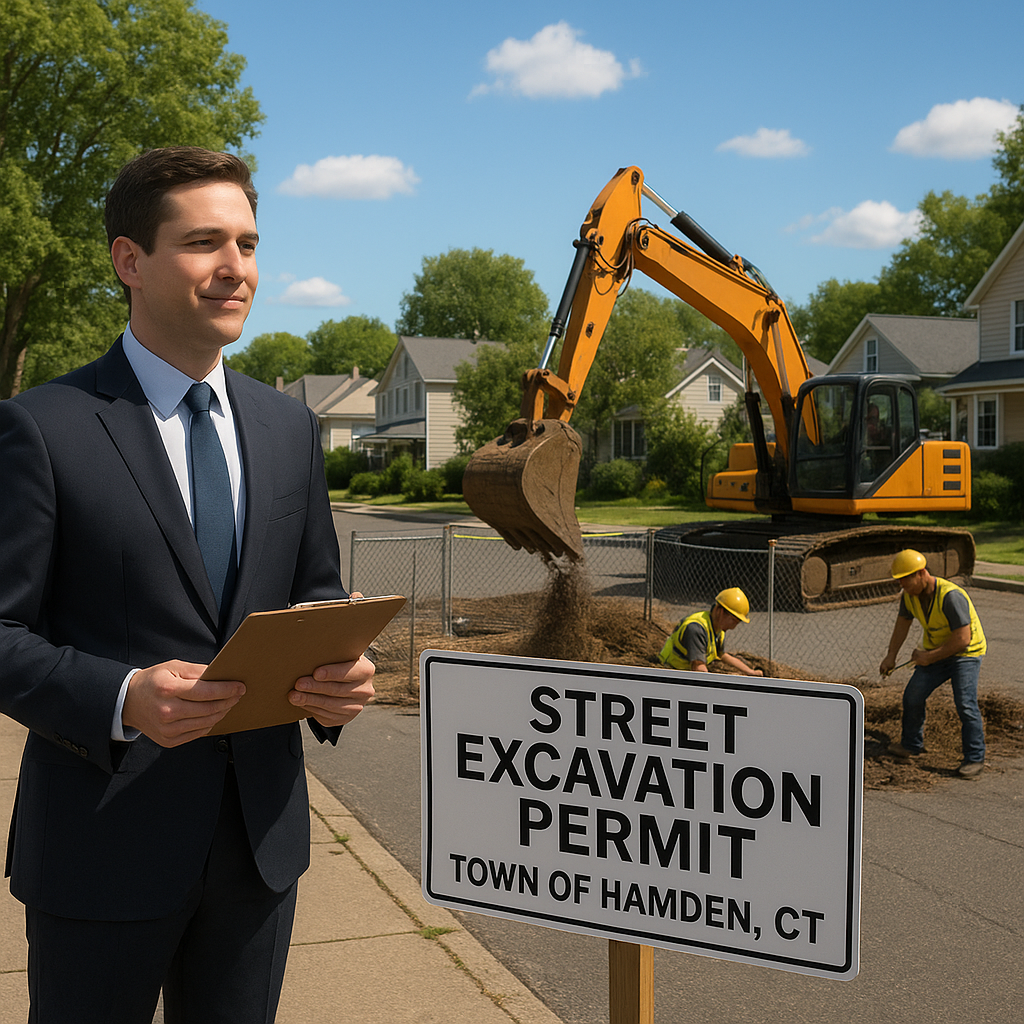
Have you ever watched a road crew tear up a street to fix a water main or install new fiber optic cables and wondered, “Who makes sure they put everything back the way it was?” That’s exactly where Hamden CT street excavation bonds and the town’s permit process come into play. If you’re a contractor, a utility company, or even a homeowner planning a project that involves digging into public right-of-way, understanding these rules isn’t just a good idea—it’s a must. Let’s walk through the entire process together, using plain language and practical examples, so you know exactly what to expect before the first shovel hits the ground.
What Exactly Is a Street Excavation Bond?
Think of a street excavation bond as a financial safety net for the Town of Hamden. It’s a promise that any work done in public streets, sidewalks, or curbs will be restored properly and in line with town standards. This isn’t some random fee—it’s a guarantee backed by a surety company. If the contractor leaves a trench sinking, pavement crumbling, or a sidewalk a tripping hazard, the town can dip into that bond to fix the mess without spending taxpayer dollars.
You can picture it like a security deposit when you rent an apartment. The landlord holds it to cover any damage beyond normal wear and tear. Similarly, Hamden holds the bond to ensure that the street excavation doesn’t harm the community’s infrastructure long after the project is “done.”
Who Needs a Street Excavation Permit and Bond in Hamden?
It’s a common question, and the answer covers a lot of ground. Generally, anyone who plans to cut, dig, excavate, or disturb the surface of any public street, alley, or right-of-way within the Town of Hamden must obtain a street excavation permit and post the required bond. This group includes:
- Utility companies laying gas, water, sewer, electric, or telecom lines.
- Private contractors installing driveway aprons, curbs, or under-road utilities for new homes and businesses.
- Homeowners who hire contractors for sidewalk repair or to run a service line from the main to their property.
- Landscaping or tree work that requires digging into the public right-of-way.
Even a seemingly small project, like trenching across a quiet suburban street for a sprinkler system, can trigger the requirement. The key factor is whether the work impacts land owned by the town. When in doubt, calling Hamden’s Engineering or Public Works Department early can save you a giant headache later.
The Step-by-Step Permit Process in Hamden, CT
Getting through the Hamden CT street excavation permit process feels a lot smoother once you break it into clear bites. Here’s a friendly overview of the typical path:
Start with a Detailed Application
You’ll need to fill out an application that spells out the scope of work, location, dimensions, and timeline. Don’t rush this part. The town wants to know exactly which streets you’ll touch, how deep you’ll dig, and what kind of restoration you’ll perform. Attach clear maps and drawings. If you skimp on details now, the review process will stretch out and your project might stall.
Show Your Traffic Control Plan
Safety is a big deal. Hamden will require a traffic control plan that shows how you’ll protect drivers, pedestrians, and your own crew during construction. That means proper signage, cones, barriers, and possibly flaggers. It’s not just a paperwork exercise—a thoughtful plan reduces accidents and keeps everyone moving safely around the work zone.
Secure the Bond Before Work Begins
Here’s the heart of the matter. The town will calculate a street excavation bond amount based on the extent of the work, the road type, and the estimated cost of restoring the surface to its original condition. You can’t simply write a check for the full amount; you need to purchase a surety bond from a licensed agency. The bond document must name the Town of Hamden as the obligee, and you’ll submit it along with your permit application or before the permit is issued. We’ll dive deeper into bond costs and mechanics in a moment.
Pay the Permit Fees
Beyond the bond, Hamden charges a permit fee. This fee covers the town’s administrative costs and inspections. Fees vary based on the square footage of the opening, the type of road (a major arterial road might cost more than a small residential lane), and any additional permits you need, like a sidewalk closure or lane rental. Always confirm the current fee schedule on the town’s official website or with the Engineering Department because these numbers can change annually.
Inspections: The Town Keeps an Eye on Things
Once you have your permit and bond posted, the real work begins—and so do the inspections. A town inspector will visit the site to check that the base is properly prepared, backfill is compacted correctly, and the final paving patch meets Hamden’s standards. Don’t view these visits as a nuisance. They’re actually your best friend if you want to release your bond liability later. Failing an inspection means expensive rework, so getting it right the first time is worth every ounce of effort.
How Much Does a Hamden Street Excavation Bond Cost?
This is where many contractors raise their eyebrows, but the cost is much smaller than you might think. The bond amount is determined by the town—often starting around $5,000 to $10,000 for smaller residential jobs and climbing to $50,000 or more for large commercial utility projects along main roads. But here’s the relief: you don’t pay the full bond amount upfront. You pay a premium, which is a small percentage of that total amount. For someone with good credit and a solid work history, the premium typically ranges from 1% to 5% of the bond value. So a $10,000 bond might only cost you $100 to $500 per year.
Your premium depends heavily on your personal or company credit score and the perceived risk. A contractor with a track record of timely, quality restorations will enjoy lower rates. A newcomer or someone with a less-than-stellar history might pay a bit more. It’s a lot like car insurance—the safer and more reliable you look, the better the deal.
A Deeper Look at the Bond: How It Protects Everyone
Let’s use an everyday analogy. Imagine you borrow your neighbor’s truck to haul supplies. You promise to return it washed and with a full tank. To give your neighbor peace of mind, you hand them a deposit check. If you bring the truck back muddy and empty, they cash the check to cover the cleaning and fuel. That’s exactly the role a Hamden CT street excavation bond plays between you and the town.
If you complete the work perfectly and pass the final inspection, your bond obligation eventually ends. Many bonds remain in effect for a maintenance period, often one to two years, to ensure the patch job holds up through freeze-thaw cycles and traffic. If all goes well past that window, the bond is released and you can put the matter behind you. But if a sinkhole opens up six months later because of poor compaction, the town can make a claim against your bond. At that point, the surety company pays the town to cover repairs—and then the surety will come back to you for reimbursement because you’re ultimately responsible for fulfilling the bond’s promise.
What Happens If You Skip the Process?
You might be tempted to do a quick little dig without pulling a permit, especially for a project that looks like “no big deal.” That’s a dangerous gamble. The Town of Hamden takes street excavation regulations seriously. Working without a permit can lead to immediate stop-work orders, fines that multiply quickly, and even being held liable for any damage to underground utilities or road failures. Worse, you’ll probably be asked to post an even higher bond retroactively and may face difficulty getting permits in the future. The short-term shortcut nearly always costs more than following the rules from day one.
Practical Tips for a Smooth Excavation Experience in Hamden
A little preparation goes a long way. Keep these pointers in your back pocket:
- Call before you dig: This is a state law. Dial 811 to have underground utilities marked. It’s free, it’s fast, and it prevents you from hitting a gas line or fiber cable.
- Visit the Town’s Engineering Department early: Don’t guess about bond amounts or requirements. The staff can walk you through the current application, bond forms, and fee schedules. They’d much rather answer questions upfront than deal with a mess later.
- Choose a surety agency familiar with municipal bonds: Not all agencies understand the specific wording Hamden requires. Working with an agency that regularly handles Connecticut towns’ street excavation bonds can save you from paperwork rejections.
- Document everything with photos and notes: Pictures before, during, and after the excavation can protect you if a question arises about pre-existing damage or the quality of your restoration.
- Schedule inspections proactively: Don’t wait until the last minute. Giving inspectors adequate notice keeps your project timeline on track.
Why This Process Matters to the Whole Community
We all share the roads. Every time a contractor opens a street in Hamden, hundreds or thousands of drivers, cyclists, and pedestrians rely on that surface being returned to a safe, smooth condition. A poorly done patch becomes a pothole that rattles cars and damages suspensions. A settled trench can redirect water and create icy patches in winter. The street excavation permit and bond system is the town’s way of saying, “We trust you to do the work, but we’ll verify it’s done right.” It keeps neighborhoods safe, preserves property values, and protects the town’s budget. When you participate fully in the process, you’re not just checking a bureaucratic box—you’re being a good neighbor to everyone who calls Hamden home.
Common Questions People Ask
It’s normal to still have a few lingering thoughts after reading all of this. Let’s tackle them in a quick, straightforward way.
Is a cash bond an option instead of a surety bond? In some cases, Hamden may accept a cash or certified check held in escrow as the security, but a surety bond is the standard route. Cash ties up your working capital, so many professionals prefer the surety path.
How long does the permit take to get approved? Turnaround varies with workload and completeness. A well-prepared application with all documents attached often yields a permit within days to a couple of weeks. Complex projects or incomplete submissions take longer.
Does a homeowner need a bond for a small DIY sidewalk repair? Yes, if the work is in the public right-of-way. Even DIY projects typically require a permit and some form of security. But the amounts are usually lower, and the Engineering staff can explain the simplest path for residents.
What if the bond amount seems too high for my small job? Reach out and discuss the scope. Bond calculations are based on estimated restoration costs. If you can demonstrate that the impact is minimal, the town might adjust the figure.
Wrapping It All Together
Navigating the Hamden CT street excavation bond and permit world doesn’t have to be intimidating. With a clear understanding of why bonds exist, who needs them, and what steps to follow, you can move from confusion to confidence. Remember, the Town of Hamden’s goal isn’t to slow you down—it’s to make sure that every road cut is restored so seamlessly that you’d never know the ground was opened in the first place. By securing the right bond, filing a thorough permit, and honoring the restoration standards, you protect your reputation, your wallet, and the streets that connect us all. So whether you’re laying a new sewer line or just repairing a sidewalk panel, take the time to do it by the book. Your future self—and everyone who drives over your work—will thank you.