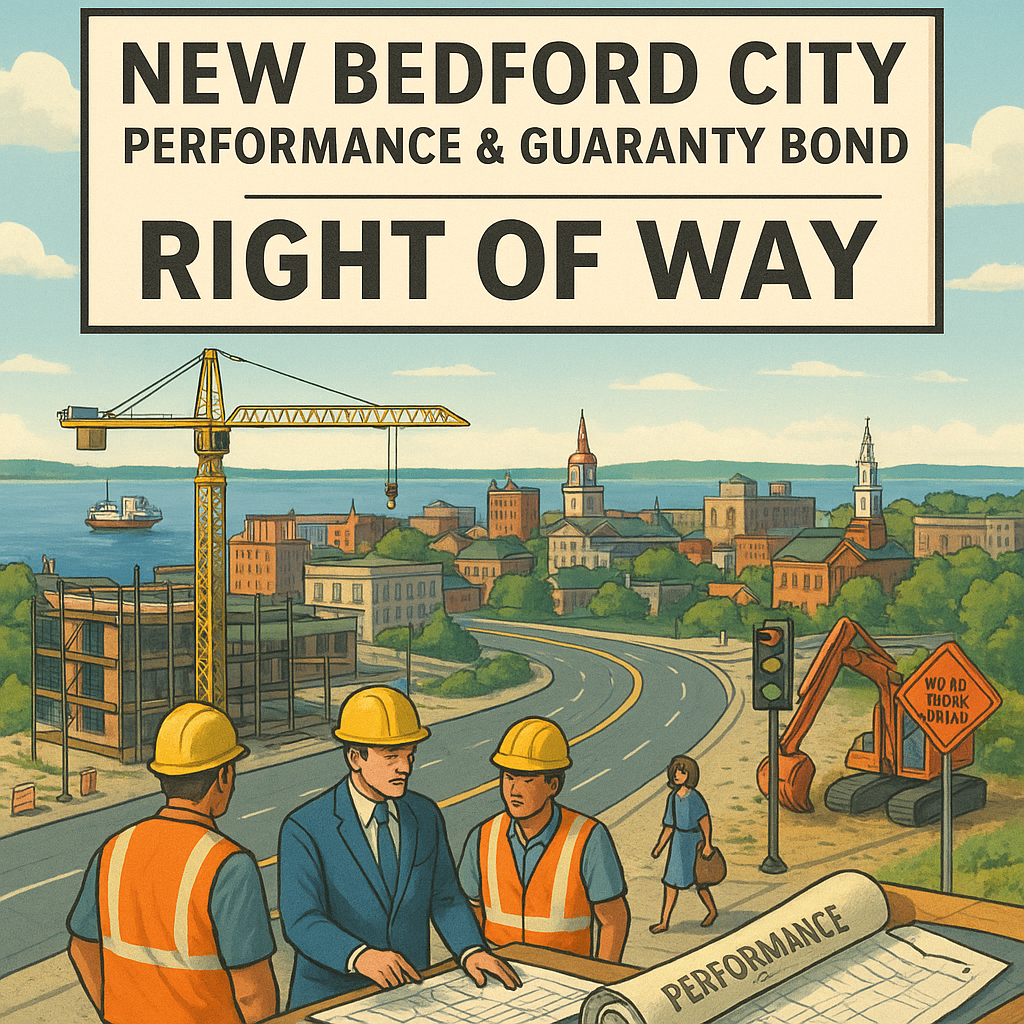
New Bedford is introducing a Right of Way Bond initiative requiring contractors and utility companies working in public spaces to secure a Performance & Guaranty Bond, ensuring proper job completion and covering repair costs. This measure aims to protect infrastructure, increase contractor accountability, and align with best practices in other communities.
What Is a Right of Way Bond?
Let’s break this down in plain English. A Right of Way Bond is a specific type of surety bond. Think of it as a financial promise. When a contractor or utility company needs to dig up a public street, sidewalk, or any part of the city’s right-of-way, New Bedford wants assurance the job will be done right. The bond acts like a safety net for the city and its residents. The official name often includes “Performance & Guaranty Bond,” which tells you its purpose: it guarantees performance of the work and guarantees any necessary repairs afterward.
Here’s a simple way to picture it. Imagine you’re lending a friend your favorite power tool. You might ask for a small deposit, just in case it comes back broken. The Right of Way Bond is New Bedford’s deposit. The city doesn’t want to end up with a crumbling patch in a brand-new road after a utility project. The bond ensures there’s money set aside to fix any problems if the contractor doesn’t.
Why Is New Bedford Rolling Out This Initiative?
If you’ve driven around any growing city, you know the drill. A street gets paved, everything looks great, and then a few months later a crew shows up to cut a trench right down the middle. The patch job often never quite matches the surrounding surface. Puddles form. Cracks appear. Everyone feels frustrated. New Bedford’s new Right of Way Bond initiative is a direct response to that cycle.
The city wants to raise the bar for public infrastructure work. By requiring a Performance & Guaranty Bond anytime someone works in the right-of-way, officials add a layer of accountability that didn’t always exist. The goal isn’t to make life harder for local contractors. It’s to protect shared spaces and avoid expensive emergency repairs that taxpayers eventually foot. The bond holds contractors to a clear standard and gives the city a fast, reliable way to recover costs if something goes wrong.
This move also aligns with best practices seen in other forward-thinking communities. Cities across Massachusetts and beyond have long used right-of-way bonds to safeguard their pavement, utilities, and landscaping. New Bedford is simply modernizing its approach to match the reality of constant construction and aging underground infrastructure.
Who Needs a New Bedford City Performance & Guaranty Bond?
This requirement casts a wide net. If your work involves breaking ground within the public right-of-way, you’ll likely need one. Examples include:
- Utility companies installing or repairing gas, water, electric, or telecom lines.
- General contractors doing road widening, sidewalk replacement, or curb work.
- Plumbers and excavators connecting new buildings to city sewer and water mains.
- Fiber-optic and cable installers laying lines along residential streets.
- Demolition crews whose work impacts adjacent sidewalks or streets.
In short, if a project touches anything owned by the city, the bond is your ticket to getting a permit. Even smaller local businesses, like a landscape company installing an irrigation line under a sidewalk, may fall under the new rules. Always check with New Bedford’s Department of Public Infrastructure before you start digging. It’s far better to ask upfront than to face a stop-work order later.
How Does a Right of Way Performance & Guaranty Bond Work?
The bond involves three parties, but the concept is straightforward. The city (called the obligee) receives the protection. The contractor or utility (the principal) must buy the bond. An insurance or surety company (the surety) backs the bond.
Here’s the flow. You, as the contractor, purchase the bond and file it with your permit application. The bond sets a specific coverage amount, often based on the project scope. You then complete the work according to city specifications. Once the city inspects and approves the restoration, the bond’s obligation eventually ends. If, however, you leave a sunken trench or damage a city water line without proper repair, New Bedford can file a claim against the bond. The surety company investigates. If the claim is valid, the surety pays the city up to the bond’s full amount. But—and this is a big one—the contractor must reimburse the surety for every penny paid out. A bond isn’t insurance for the contractor. It’s a guarantee backed by the contractor’s own assets and reputation.
This structure keeps everyone honest. The city feels secure. The surety screens contractors carefully because they don’t want to pay claims. And contractors are motivated to do flawless work to avoid triggering a claim that could hurt their future bonding ability.
What Does a New Bedford, MA Right of Way Bond Cost?
Don’t confuse the bond amount with the price you pay. If the city requires a $50,000 bond, you aren’t writing a $50,000 check. You pay a small percentage as an annual premium. For well-qualified contractors, that premium often falls between 1% and 3% of the total bond amount. In this example, you might pay $500 to $1,500 per year.
The exact cost depends on a few things. Surety companies look at your personal credit score, business financials, and experience level. A contractor with solid credit and several years of clean work history can expect the lowest rates. Someone just starting out or with dings on their credit might pay a little more. But the good news is many surety agencies offer programs specifically designed to help new contractors get bonded. This initiative doesn’t have to be a barrier. It’s a step toward building credibility.
Also, bond amounts aren’t random. They usually match the estimated cost of restoring the right-of-way if everything had to be redone. A tiny curb cut may only need a $10,000 bond. A multi-block water main replacement could require a much larger bond. Work with your surety agent and the city to pinpoint the right amount before you quote your project.
Steps to Secure Your New Bedford Right of Way Bond
Getting bonded feels unfamiliar the first time, but the process is quick once you know the drill:
- Confirm the requirement. Talk to the city’s engineering or public works department. Ask what bond form they need, the exact amount, and any special language they require.
- Gather your paperwork. You’ll usually need basic business info, a completed application, and sometimes recent financial statements. A strong credit history helps, but don’t worry if you’re not perfect. Some carriers focus on smaller accounts.
- Request quotes from a specialized surety agency. An agency that writes contract and commercial bonds regularly will know the ins and outs of New Bedford’s specifications. They can shop your application across multiple surety companies to get you the best rate.
- Pay the premium and get your bond form. Once approved, you pay the annual premium. The agency then issues the official bond document.
- File the bond with your permit. Submit the original bond along with your right-of-way permit application. The bond must be in place before the city signs off on your permit.
Plan for a little lead time. A straightforward application can often be turned around in 24 to 48 hours. More complex cases might take a few days. Build that buffer into your project schedule so you’re not scrambling at the last minute.
Real Benefits for the Community and Honest Contractors
It’s easy to see the bond as just one more hoop to jump through. But look closer, and it actually creates a fairer playing field. The initiative rewards contractors who take pride in their work. It filters out those who might cut corners, finish poorly, and leave town. When every contractor in the right-of-way has skin in the game, quality rises across the board.
Residents win, too. Nobody likes driving over a rattling metal plate that’s been in place for weeks. A properly installed and restored road means fewer potholes, fewer flat tires, and quieter streets. Emergency repairs plummet because the original work was done correctly. The bond protects the curb appeal of neighborhoods and the long-term value of public property.
What about the local economy? Surprisingly, it can benefit. When the city trusts its contractors, projects move faster. Fewer disputes. Faster inspections. More money stays in the community rather than being consumed by fix-it crews. A robust bonding requirement also signals to larger infrastructure investors that New Bedford takes its public assets seriously. That quiet confidence can attract new business.
Common Questions About the New Bedford City Performance & Guaranty Bond MA
Is this the same as general liability insurance?
Not at all. Insurance protects the contractor against accidents. The bond protects the city and public against incomplete or substandard work. General liability won’t pay to repave a street that settles because a trench was improperly compacted. The bond will.
What if I only do small, one-day jobs?
Even small jobs can cause big problems. A poorly backfilled water service connection can sink and create a hazardous dip. New Bedford typically sets bond thresholds based on the nature of the cut, not the duration of work. Always confirm, but expect that most excavation in the public way will trigger the requirement.
Can the bond be canceled?
Yes, but it’s not as simple as canceling a magazine subscription. The surety company must typically provide written notice to the city, and there’s often a waiting period—commonly 30 to 60 days—before cancellation takes effect. During that window, the contractor must get a replacement bond or wrap up work and get final acceptance. Letting the bond lapse can lead to immediate permit suspension.
How long does the bond obligation last?
It’s tied to a maintenance period. The city usually holds the bond until the restoration passes a final inspection and survives a set amount of time, often one year, through all seasons. If the patch holds up after winter freezes and spring thaws, the bond can be released.
Making the Bond Work for You
Instead of viewing this as a burden, think of it as a mark of professionalism. When you hand a client a bid that includes the cost of a proper New Bedford Right of Way Bond, you’re telling them you operate by the book. That trust can set you apart from less-prepared competitors. Many property owners and developers actually prefer bonded contractors because it reduces their own risk.
Build a relationship with a surety agent before you need the bond. That way, when a great project lands on your desk, you can act fast. Ask your agent about a bonding line that covers multiple small jobs instead of buying a fresh bond every time. It can simplify your paperwork and save money in the long run.
As New Bedford continues to grow and renew its infrastructure, staying ahead of these rules keeps your business resilient. The right-of-way network touches every home and storefront. Protecting it isn’t a bureaucratic whim—it’s a shared responsibility. And the bond program makes sure that responsibility comes with a real guarantee.
So, is your crew ready to dig into the next New Bedford job? Check your permit requirements early, lock in your bond, and pave the way for work that leaves the city better than you found it.