Navigating demolition projects in Boston requires securing a Demolition/Foundation Permit Bond, a financial guarantee that protects the city and third parties from damages or safety violations. This surety bond shifts liability onto contractors, ensuring compliance with city codes and covering costs for any harm to adjacent properties, public infrastructure, or utilities.
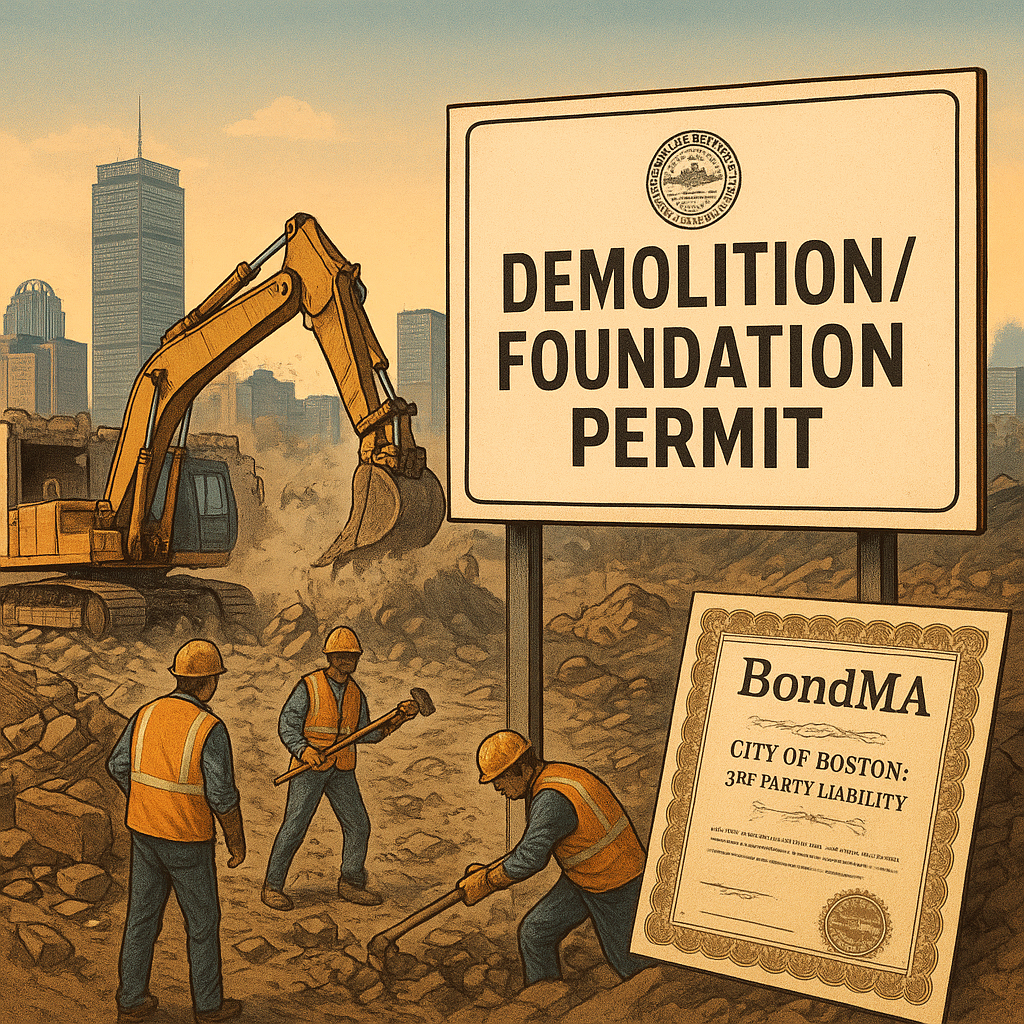
Thinking about taking on a demolition project in Boston? Whether you’re a seasoned contractor or tackling a first-time teardown in the city, there’s a critical piece of paperwork you can’t afford to overlook. It’s not just about permits and blueprints. The City of Boston requires a specific type of financial guarantee called a Demolition / Foundation Permit Bond. This bond plays a huge role in protecting the public, property, and your business’s reputation. So, let’s break it all down in plain, simple terms, no confusing legal talk involved.
What Exactly Is a Demolition Permit Bond?
Picture this: you’re renting an apartment and the landlord asks for a security deposit. That deposit isn’t a fee—it’s money set aside just in case something goes wrong, like damage to the unit. A demolition permit bond works in a similar way, but on a much bigger scale. It’s a promise, backed by a surety company, that you’ll follow all city rules, building codes, and safety standards when tearing down or excavating a site. If you don’t, there’s money available to fix the problem. You can think of it as a safety net for the City of Boston and the people who live there.
Officially, this bond is often called the “City of Boston MA Demolition / Foundation Permit Bond.” It’s a type of license and permit surety bond. Before you swing a wrecking ball or dig a foundation, Boston requires you to secure this bond. The bond guarantees that you’ll do the job right—protecting adjacent properties, public streets, underground utilities, and the overall well-being of the neighborhood.
Why Boston Makes This Bond a Must-Have
Boston is an old city with a rich history. Its streets are narrow, its buildings are packed tightly together, and a lot of structures are well over a century old. That means demolition here isn’t a simple “knock it down and haul it away” job. A small mistake can crack a neighbor’s foundation, sever a gas line, or send debris tumbling into a busy sidewalk. The city requires this bond to shift the financial risk away from taxpayers and onto the contractor and their insurance providers. It’s a way for the city to say, “We trust you to do the work, but we need a solid backup plan.”
When you pull a demolition or foundation permit in Boston, you’re agreeing to a set of strict conditions. If you damage public property, fail to properly shore up an adjacent building, or leave a site unsafe, the city can make a claim against your bond. The surety company would pay out to cover the damages, and then you’d be responsible for repaying that amount. It’s a cycle of accountability that keeps everyone on their toes.
Third-Party Liability: The Heart of the Matter
One of the most important terms you’ll see attached to this bond is “third-party liability.” But what does that actually mean for you? Simply put, it’s about protecting people and property who aren’t directly part of your contract. Your crew is one party, the property owner is the second, and literally everyone else—neighbors, pedestrians, adjacent business owners, utility companies—are the third parties.
Imagine a scenario where vibrations from your excavator cause a crack in the wall of the historic brownstone next door. The owner of that brownstone is the innocent third party. Without a bond, they might have to sue you and your business directly, spending months or years chasing compensation. With the bond in place, they have a clear, faster path to get the money needed to repair that crack. The bond acts like a pre-funded damage fund, making sure the little guy doesn’t get left holding the bag for your mistake.
How the City of Boston Demolition Bond Works in Real Life
Let’s walk through a few everyday examples to make this crystal clear:
- The Sidewalk Scenario: Your team is removing a concrete foundation, and a dumpster haul off scratches up a freshly laid public sidewalk. The city inspects the damage and files a claim on your bond to cover the cost of pouring new concrete.
- The Shared Wall Surprise: You’re demolishing a free-standing garage, but it turns out the back wall was actually attached to the neighbor’s fence and shed. The tear-down pulls part of their shed with it. That neighbor can make a third-party claim against your bond to rebuild what was damaged.
- The Underground Mishap: While digging a new foundation hole, an operator hits an unmarked fiber optic cable, cutting off internet service for an entire block. The utility company can seek compensation through the bond to expedite repairs and cover service losses.
In each case, the bond isn’t just a piece of paper—it’s the tool that turns a potential legal nightmare into a manageable, resolvable issue. It keeps projects moving and relationships intact.
Permit and Bond Requirements: What You Need to Know
Before you get started, you’ll need to apply for your demolition or foundation permit through the City of Boston’s Inspectional Services Department (ISD). The bond requirement will be spelled out in your permit conditions. The bond amount can vary depending on the scope and scale of the project. A small residential garage teardown might require a lower bond amount than a massive commercial demolition project covering an entire city block. Your surety bond provider can help you understand the exact figure the city is asking for.
Typically, you’ll have to show proof of this bond before the city issues the final permit. That means you can’t wait until the last minute. Building a little extra time into your project timeline for the bonding process is always a smart move.
How to Get a Boston Demolition Bond
Getting this bond is a lot simpler than it sounds. Most contractors work with a surety bond agency that specializes in construction and contractor bonds. You’ll fill out an application, and the agency will run a quick check on your credit and business history. Don’t panic if your credit isn’t perfect. Surety companies focus on your track record as a contractor more than anything else. If your finances are solid and your business history is clean, you could be approved in as little as 24 hours.
You’ll pay a small percentage of the total bond amount as your premium. For example, if the city requires a $20,000 bond, your premium might be just a few hundred dollars a year. It’s a small price to pay for the amount of protection and credibility it buys you.
What This Means for Homeowners and Property Developers
Maybe you’re not a contractor at all—you’re a homeowner hiring someone to tear down an old sunroom or a developer planning a new condo building. Why should the demolition bond matter to you? Because it’s your first line of defense. A contractor who has secured the proper bond is demonstrating they are legitimate, vetted, and financially responsible. They’re not cutting corners to save a buck. You can ask to see their bond certificate before signing any contract. If they hesitate or can’t produce one, that’s a giant red flag.
It also protects you from being named in a lawsuit. If an uninsured contractor damages a neighbor’s property on your land, that neighbor might come after you as the property owner. A bonded contractor creates a buffer, so the claim is handled through the bond and the contractor’s insurance, not your homeowner’s policy. Peace of mind is worth a great deal.
Common Misconceptions About Demolition Bonds
Let’s clear up a few myths that often float around the construction world:
- “It’s the same as insurance.” Not exactly. Insurance protects you and your business. A bond protects the public and the city. If a claim is paid out, the surety company will come back to you for every penny. It’s more like a line of credit than a traditional insurance policy.
- “It’s optional if I’m careful.” Absolutely not. The City of Boston won’t issue a permit without it. No bond, no permit, no project. Simple as that.
- “Any bond will do.” The bond must be specific to demolition or foundation work in Boston. A generic contractor license bond won’t cut it. Make sure your bond exactly matches the wording the city asks for.
Keeping Your Bond in Good Standing
Once you have your bond, the job isn’t over. You need to protect it. The best way to avoid claims is to over-communicate with neighbors, thoroughly document the existing condition of adjacent properties before you start, and never skip safety steps. Take photos, install protective fencing, follow your engineered shoring plans, and respect work hour restrictions. If a neighbor complains about minor cracks, address the issue quickly out of pocket rather than letting it fester into a bond claim. Claims raise your premium rates and can make it harder to get bonded for future projects. A little proactive care goes a long way.
Moving Forward with Confidence
Demolition work in Boston is challenging, but it’s also incredibly rewarding. You’re often clearing the way for new homes, updated businesses, and vibrant community spaces. The demolition permit bond isn’t an obstacle—it’s a badge of trust. It tells the city, your neighbors, and your clients that you stand behind your work with real financial backing.
Are you getting ready to pull a permit for a teardown in Dorchester, a foundation dig in South Boston, or a gut renovation in the Back Bay? Make the bond one of the very first items on your checklist. Gather your paperwork, reach out to a trusted surety bond professional, and get that coverage locked in place. When the excavator starts rumbling and the walls come down, you’ll be glad you have more than just hard hats protecting everyone involved. You’ll have the solid, dependable safety net that keeps Boston strong, safe, and always moving forward.