Contractors performing drain work in Fall River, Massachusetts must secure a drain layer bond, a three-party financial guarantee that protects the city by covering repair costs if public right-of-ways are not properly restored. This bond is required for any job involving installation, repair, or connection of private drain lines to municipal sewer or stormwater systems.
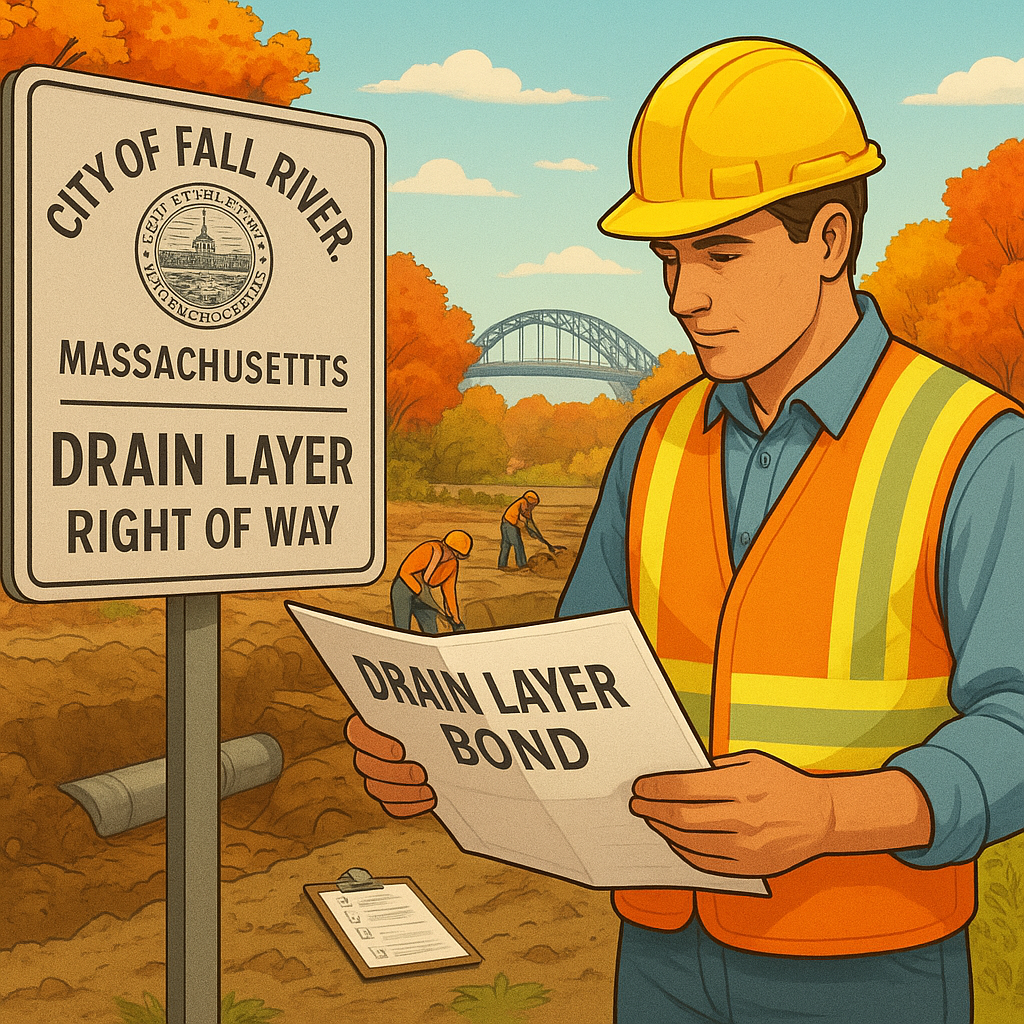
So, you’re a contractor working in the Fall River area. Maybe you just landed a job that involves installing, repairing, or adjusting a drain line that connects a private property to the city’s main sewer or stormwater system. Or perhaps you’ve heard the term “drain layer bond” floating around and you’re scratching your head. Don’t worry—you’re in the right place. We’re going to break down everything you need to know about drain layer bonds in Fall River, Massachusetts in plain, everyday language. No confusing legal jargon, just the facts served up in a friendly way.
What Exactly Is a Drain Layer Bond?
Think of a bond like a three-way promise. A drain layer bond—often called a Drain Layer Right-of-Way Bond—is a type of surety bond required by the City of Fall River. It’s not insurance for your business; it’s a financial guarantee that protects the city and its residents. Here’s the simple breakdown:
- The Principal: That’s you, the drain layer or contractor.
- The Obligee: That’s the City of Fall River, the entity requiring the bond.
- The Surety: The company that backs your bond and promises to pay if something goes wrong.
If you dig up a city street or sidewalk to access a drain line and don’t restore it properly—or if your work violates local codes—the bond kicks in to cover the cost of fixing the mess. It’s the city’s way of saying, “We trust you, but we also want a safety net.”
Why Does Fall River Require This Bond?
If you’ve ever driven through a New England town, you know how cherished those historic streets and compact neighborhoods are. The City of Fall River is no different. When someone cuts into a public right-of-way—think sidewalks, streets, curbs, or even the strip of grass between the sidewalk and the curb—the city wants the peace of mind that everything will be put back exactly as it was, or better.
Imagine a scenario where a drain layer fixes a clogged sewer line, backfills the trench, and just throws down a temporary patch of asphalt. Months later, that patch sinks, creating a pothole that swallows a car tire. Without a bond, the city might have to chase the contractor down for repairs, costing taxpayer dollars and creating headaches. The Fall River drain layer bond ensures that there’s a dedicated pool of money available to make things right, quickly and without a lengthy fight.
Who Needs a Drain Layer Bond in Fall River?
Typically, any contractor who performs work within the public right-of-way connected to drainage systems must post this bond before pulling a permit. You might need one if you’re involved in:
- Installing a new sewer or drain lateral from a house to the city main.
- Repairing or replacing cracked, collapsed, or root-infested drain pipes.
- Connecting a sump pump or footing drain to the municipal storm drain system.
- Trenching across a sidewalk or roadway to reach a connection point.
Essentially, if your tools touch city-owned asphalt, concrete, or unpaved right-of-way and you’re doing drain work, the city wants you bonded. It’s a non-negotiable part of the licensing and permitting process. Even if you’re a seasoned pro who’s done this a hundred times, the rule still applies equally to every contractor.
The Cost of a Drain Layer Bond in Fall River, MA
Let’s talk dollars and cents because that’s what most folks really want to know. The bond amount the city requires is set—often $5,000 or $10,000, but you’ll want to check the latest city ordinance or ask the permitting office for the exact figure. That’s the “penal sum,” the maximum amount the surety would pay out.
But you won’t pay that full amount. You pay a small percentage, called the premium. For a bond where the required amount is $5,000, you might pay as little as $100 – $250 per year, depending on your credit and financial history.
Here’s the kicker: even if your credit isn’t perfect, you can still likely get bonded. Many surety companies offer programs for individuals with less-than-stellar credit, though the premium might be a bit higher. Think of it like a security deposit that’s calculated based on your reliability score. You don’t need to tie up thousands of dollars in cash; you just pay a modest annual fee and the full bond limit is available if a claim ever arises.
How to Get a Fall River Drain Layer Bond: A Painless Process
Getting bonded doesn’t have to feel like running a bureaucratic gauntlet. In fact, it can be surprisingly quick. Here’s the usual roadmap:
- Confirm the exact requirements. Call Fall River’s Department of Public Works or the city’s engineering division. Ask: “What is the bond amount needed for a drain layer right-of-way permit?” They might also provide the bond form you’ll need.
- Reach out to a surety bond agency. You don’t have to go through a giant commercial insurer in a skyscraper. Many specialized bond agencies work entirely online or over the phone and understand municipal bonds inside and out.
- Fill out a simple application. You’ll provide basic business info, your name, address, and sometimes a social security number for a soft credit check. It’s painless—think of it like applying for a rental application.
- Get your quote and pay the premium. In many cases, you’ll get a quote within minutes. Pay the premium, and the agency will issue your bond.
- File it with the city. The original bond document goes to the city. Keep a copy for your records, and you’re ready to pull that permit.
Pro tip: Some agencies can even e-file the bond directly with Fall River, saving you a trip downtown. Nothing beats the feeling of clicking “submit” and having that item checked off your list.
Drain Layer Bond vs. Insurance: Don’t Get Them Confused
I often hear, “But I already have liability insurance, isn’t that enough?” It’s a fair question, and the answer highlights an important distinction. Your general liability insurance protects you if something goes wrong on the job—if a pipe bursts and floods a basement, your insurance steps in to cover the damages and legal fees.
A bond, on the other hand, protects the city (and indirectly, the public). Plus, there’s a big financial string attached: if a claim is paid out on your bond, the surety company will come back to you for every single penny. You’re ultimately on the hook. Insurance handles the risk and spreads it out; a bond acts like a credit line that you must repay if it’s used. Bringing both to the table shows the city you’re responsible, well-rounded, and serious about your trade.
What Happens If Something Goes Wrong?
Let’s paint a real-world picture. You finish a drain line replacement in front of a beautiful triple-decker on Rock Street. The trench in the asphalt was patched. A year later, after a harsh New England freeze-thaw cycle, that patch sinks four inches. The homeowner complains, and the city inspects. They see it’s clearly substandard work related to your trench.
The city can then make a claim against your drain layer bond. The surety will investigate, and if they find the claim valid, they’ll pay the city up to the bond limit to properly repave the section. Then, the surety will turn to you and say, “We need to be reimbursed for what we paid out.”
It’s not a punishment—it’s accountability. And it’s exactly why doing the job right the first time, using proper compaction and materials, is so crucial. A solid bond program encourages top-notch workmanship, which protects your reputation and wallet simultaneously.
Keeping Your Bond in Good Standing
Once you have your bond, staying compliant is mostly about following the rules the city has set. A few key reminders:
- Renew on time. Most bonds run for one year. Put the expiration date on your calendar and treat it like your license renewal.
- Notify your surety of big changes. If you change your business structure—like going from a sole proprietor to an LLC—update the bond accordingly.
- Permit properly. Never do right-of-way work without the active permit in hand. Unpermitted work can be a fast track to a claim and could jeopardize your ability to get bonded in the future.
- Repair with pride. The best way to avoid bond claims is to do such a great job that the city barely remembers you were there, except to note the neat restoration.
Common Questions Contractors Ask About Drain Layer Bonds
Can I use a generic surety bond form?
Usually no. Fall River likely has a specific bond form that must be used. Always grab the city-approved form from the clerk’s office or website, and make sure the surety agent uses that exact document.
Is a drain layer bond the same as a sewer bond or utility bond?
Almost, but you need to be precise. Fall River may call it a “Drain Layer – Right of Way” bond. Always use the exact terminology the city uses. If you ask for a generic utility bond, you might get the wrong type and have to start over.
What if I only do emergency repairs?
Emergencies can be tricky. The city might have a process for retroactive permits, but you’d be taking a huge risk without a bond already in place. It’s far safer to get bonded before the phone rings in the middle of a rainstorm. Think of it as preparation, not an obstacle.
Does my bond cover work on private property?
No. The bond is specifically for work in the public right-of-way. A collapsed pipe under a homeowner’s front lawn that doesn’t extend into the sidewalk or street is generally outside the bond’s scope. You’d rely on your contract and insurance for protection there.
Why Fall River Takes Right-of-Way Work Seriously
Fall River is a city with rich history, from its mighty Battleship Cove to its tight-knit neighborhoods of weathered multi-family homes. The infrastructure underneath those streets is just as important as the stories above. Old clay pipes, century-old connections—every drain layer plays a role in keeping the community safe, dry, and sanitary. The bond requirement isn’t a hurdle; it’s a badge of trust the city gives to professionals who respect the public space. When you carry a valid Fall River MA drain layer bond, you’re telling the world you stand behind your work and you’re willing to back it up with a financial guarantee.
Ready to Get Bonded?
So, that’s the full scoop on drain layer bonds in Fall River. They’re straightforward, affordable, and essential for anyone working under the city’s streets and sidewalks. You don’t need to wrestle with complex terms or fear the process. A quick chat with a knowledgeable bond specialist can set you up in no time. And once you have that bond certificate in hand, you can focus on what you do best—laying those drains correctly, restoring the pavement neatly, and moving on to the next job, all while keeping Fall River’s foundations strong and secure.