Drain layers in Cromwell, Connecticut must secure a Compliance Only surety bond to guarantee their work adheres to town codes and regulations, protecting residents and infrastructure. This bond acts as a financial safety net, not insurance for the contractor, ensuring all drainage work meets local standards.
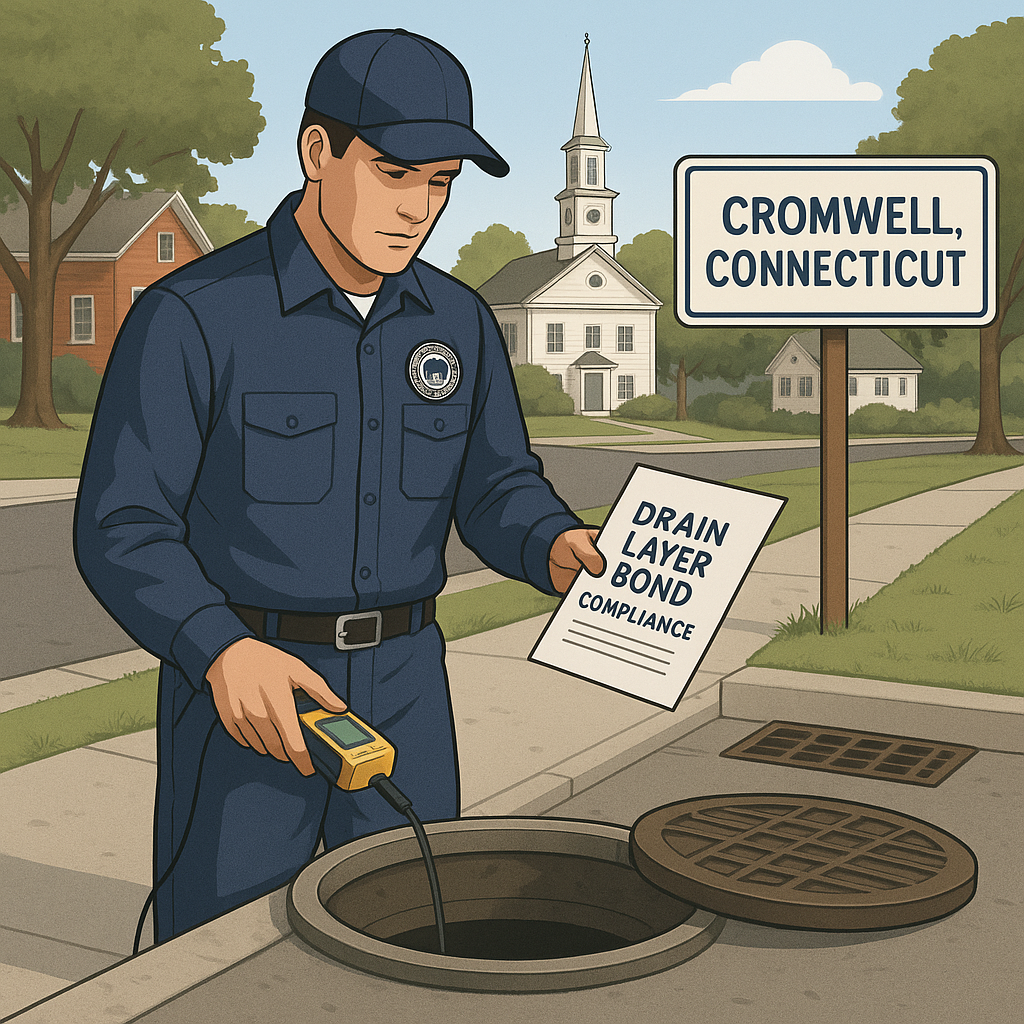
So, you’re a drain layer in Cromwell, Connecticut. Or maybe you’re about to become one. You’ve got the tools, the know‑how, and the crew ready to go. But then, someone mentions a “drain layer’s bond,” and suddenly it feels like you’ve hit a bureaucratic pothole. What even is it? Is it a tax? Insurance? A secret handshake at Town Hall?
Take a deep breath. You’re not alone, and it’s nowhere near as complicated as it sounds. In fact, once you understand the “why” behind it, this little piece of paperwork starts to make a whole lot of sense. Let’s walk through everything you need to know about the Town of Cromwell CT drain layer’s bond — the one marked “Compliance Only” — in plain, friendly English.
First Things First: What Exactly Is a Drain Layer’s Bond?
Imagine you’re loaning your favorite ladder to a neighbor. To make sure it comes back in one piece, you ask for a small deposit. If the ladder returns scratch‑free, your neighbor gets the deposit back. If it’s damaged, you use the deposit to fix it. A surety bond works kind of like that, just on a bigger scale.
A drain layer’s bond is a three‑party promise:
- The Principal: That’s you, the drain layer or contractor.
- The Obligee: The Town of Cromwell, Connecticut, requiring the bond.
- The Surety: The company that issues the bond and guarantees you’ll play by the rules.
If you do your work according to local codes and regulations, the bond sits quietly in the background. If you slip up and cut corners, the bond kicks in to make things right. It’s not insurance for you. It’s a financial safety net for the town and its residents.
The “Compliance Only” Part: Why Those Two Words Matter
You might have noticed that Cromwell specifically labels this a “Compliance Only” bond. That’s a big clue, and it actually makes your life easier. In the world of surety bonds, there are generally two types you’ll run into:
- Performance Bonds: These guarantee that you’ll complete the entire project. If you walk off a job, the bond covers the cost for someone else to finish it.
- Compliance Bonds (or License & Permit Bonds): These guarantee that, as long as you’re working, everything you do will meet the town’s codes, ordinances, and regulations.
Cromwell’s drain layer bond falls squarely into that second camp. The town isn’t asking the bond to babysit your project timeline or make sure you finish on budget. They’re asking for a promise that every trench you dig, every pipe you connect, and every backfill you compact follows the rules designed to keep groundwater clean, properties safe, and streets from flooding.
Why Does the Town of Cromwell, CT Require This Bond in the First Place?
It might feel like red tape, but there’s a very down‑to‑earth reason. Drainage work is one of those things that’s invisible until it goes wrong. A poorly installed drain line can quietly undermine a foundation, contaminate a drinking water well, or turn a neighbor’s basement into an accidental wading pool. Once the problem shows up, fixing it often means tearing up driveways, sidewalks, or even parts of the road.
By requiring a compliance bond, the Town of Cromwell creates a layer of financial protection. It says, “We trust you, but we also want to make sure that if a mistake happens, the money is there to correct it without sticking taxpayers with the bill.” Essentially, the bond helps keep everyone on the same page — you, the homeowner, and the town.
Who Needs a Drain Layer’s Bond in Cromwell?
If you put shovel to soil and handle subsurface water — even on your own property — you might be surprised who needs this bond. Generally, the requirement catches:
- Independent drain layers and plumbing contractors doing new installations or replacements.
- Excavation and site‑utility contractors whose work includes storm drains, footing drains, or dry wells.
- Any business owner pulling a permit specifically for drain‑related work within Cromwell’s town limits.
Not sure if you fall under the rule? A quick call to the Cromwell Building or Public Works Department can save you a headache. It’s always better to ask, “Am I covered?” before you start digging.
How Does the Bond Process Actually Work?
Here’s where the rubber meets the road — and trust me, it’s smoother than laying a brand‑new PVC pipe on a sunny day. Getting your Cromwell CT drain layer’s bond involves just a few steps.
Step One: Confirm the Required Bond Amount
The town sets the dollar figure. It’s the maximum amount the surety could pay out on a valid claim. Think of it as the coverage cap, not what you pay out of pocket. Typical license bonds in small to mid‑sized Connecticut towns often sit in the $5,000 to $10,000 range, but always check with Cromwell directly because requirements can change.
Step Two: Reach Out to a Surety Bond Provider
You don’t go to Town Hall to buy the bond. You go to a licensed surety company or an agency that specializes in contractor bonds. Many independent insurance agents in Connecticut can help you, and there are online platforms built for exactly this.
Step Three: Answer A Few Quick Questions
The application is usually simple — especially for a compliance‑only bond. You’ll share basic business details and, in most cases, permit a soft credit check. Don’t let the word “credit” spook you. For smaller bonds, the underwriting is lightning‑fast, and approval often happens the same day.
Step Four: Pay a Small Premium, Get Your Bond
Here’s the beautiful part. You don’t pay the full bond amount. You pay a premium — a tiny percentage, often as low as 1% to 3% of the bond total. So if Cromwell requires a $10,000 bond and your premium is 2%, you pay just $200. The bond is then issued, and you’re on your way to pulling permits.
What Does a Cromwell Drain Layer’s Bond Cost?
Since everyone’s situation is a little different, premiums aren’t one‑size‑fits‑all. The biggest factor is usually your credit score. A strong score can push premiums to the lowest possible rates. If your credit has a few dings, don’t panic. Many surety companies offer programs that look past a number and still get you bonded, sometimes for just a slightly higher premium.
You can generally expect:
- Excellent Credit (700+): Premiums around 1% – 2% of the bond amount.
- Good Credit (650‑699): Premiums roughly 2% – 3%.
- Credit Challenges: Premiums might climb to 5% – 10%, but specialized programs can keep it affordable.
For a compliance bond in Cromwell, we’re often talking about a cost that costs less than a nice pair of work boots — and you only pay it once for the bond term, typically one year. After that, you renew and pay a similar premium to stay compliant.
But Wait… Is This Just Another Form of Insurance?
I’m glad you asked — because the answer is a firm “no,” and knowing the difference could save you a lot of money. With insurance, you pay a premium, and if something goes wrong, the insurance company pays for the loss and doesn’t ask for the money back. A surety bond is more like a line of credit with a cosigner.
If a legitimate claim is paid out on your drain layer bond, the surety will come to you for every single penny. You are ultimately responsible for the full amount. The bond simply guarantees that the town doesn’t have to chase you down; the surety does that part instead. This is why doing good, code‑compliant work remains your best shield against any bond trouble.
What Happens If Something Goes Wrong? The Claim Process
Let’s paint a realistic picture. You install a drainage system for a homeowner, but you accidentally tie into the wrong municipal line or damage an existing water main. The town inspects it, finds a code violation, and the correction is expensive. The homeowner or the town itself can file a claim against your bond.
The surety investigates. If the claim is valid, they cut a check up to the bond’s penal sum to make the situation right. Then, as we just discussed, they’ll come to you for reimbursement. That’s why many drain layers view the bond as a powerful motivator to double‑check measurements and follow Cromwell’s ordinances to the letter.
But here’s a hopeful statistic: claims on compliance‑only bonds like this are genuinely rare. Most drain layers do solid work, and the bond simply acts as a quiet badge of trustworthiness.
Keeping Your Bond (and Your Business) in Good Standing
Once you hold a drain layer’s bond, a few simple habits keep everything humming:
- Renew on time: Letting the bond lapse can halt your ability to pull permits. Mark your calendar.
- Stay updated on local codes: Cromwell may tweak drainage regulations. A friendly check‑in with the town once a year can keep you ahead.
- Document your work: Photos, invoices, and inspection reports are your best friends if a dispute ever arises.
- Communicate openly: If you hit an unexpected snag during a job, talking to the town inspector before covering things up often prevents misunderstandings that could lead to a claim.
Common Questions You Might Be Asking Right Now
Does my general liability insurance cover the same thing?
No. General liability protects you against bodily injury and property damage claims. The bond specifically enforces town code compliance and is a separate requirement.
Can I use the same bond for other Connecticut towns?
Usually not. The bond is issued to the Town of Cromwell as the named obligee. If you work in multiple towns, you’ll likely need a separate bond or a blanket bond that lists each municipality. Check with your surety agent.
What if I’m a new business with no credit history?
You can still get bonded. Many sureties look at your experience and personal financial standing rather than just your business credit file. Be ready to share evidence of your skills and perhaps pay a slightly higher premium for the first year.
Wrapping It Up: A Small Step for a Stronger Business
The Town of Cromwell CT drain layer’s bond might seem like one more item on a long to‑do list, but reframe it for a moment. It’s really a signal. It tells your customers that you stand behind your work so confidently that a third party is willing to back you up financially. It tells the town you’re a professional who cares about getting the details right. And it protects your community from the kind of hidden drainage nightmares nobody wants to discover.
So grab that bond, pull your permit, and dig in — both literally and figuratively. With the compliance side settled, all that’s left is doing what you do best: keeping water moving in the right direction, one trench at a time.