Excavation bonds in New Haven, Connecticut, are mandatory three-party agreements that guarantee contractors restore public property to city standards after digging. These compliance-only bonds protect taxpayers from the financial burden of poor workmanship by holding contractors legally accountable for proper restoration.
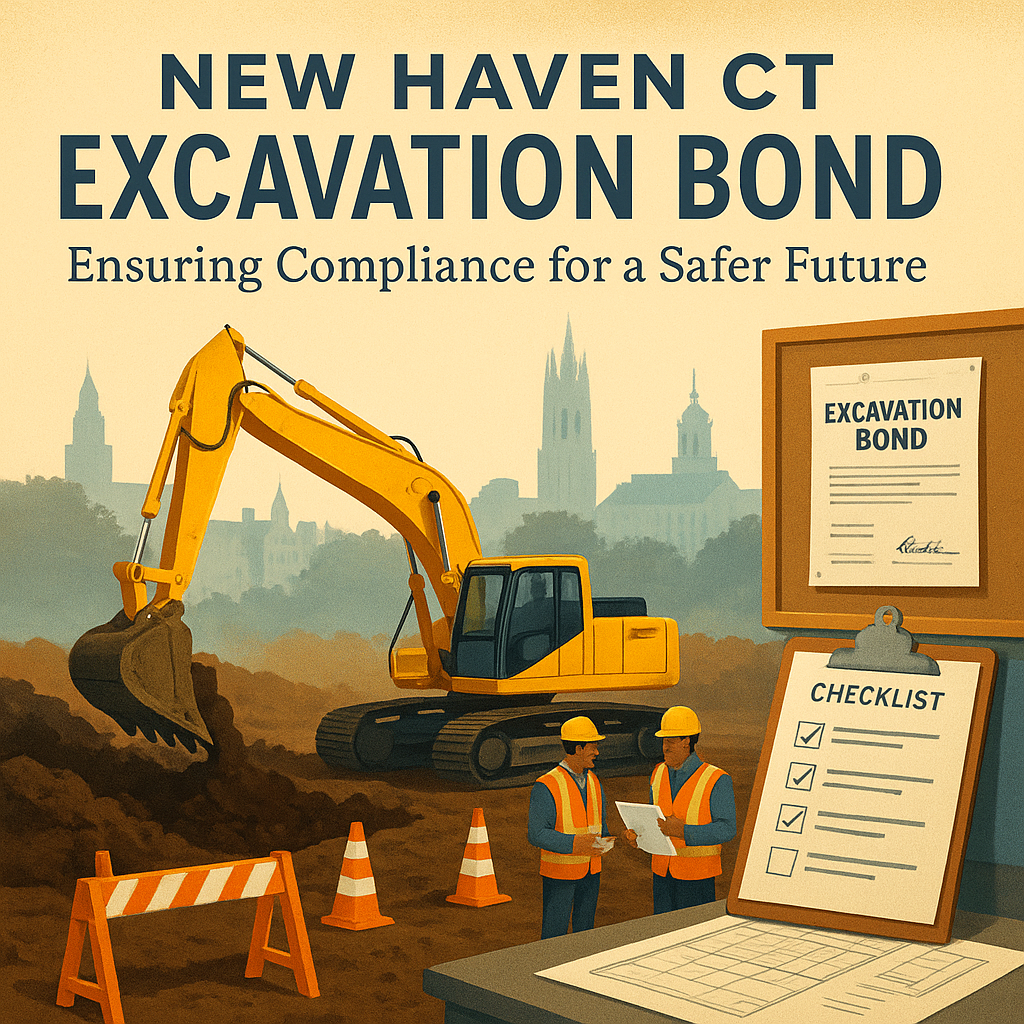
If you have ever driven past a construction site in New Haven and wondered why the road is torn up one day and perfectly patched the next, there is a good chance an excavation bond is working behind the scenes. For anyone planning to dig into city streets, sidewalks, or public rights-of-way, understanding excavation compliance and bonding in New Haven, Connecticut, is not just smart—it’s mandatory. This post breaks everything down in simple terms so you can tackle your next project with confidence.
What Exactly Is an Excavation Bond?
Think of an excavation bond as a security deposit you hand to the city before you start digging. In New Haven, this bond is a three-party agreement between the excavation contractor (that’s you), the City of New Haven (the obligee), and a surety company (the bond provider). The bond guarantees something very specific: you will follow all local rules and put the ground back the way you found it—or better—after your work is done.
If you skip town leaving a crater in the middle of Elm Street, or you forget to compact the soil properly so that a sinkhole appears months later, the city can make a claim against your bond. The surety then pays to fix the mess, but here is the catch—you have to reimburse the surety every penny. So the bond encourages everyone to do the job right the first time.
Why New Haven Requires This Bond
New Haven is a historic city with aging infrastructure and dense neighborhoods. Every time a water main breaks, a gas line needs an upgrade, or a fiber optic cable gets buried, someone has to dig. The city’s Engineering Department wants to protect public safety, preserve street quality, and keep underground utilities intact. An excavation bond holds contractors accountable for restoring pavements, curbs, sidewalks, and any disturbed landscaping to city standards.
Without this requirement, a contractor with no skin in the game could walk away from sloppy work, leaving taxpayers to foot the repair bill. The bond transforms a promise into a legally enforceable commitment. It also reassures residents that a torn-up street won’t stay that way forever.
Who Must Be Bonded?
Pretty much any contractor performing excavation work within New Haven’s public right-of-way needs a bond. This includes general contractors, utility installation companies, plumbing and sewer crews, paving specialists, and even landscaping businesses that need to trench for drainage. If you are disturbing the street surface, shoulder, sidewalk, or parkway, you fall under the requirement.
The bond is often called a “compliance-only bond” because its sole focus is making sure you comply with the city’s excavation rules, safety codes, and restoration standards. You might not need a separate performance bond for the whole construction project—this one is strictly about your obligation to the city for what you do to public property.
The Compliance-Only Bond: A Closer Look
In New Haven, you will frequently see the bond listed as “City of New Haven CT Excavation Bond – Excavation Contractor – Compliance Only.” That wording tells you everything. It is not a bond that guarantees you will finish building a shopping center on time. It guarantees you will play by the city’s rulebook when you cut into the pavement, install your pipes or cables, and put everything back together.
How It Differs from a Performance Bond
Many construction professionals are familiar with performance bonds on private projects—they ensure a contractor completes the work according to the contract. A compliance bond serves a different master. The “obligee” is the city, and the bond benefits the public. Even if your private client is happy with the utility connection, if the street patch fails inspection, the city can act. So you must satisfy both your client and the municipal inspectors.
Step-by-Step: Getting Your Excavation Bond in New Haven
The process is more straightforward than it sounds. Here is a typical path:
- Determine your bond amount. The City of New Haven sets the required bond amount based on the scope of work. It could range from a few thousand dollars for a small curb cut up to $50,000 or more for extensive road openings.
- Gather your paperwork. You will need a valid contractor’s license, proof of insurance, and sometimes a copy of the approved permit application.
- Contact a surety bond agency. Independent agencies that specialize in contractor bonds can shop rates from multiple surety companies. You will fill out a brief application and disclose some financial history.
- Get approved and pay the premium. Once approved, you pay a small percentage of the total bond amount—usually between 1% and 5% for applicants with good credit.
- File the bond with the city. The surety will issue the bond form. You submit it to New Haven’s Engineering Department or the required municipal office before your excavation permit is issued.
Always check the latest requirements directly with the city, because bond amounts and forms can change. A quick call to the Engineering division can save you hours of guesswork.
How Much Does It Cost?
The cost, or premium, depends on two main factors: the bond amount the city demands and your personal credit score. If you need a $10,000 bond and your credit is in good shape, you might pay somewhere between $100 and $500 per year. Contractors with less-than-perfect credit can still get bonded through specialty programs, though they may pay a higher rate.
It is helpful to view the premium as a small operating expense that opens the door to city work. When you compare it to the potential liability of a damaged water main or a lawsuit from a tripping hazard, the bond becomes a bargain.
Staying Compliant: Tips to Keep Your Bond Active and Avoid Claims
No one wants a bond claim. A claim can raise your future premiums and damage your reputation with both the city and surety companies. Here is how to stay on the right side of compliance:
- Study the city’s excavation manual. New Haven publishes specifications for pavement restoration, backfill material, compaction, and temporary patching. Know these standards inside out.
- Call before you dig. Always notify Call Before You Dig (811) to have underground utilities marked. Damaging a gas line is dangerous and guarantees a bond claim.
- Schedule inspections promptly. The city will want to see your work at various stages, from base preparation to final paving. Missing an inspection can halt your permit and trigger a violation.
- Maintain a solid relationship with an asphalt crew. Quality restoration often requires a hot-mix patch laid by an experienced paving contractor. Subpar cold patches rarely pass inspection.
- Document everything. Take photos before, during, and after your work. Keep copies of inspection reports and communication with city officials. Organized records are your best defense if a dispute arises.
Why Being Bonded Benefits Your Excavation Business
Securing an excavation bond is not just about obeying the law. It sends a powerful signal to general contractors, property developers, and homeowners: you are a legitimate, trustworthy professional. Many private projects in New Haven also require proof of bonding, even if the work stays on private property. The bond shows you have been vetted by a surety company and have financial backing.
Additionally, being bonded often speeds up the permitting process because the city has a financial safeguard on file. It gives you a competitive edge when bidding against unlicensed or unbonded operators who might cut corners. In a tight-knit business community like Greater New Haven, a reputation for reliability is worth its weight in granite curbing.
Frequently Asked Questions
Do I need a separate bond for each job?
Usually not. Many contractors maintain an annual blanket bond that covers all permitted excavations throughout the year. The city will tell you if a specific project requires a higher amount or a project-specific bond.
What happens if the city rejects my restoration?
If the restoration fails inspection, you will receive a notice and a deadline to correct the issue. Ignoring it can lead to a bond claim. As long as you cooperate, most situations are resolved without a claim.
Can I get a bond with a low credit score?
Yes. Specialized bad-credit surety programs exist. The premium will be higher, and you may need to provide additional documentation, but approval is possible for most contractors.
Is this bond the same as liability insurance?
No. Liability insurance pays for accidental injuries or property damage during your work. The excavation bond guarantees your compliance with city restoration and safety rules. Both are usually required.
Navigating New Haven’s Specific Requirements
New Haven’s Engineering Department and the Department of Public Works administer the excavation bond program. They enforce strict timelines: temporary patches must be in place quickly for public safety, and permanent restoration often must follow within a set number of days. Cold weather can extend deadlines, but communication is key. Always submit your paperwork early, and never dig until your permit and bond are fully approved.
The city takes particular pride in its historic streetscapes. If your work disturbs brick pavers, granite curbstones, or tree grates, expect meticulous inspection standards. Factor that into your schedule and budget. A little extra care during restoration saves you from expensive re-dos later.
Real-World Example: A Small Job That Taught a Big Lesson
Consider a local plumber who needed to replace a sewer lateral from a century-old house to the city main. The street opening was only six feet long. He obtained his permit and bond, dug the trench, and made the connection. However, he tried to save time by using a cold-mix asphalt patch without proper compaction. Within two weeks, the patch had rutted and pooled water. The city inspector flagged it, and the plumber had to re-excavate, place new base material, and install a hot-mix patch. Because he acted quickly and cooperated, no bond claim was filed. But the double work cost him time and profit. The message? Do it right the first time, and your bond becomes a safety net you never have to use.
Your Roadmap to a Smooth Excavation Process
Keeping everything simple and organized is the best way to tackle New Haven’s requirements. Review the city’s website for current bond forms, reach out to a reputable surety bond agency that understands Connecticut municipal bonds, and ask plenty of questions before you apply. The more you know upfront, the smoother your job will go from the moment the saw cuts hit the asphalt to the day the city signs off on your final restoration.
Final Thoughts
Excavation bonding and compliance in New Haven, Connecticut, might feel like one more hoop to jump through, but it exists to protect everyone—contractors, residents, and the city itself. When you treat the bond as a partnership rather than a burden, you build a reputation for reliability that pays off in repeat business and referrals. Have you checked your bonding requirements lately? A quick conversation with a local surety expert could be the smartest move you make before your next dig.