Massachusetts auto repair shops must obtain a surety bond as a legal requirement for licensing, serving as a financial safety net to protect customers and the state from dishonest or substandard work. The bond, backed by a surety company, ensures harmed parties can be compensated up to the bond amount, with the shop ultimately responsible for repayment.
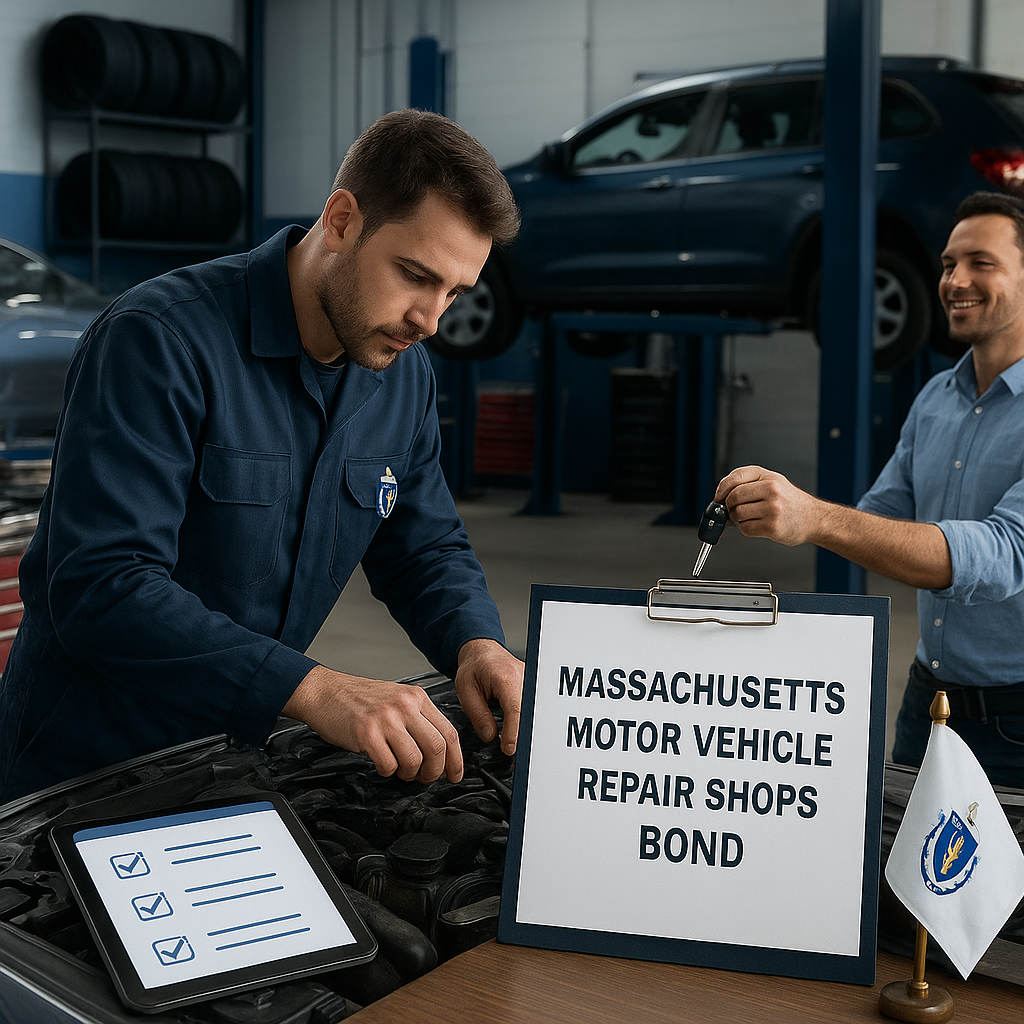
If you’re running an auto repair shop in Massachusetts — or thinking about opening one — you’ve probably heard the term “surety bond” tossed around. It might sound like just another piece of paperwork, but the Massachusetts Motor Vehicle Repair Shops Bond is way more than that. Think of it as a promise to your customers and the state that you’ll do honest, professional work.
So, what exactly is this bond? Who needs it? And how can you get one without pulling your hair out? Let’s walk through everything in plain, simple English.
What Is a Massachusetts Motor Vehicle Repair Shops Bond?
A motor vehicle repair shop bond is a type of surety bond. Don’t let the jargon scare you — a surety bond isn’t insurance for your business. Instead, it’s a three-party guarantee. There’s you (the repair shop), the state of Massachusetts (the obligee), and a surety company (the financial backer). The bond says: “If this shop breaks the rules, there’s money set aside to make things right for customers or the state.”
It’s a bit like when you rent an apartment and put down a security deposit. The landlord holds that deposit in case you damage the property. Here, the bond is a financial safety net. If your shop fails to fulfill its legal or ethical obligations, a claim can be filed, and the bond will pay out up to the full bond amount. You’re ultimately responsible for paying back the surety company, but the harmed party gets covered quickly.
In Massachusetts, this bond is a must-have for many auto repair businesses. It’s not optional — it’s a legal requirement to get and keep your license.
Who Needs This Bond in the Commonwealth of Massachusetts?
Not every single garage needs one, but if you operate a motor vehicle repair shop that is required to register with the Massachusetts Division of Standards, you’ll almost certainly need a bond. This includes independent repair shops, body shops, and some specialty service providers that work on cars, trucks, and other motor vehicles.
In short: if the state classifies your business as a “motor vehicle repair shop” under M.G.L. Chapter 100A and the related regulations, you’ll need to post a bond as part of your registration. The requirement helps keep the industry fair and trustworthy. Even mobile mechanics who operate as a legal business entity may need one if they fall under the registration rules. When in doubt, check with the Massachusetts Office of Consumer Affairs and Business Regulation — they can clarify if your specific shop needs a bond.
Why Does Massachusetts Require This Bond?
Great question. Imagine you take your car in for a simple brake job, and the shop cuts corners, returns the vehicle in unsafe condition, and refuses to fix the mistake. Without a bond, you’d have to rely on a long court battle to get your money back. The bond changes that.
The Commonwealth of Massachusetts uses this bond to protect the public from dishonest or incompetent repair shops. It’s a consumer safeguard. If a shop violates state laws — like charging for work not done, failing to honor warranties, or engaging in deceptive practices — the bond gives customers a direct path to financial recovery. It also protects the state’s interest in maintaining a reputable auto repair industry.
Put simply, the bond builds trust. It tells customers, “We’re so confident in our work that the state makes us back it up with real money.”
How Much Is the Bond and What Does It Cost?
Most Massachusetts motor vehicle repair shop bonds are issued in the amount of $10,000. That’s the coverage limit — the maximum that can be paid out for claims. But here’s the good news: you don’t need to fork over $10,000 of your own cash.
You only pay a small percentage of the total bond amount as a premium. For a $10,000 bond, your annual premium could be as low as $100 to $300, depending on a few things. Surety companies look at your personal credit score, business financials, and experience. If your credit is solid, you’ll snag the lowest rates. Even with less-than-perfect credit, you can usually get bonded — the premium just might be a bit higher.
Think of it like paying an affordable yearly fee to keep your shop legal and trustworthy. That small investment opens the door to doing business the right way in Massachusetts.
What Does the Bond Cover Exactly?
The bond covers a range of violations tied to the repair shop’s legal duties. Here’s a quick breakdown of what that $10,000 might be used for:
- Workmanship issues: Failing to perform repairs correctly or using substandard parts.
- Overcharging: Charging customers for labor or parts that were never provided.
- Warranty violations: Not honoring an expressed or implied warranty on repair work.
- Deceptive practices: Misrepresenting the need for repairs or the condition of a vehicle.
- Failure to comply with state regulations: Any other violation of Massachusetts laws governing motor vehicle repair shops.
When a legitimate claim is made, the surety investigates. If the claim is valid, the bond pays out to the harmed party (up to $10,000 per occurrence or in aggregate, depending on the bond terms). Afterward, you — the shop owner — must reimburse the surety company for the full amount paid. That’s why it’s so crucial to run a clean, honest business. The bond isn’t a get-out-of-jail-free card; it’s a guarantee you’ll make things right.
How to Get Your Vehicle Repair Garage Bond in MA
Getting bonded might seem daunting, but it’s actually a pretty smooth process. Here’s a simple roadmap:
Step 1: Confirm Your Bond Requirement
Reach out to the Massachusetts Division of Standards or check the official state website. Make sure you know the exact bond amount and form required. It’s usually a $10,000 bond, but always double-check.
Step 2: Find a Reputable Surety Bond Provider
You can go through an independent insurance agent who specializes in bonds, or use an online surety marketplace. Many companies offer instant quotes. Compare a few options to get the best rate.
Step 3: Apply and Get a Quote
Fill out a short application with your business details and personal information. The surety company will run a soft credit check (in most cases) and give you a premium quote. For a $10,000 bond, it’s typically under $300 per year if your credit is in decent shape.
Step 4: Pay and Receive Your Bond
Once you accept the quote and pay the premium, the surety issues your bond document. Many providers can email it to you the same day.
Step 5: File the Bond with the State
Submit the original bond form to the Massachusetts Division of Standards along with your registration application or renewal. Keep a copy for your records. The bond usually needs to stay active as long as your registration is valid.
Common Questions About Massachusetts Motor Vehicle Repair Shop Bonds
Do I need a bond if I only do minor repairs?
If your business falls under the state’s definition of a motor vehicle repair shop, the bond requirement doesn’t change based on the type of repair. Whether you do oil changes or engine overhauls, you likely need a bond to register. Always check with the state authority to be sure.
What happens if a claim is filed against my bond?
The surety company will investigate. If they find the claim valid, they’ll pay the customer up to the bond limit. Then, you’re legally required to pay back that amount. It’s like a loan you have to settle, so preventing claims is always the best strategy.
Can I cancel my bond after I get it?
You can, but your shop registration will likely be suspended or revoked. The bond must stay in force the entire time you’re actively registered. If you close your business permanently, notify the state and cancel the bond to avoid unnecessary premium costs.
Is the bond the same as garage liability insurance?
Nope, they’re completely different. Insurance protects your business from accidents, property damage, or legal defense costs. The bond protects your customers and the state from your wrongful actions. You’ll almost certainly need both to run a fully compliant shop.
Where do I file the bond in Massachusetts?
Typically, the bond is filed with the Division of Standards, which is part of the Office of Consumer Affairs and Business Regulation. The exact mailing address and instructions can be found on Mass.gov or in your repair shop registration packet.
Keeping Your Bond and Your Reputation Intact
At the end of the day, the Massachusetts Motor Vehicle Repair Shops Bond is about accountability. It’s the state’s way of saying, “We believe you can run a great shop — but here’s a safety net, just in case.” For most honest business owners, that’s a small price to pay for credibility and peace of mind.
So take a deep breath, grab a coffee, and start the bonding process. It’s a straightforward step that proves your commitment to quality work. And when customers see that you’re fully bonded and registered, they’ll feel a whole lot better handing over their keys.
Got more questions? Reach out to a surety bond expert or your local Massachusetts small business development center. They’ve helped hundreds of shops just like yours get bonded and open for business. You’ve got this!