Westport, CT requires a tree work permit bond for any tree work performed in the town’s right-of-way, guaranteeing that contractors or property owners follow local rules and cover any damage to public property. This bond protects taxpayers from repair costs and is typically secured by the permit holder, so homeowners should always verify a contractor’s bond before hiring.
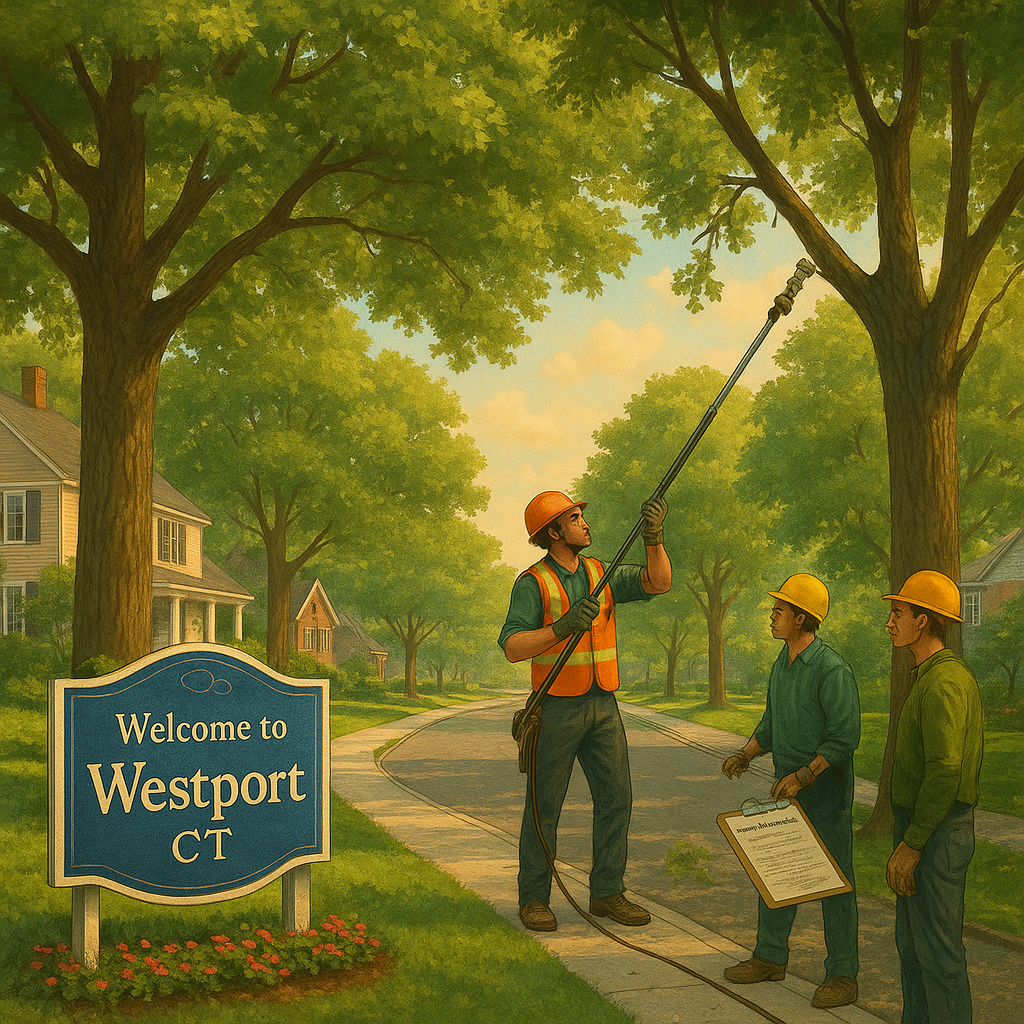
What Is a Tree Work Permit Bond in Westport, CT?
If you’ve ever looked at a giant oak leaning over the sidewalk in front of your Westport home, you know trees add beauty, shade, and value. But what happens when that tree needs trimming or removal—and the work spills into the strip of land between your lawn and the street? That’s exactly where a Westport CT tree work permit bond enters the picture.
In simple terms, a tree work permit bond is a promise backed by money. It guarantees that anyone performing tree work inside the town’s right-of-way will follow local rules and repair any damage they cause to public property. Think of it like a security deposit you’d leave when renting equipment. The bond tells the Town of Westport, “If something goes wrong, we’ve got you covered.”
Why Does Westport Require a Bond for Tree Work?
Westport is dotted with tree-lined streets and carefully maintained sidewalks. The area from the curb to your property line—often called the “right-of-way”—is usually owned or managed by the town. When tree roots buckle a sidewalk, a branch scrapes a street sign, or heavy equipment leaves ruts in the grass, the repair bill falls on taxpayers. That’s not fair to the community.
To protect public infrastructure and keep neighborhoods safe, the town mandates a tree work permit bond for certain projects. The bond acts like a financial safety net. It gives the town a fast way to cover repair costs without chasing after a contractor or homeowner. It also encourages everyone to do the job right the first time, because a claim on the bond can lead to higher insurance costs and a hit to the contractor’s reputation.
Who Needs This Bond? Homeowners, Contractors, or Both?
In Westport, the bond is usually obtained by the person or company pulling the tree work permit. Most often that’s a professional tree service. But don’t tune out if you’re a hands-on property owner. If you decide to prune your own tree and the work touches the right-of-way—or if heavy equipment needs to cross a sidewalk—you could be required to secure a Westport tree work bond yourself.
Here’s the real-world scenario: you hire a local arborist to take down a dead maple near the street. The company should already have a valid permit and the right bond in place. If they don’t, and they crack the curb with a falling limb, the town may look to you to cover the damage. That’s why smart property owners always ask, “Can I see your permit and bond certificate?” It’s a quick question that can save you thousands of dollars and a lot of headaches.
A Quick Look at the Right-of-Way
To avoid confusion, let’s clarify the right-of-way. It’s the strip of land that often includes the sidewalk, the grassy area between the sidewalk and street, and sometimes even a portion of your front yard. Even though you mow it and may have planted flowers there, the town generally has an easement or ownership. Tree work that impacts this zone—root pruning, canopy trimming over the road, stump grinding near a fire hydrant—triggers the permit and bond requirement. Always check Westport’s tree regulations before you pick up the saw or call a crew.
How a Westport CT Tree Work Permit Bond Works
A permit bond is a three-party agreement. It sounds formal, but the idea is straightforward once you break it down.
- The Obligee: The Town of Westport. They are the ones protected by the bond.
- The Principal: The permit holder—either the tree service company or the property owner doing the work.
- The Surety: The insurance company that issues the bond and guarantees payment if something goes wrong.
When a principal takes out a right-of-way bond Westport requires, they pay a small percentage of the bond amount, called the premium. In return, the surety company agrees to pay the town up to the full bond limit for covered damages. Then the surety collects that money from the principal. It’s similar to co-signing a loan. The surety trusts the principal to follow through, but they step in to pay if things fall apart.
What’s the Typical Bond Amount and Cost?
Westport generally sets a fixed bond amount depending on the project size. A common figure you’ll see is $10,000, though larger jobs might call for $25,000 or more. The good news is you don’t pay the full bond amount. You only pay the annual premium, which often runs between 1% and 3% of the bond total.
So for a $10,000 Westport CT tree work permit bond, a contractor with good credit might pay just $100 to $300 per year. That’s a small price for the peace of mind that a damaged sidewalk or broken water line won’t spiral into a legal mess. Property owners who need a one-time bond can often find premium rates in a similar range, though the exact cost depends on credit history and the scope of work.
Steps to Get Your Tree Work Permit Bond
Whether you’re a tree pro or a homeowner tackling a weekend project, the bonding process is fairly painless. Here’s a simple roadmap:
- Check town requirements. Call the Westport Tree Warden or Public Works Department. Ask about the current bond amount and any specific forms you need.
- Find a reputable surety bond agency. Many insurance providers and specialized bond companies offer instant quotes online.
- Apply and get approved. The surety will review your credit and possibly your work history. For smaller bonds, approvals can come in minutes.
- Pay the premium. Once approved, you pay the premium and receive the bond document.
- File the bond with your permit application. Submit the bond along with any other paperwork to the town. The permit won’t be issued without it.
Pro tip: If you’re a homeowner hiring a tree company, you don’t need to get the bond yourself. Simply verify the contractor’s bond is active and covers the work on your property. A quick call to the surety company or a look at the bond certificate can confirm everything is in order.
What Happens When Something Goes Wrong?
Let’s paint a picture. A tree crew is removing a large branch over the street. Despite careful rigging, the branch swings wide and smashes a streetlight. The town inspects the damage and files a claim against the tree work permit bond. The surety investigates, and if the claim is valid, they pay the town to repair the light—up to the bond’s limit. Then the surety turns to the contractor to be reimbursed.
For property owners, this process is reassuring. The bond means public property gets fixed fast, without the town tapping emergency funds or sending bills to unsuspecting homeowners. It also holds the tree service financially accountable, which pushes them to use proper safety measures and techniques.
Why This Matters for Westport Homeowners
You might be thinking, “I’m just one homeowner trimming a few branches—why should I care about a town permit bond?” The answer lies in protecting your wallet and your relationship with the neighborhood. Unpermitted work in the right-of-way can result in fines, stop-work orders, and personal liability for any damage. Even a small mistake, like scraping a fire hydrant with a stump grinder, can lead to expensive repairs that far exceed the cost of a bond.
Think of the bond requirement as a layer of insurance that keeps Westport’s tree-lined streets safe and beautiful. When everyone follows the rules, sidewalks stay smooth, street signs stay straight, and property values stay strong. Plus, hiring a bonded contractor gives you confidence that they stand behind their workmanship.
Common Questions About the Westport Tree Work Bond
Does every tree job need a permit and bond?
Not always. Trimming a small branch on a tree fully inside your backyard, away from any public right-of-way, may not require a permit or bond. But work near the street, sidewalk, or any town-owned equipment almost certainly does. Always call the Tree Warden’s office to be sure. Regulations can change, and it’s better to ask than to assume.
How long does the bond last?
Most tree work permit bonds are issued for a one-year term and must be renewed if the permit stays active. A contractor typically carries an evergreen bond that renews automatically. For a one-time homeowner project, the bond remains in effect for the duration of the permit, often covering a set number of days or months.
Can I be held responsible if my neighbor’s tree falls on the right-of-way?
This is a tricky one. Generally, if a healthy tree falls due to a storm, liability may not rest with any single property owner. But if you were negligent—say, you ignored obvious signs of decay and the tree crashes onto a town sidewalk—you could be on the hook. This is why keeping trees healthy and addressing hazards proactively is so important. Your homeowner’s insurance might cover some situations, but it’s smart to review your policy.
Does the bond cover damage to my own property?
No. The Westport CT tree work permit bond is strictly for safeguarding public property within the right-of-way. If a contractor accidentally knocks over your fence, that’s a matter between you and the company. That’s why verifying the contractor’s general liability insurance is just as important as checking the bond.
Making Sense of the Big Picture
Tree work bonds might seem like just another piece of paperwork, but they serve a vital purpose. They keep Westport’s streetscapes intact and prevent small projects from turning into big neighborhood dramas. The next time you admire the stately elms along your commute or the flowering dogwoods that burst into pink near your mailbox, remember there’s a quiet system working behind the scenes to protect that scenery.
For property owners, a little diligence goes a long way. Know where the right-of-way ends and your property begins. Ask your tree care professional the right questions. And if you’re ever in doubt, pick up the phone and call the town. Officials are happy to help you navigate the rules because an informed community is a safer community.
Whether you’re removing a hazard, letting more sunlight into your yard, or simply keeping your landscape tidy, the Westport CT tree work permit bond is a straightforward tool that makes it all possible—without sacrificing the public spaces everyone shares.