Contractors in Bridgeport must secure a Street Excavating License for any work disturbing public roads and a Curb & Walk Layers License for concrete curbs and sidewalks, both backed by a surety bond to ensure proper restoration and public safety. These licenses hold contractors accountable for quality workmanship, preventing hazards like potholes and tripping risks, with failure to comply leading to fines and stop-work orders.
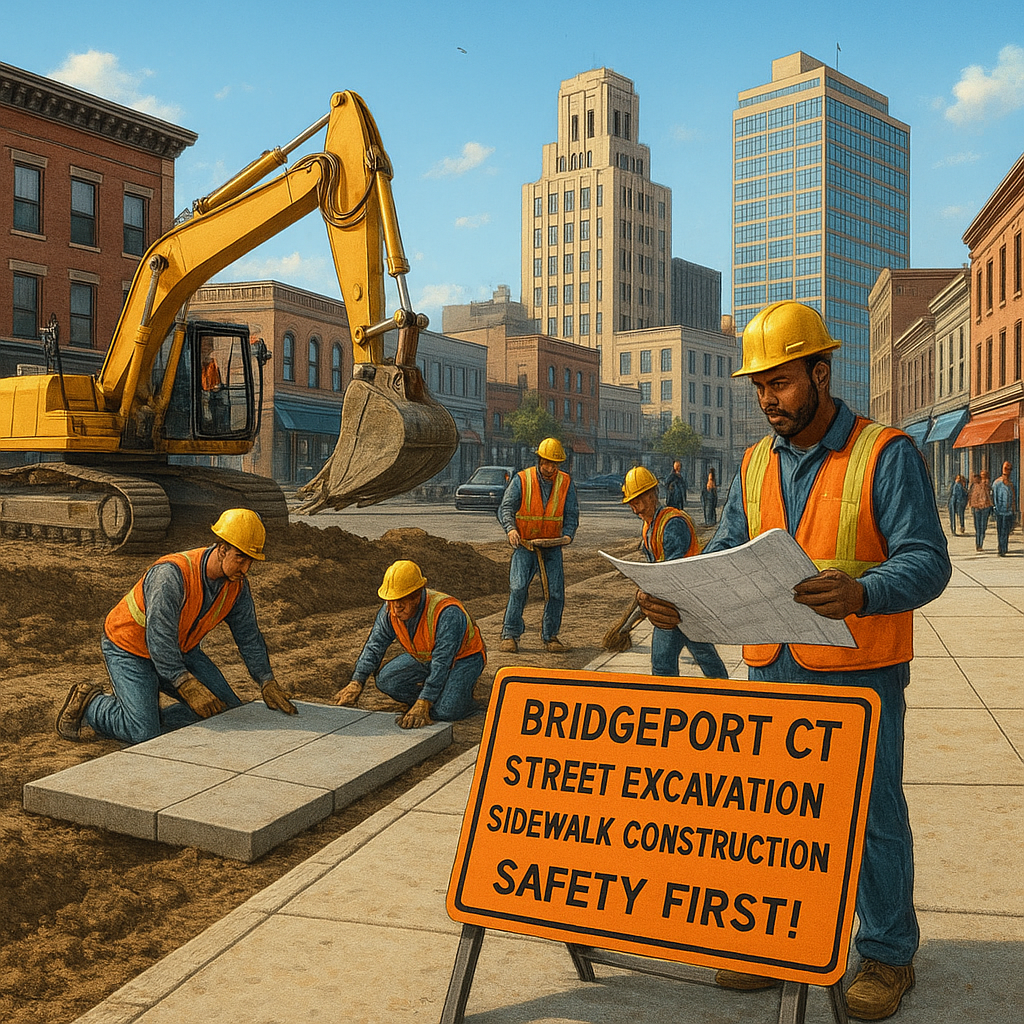
Paving the way for a new driveway, repairing a sidewalk, or digging up a street in Bridgeport involves more than just heavy machinery and hard work. It requires a clear understanding of the city’s licensing rules. If you’re a contractor planning to cut into asphalt or pour concrete along public rights-of-way, you’ve likely come across two critical requirements: the Street Excavating License and the Curb & Walk Layers License. Tied closely to these is a surety bond that protects the community. Let’s break down exactly what these licenses are, why the bond matters, and how you can secure them without getting tangled in red tape.
Why These Licenses Matter in Bridgeport
Think of a city street or sidewalk as a shared living room. Everyone uses it, and nobody wants a mess left behind. When a contractor digs into a road to access underground utilities or tears out an old curb, the work creates a temporary scar. If the restoration isn’t done correctly, that scar can turn into a dangerous pothole, a tripping hazard, or a drainage nightmare. The City of Bridgeport requires specific licenses to make sure anyone doing this work knows what they’re doing and stands behind the result.
These aren’t just bureaucratic hoops to jump through. They’re a promise to the neighborhood that the concrete will be level, the asphalt will be compacted properly, and public safety will be the top priority. Without a valid license, a contractor can face stop-work orders, steep fines, and even liability issues if something goes wrong. So, how do you know which license you need?
Who Needs a Street Excavating License?
If your project involves cutting, digging, or trenching any part of a public street, alley, or right-of-way in Bridgeport, you need a Street Excavating License. This isn’t limited to massive road reconstruction crews. A plumber connecting a new water service, a utility company upgrading gas lines, or a paving contractor digging out a failed road base all fall under this umbrella.
The core idea is simple: anytime you disturb the public pavement, you’re responsible for returning it to its original condition—or better. The city wants to know who performed the work so they can hold that party accountable if the patch settles and creates a depression two years later. Getting this license means you’ve demonstrated you understand proper backfill compaction, temporary patching, and final restoration standards.
What Does the License Cover?
The street excavating license specifically deals with the structural integrity of the road surface and base. You’ll need it for:
- Utility trenching across lanes.
- Installing or repairing sewer and water laterals.
- Digging test pits in the pavement.
- Performing any sub-surface work that breaks through asphalt or concrete road panels.
The Curb and Walk Layers License Explained
While the street excavating license focuses on the road itself, the Curb & Walk Layers License covers the concrete elements along the edges: curbs, gutters, sidewalks, and driveway aprons. In Bridgeport, property owners frequently need to repair lifting sidewalk flags caused by tree roots or replace crumbling curbs. A commercial driveway approach that crosses the sidewalk also triggers this requirement.
Even if you’re hired for a purely residential driveway, the portion that sits in the public right-of-way—often the first few feet from the curb cut—is under the city’s jurisdiction. The license confirms that you can form, pour, and finish concrete in a way that meets the Americans with Disabilities Act (ADA) guidelines for slope and detectability, manages water runoff correctly, and matches the established line and grade of the street.
Understanding the License Bond Requirement
Now, let’s talk about the glue that holds these licenses together: the surety bond. Both the street excavating and curb and walk layers licenses typically require a license bond filed with the City of Bridgeport. Surprised? Many contractors view a bond as just another insurance expense, but it serves a very different purpose.
A bond is a three-party financial guarantee. You, the contractor (principal), buy the bond from a surety company. The city (obligee) is the protected party. If you fail to complete a proper restoration—say you patch a trench and it collapses within a week, or you install a curb that crumbles after one winter—the city can make a claim against your bond. The surety pays to fix the problem up to the bond’s limit, and then you reimburse the surety. In short, the bond is your guarantee to Bridgeport that you’ll do the job right.
What Does the Bond Protect Against?
The bond isn’t about protecting your tools or covering your workers’ injuries (that’s general liability and workers’ comp). It specifically guards the public’s interest in the permanent restoration of the infrastructure. Claims often arise from:
- Inadequate compaction leading to settlement and ponding.
- Use of substandard concrete or asphalt mixes.
- Failure to maintain traffic safety devices during the project.
- Abandoning a project before the finished surface is restored.
Steps to Secure Your Licenses and Bond
Navigating city paperwork can feel overwhelming, but breaking it down into chunks makes it manageable. Does the process seem complicated at first glance? It gets much simpler when you treat each requirement as a separate checklist item.
1. Gather Your Business Credentials
Before you even touch a license application, make sure your core documents are in order. Bridgeport will likely want to see proof that you are a legally established business. That usually means having your state contractor registration, a Certificate of Good Standing from the Connecticut Secretary of State if you’re an LLC or corporation, and a valid City of Bridgeport business license or trade name certificate.
2. Provide Proof of Insurance
A general liability insurance policy with limits acceptable to the city is non-negotiable. The city will often ask to be listed as an additional insured on your certificate. This adds a layer of protection for the municipality in case of accidental property damage or bodily injury during the work. Don’t confuse this with the bond; you need both.
3. Determine Your Bond Amount
The city’s engineering or public works department sets the bond amount. It might be a flat dollar figure for all contractors, or it could scale based on the scope of work you typically perform. For a curb and walk layers license, a $10,000 bond is a common baseline, while street excavating bonds might be higher given the increased risk. Always confirm the current required amount with the City of Bridgeport Permitting Office before purchasing the bond, as requirements can change.
4. Purchase the Bond
You can obtain the bond through a licensed surety agency. The cost is a small percentage of the total bond amount—often 1% to 3% for applicants with good credit. The agency will ask about your business financials and personal credit history. Once issued, you’ll receive the original bond form bearing the surety’s seal and signature. Keep this document safe; the city will need the physical signed copy.
5. Complete the Application and Pay Fees
Fill out the city’s specific license application. Provide all requested details about your company, your qualified personnel, and your past project experience. Attach your bond, insurance certificate, and any other required exhibits. Submit everything to the appropriate department along with the required license fee. Processing times vary, so apply well before you need to start digging.
Maintaining Compliance Once Licensed
Getting the license is step one. Keeping it active is where some contractors slip up. Bridgeport typically issues these licenses for one year or aligns them with a construction season. Mark your calendar to renew before the expiration date. Letting a license lapse can result in a requirement to repurchase your bond and restart the application from scratch. You wouldn’t want to lose a prime job because your paperwork expired, would you?
Beyond the renewal date, remember that your bond must remain in full effect. If a claim gets paid out, the city might demand that you restore the bond to its original amount before allowing you to pull any new permits. Treat the bond like a credit line—it needs to stay clean and available.
What Happens If You Work Without These Licenses?
Maybe you’re tempted to skip the process for a “small” sidewalk repair or a quick utility cut. It’s a risky gamble. Building officials and public works inspectors patrol actively. If you’re caught performing regulated work without a license, the city can issue an immediate stop-work order. That idles your crew, delays the project, and disappoints your client. Repeated violations can lead to the city barring you from obtaining any license in the future, effectively shutting down your ability to work in Bridgeport permanently.
Moreover, no license often means no bond is on file. If your work causes damage, the property owner has limited recourse, and you might be personally sued for the full cost of repairs. A simple paperwork shortcut can become an existential threat to your business.
Bringing It All Together
Securing your Street Excavating and Curb & Walk Layers Licenses in Bridgeport is about proving your professionalism. It shows the city, your clients, and the community that you’re serious about quality and safety. The bond isn’t a punishment; it’s a tool that says, “I’m confident enough in my work to back it with a financial guarantee.”
Start by clarifying exactly which category your upcoming projects fall into. Do you only need the curb and walk layers license for flatwork, or will you be trenching into the pavement and triggering the street excavating license? Once you know the license type, reach out to a trusted surety bond provider to get the bond in motion. Double-check your insurance, organize your business documents, and submit a complete application. With a little preparation, you can break ground knowing you’ve built a solid foundation of compliance right from the start.