Connecticut’s highway development is accelerated by the Right of Way Bond, a surety bond required by the CT DOT that guarantees contractors follow regulations and restore disturbed property. This bond builds trust, keeps projects on schedule, protects public funds, and encourages better planning.
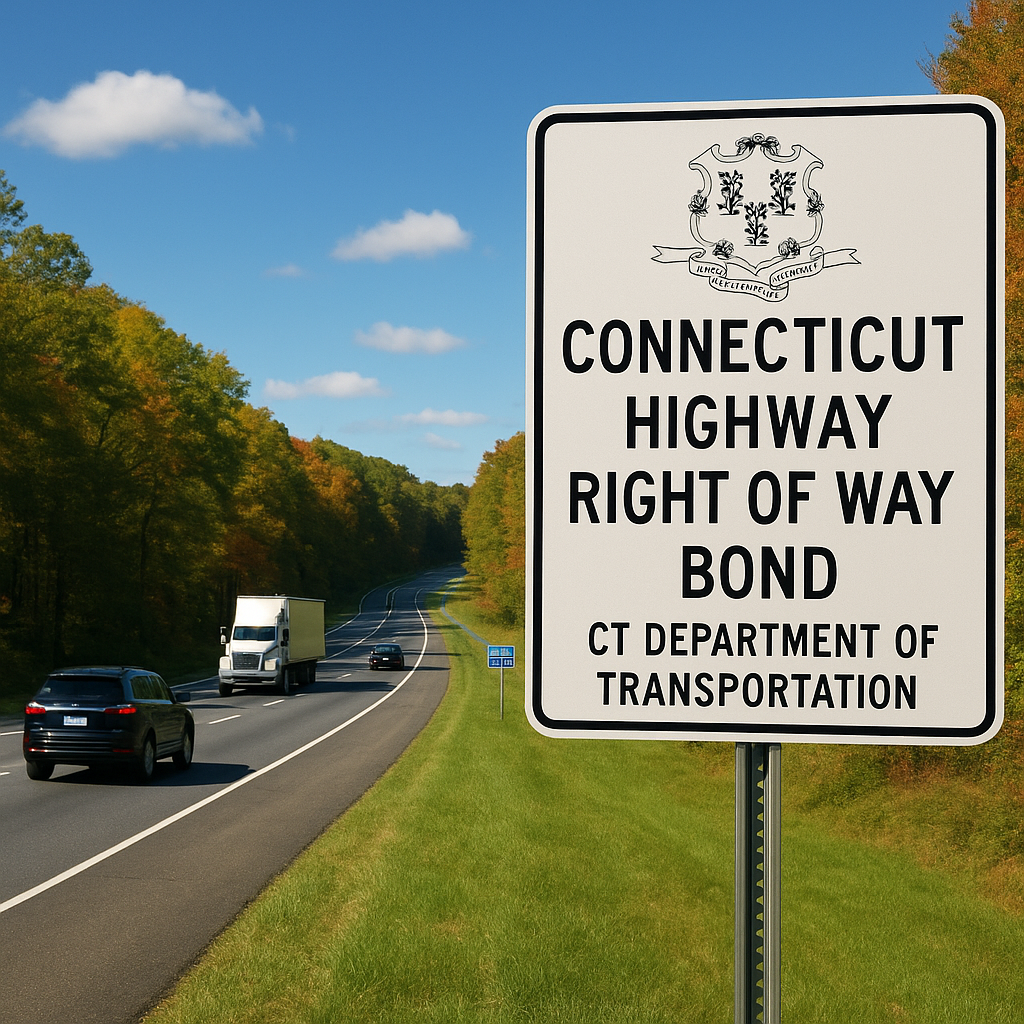
Imagine you’re driving through Connecticut, enjoying a freshly paved highway, when you notice new lanes and smoother interchanges. You might wonder: who makes sure these massive road projects happen on time and without leaving taxpayers in a lurch? Behind the scenes, a little-known tool called a Right of Way Bond plays a big role. If you’re curious about how highways get built, or if you’re a contractor looking to work with the state, understanding this bond is key. Let’s unpack the topic in a way that’s easy to grasp.
What Exactly Is a Right of Way Bond?
Think of a Right of Way Bond as a safety net. It’s a type of surety bond required by the Connecticut Department of Transportation (CT DOT) for certain highway projects. Whenever a contractor works on a project that involves acquiring or temporarily disturbing land along a public right of way—like expanding a roadway or installing utilities—this bond guarantees that the contractor will follow all the rules and restore the property as promised.
In simple terms, it’s a three-party promise. The contractor (the principal) promises the state (the obligee) that they’ll do the job correctly. A surety company backs that promise with a financial guarantee. If the contractor fails to meet the requirements, the bond covers the costs to make things right. No complicated legal jargon needed.
Why the CT Department of Transportation Requires This Bond
Connecticut is constantly maintaining and improving its transportation network. From the bustling I-95 corridor to scenic Route 7, these projects often touch private property or environmentally sensitive land. The CT DOT needs to ensure that any disruption—whether it’s removing trees, grading soil, or relocating a fence—is handled responsibly. The Right of Way Bond holds contractors accountable.
Imagine a contractor accidentally damages a homeowner’s driveway while working on a highway expansion. Without a bond, the homeowner might have to chase the contractor for repairs, or the state might foot the bill. With a bond in place, there’s a clear path to getting the driveway fixed without a headache. That’s the kind of everyday protection this bond provides.
How This Bond Boosts Highway Development
At first glance, a bond might seem like just another bureaucratic hoop to jump through. But it actually accelerates development in several ways:
- It builds trust. When the state knows a contractor is bonded, they’re more confident moving forward with a project. It’s like a landlord checking a renter’s credit score—it signals reliability.
- It keeps projects on schedule. Bonds are tied to strict deadlines. If delays happen due to non-compliance, the surety company may step in to get things back on track.
- It protects public funds. Connecticut taxpayers aren’t left covering preventable mistakes. That means more money stays available for future highway improvements.
- It encourages better planning. Contractors who know they’re bonded tend to be more meticulous about permits, land restoration, and safety protocols.
All these factors combine to create a smoother, faster process for expanding and upgrading Connecticut’s highways. It’s a behind-the-scenes booster that keeps concrete being poured and lanes being opened.
The Human Side: A Quick Story
Let’s put a face to this. Meet Maria, a small-business owner who runs an excavation company in Hartford. Last year, she won a contract to prepare a right of way for a new exit ramp on I-84. Part of the deal meant obtaining a Connecticut Highway MTG Right of Way Bond. At first, Maria felt overwhelmed by the paperwork. But her insurance agent explained it was like a promise letter backed by a bigger company. Once she secured the bond, the state approved her work faster, and her crew got started without delays. When a sudden rainstorm washed out a section of topsoil they were supposed to preserve, the bond helped cover the cost of re-stabilizing the slope. Maria finished the job on time, and the state now considers her a preferred contractor. That’s the real-world win a bond creates.
Who Needs This Bond in Connecticut?
Not every contractor working near a road needs this bond. It’s specifically tied to projects where the CT DOT grants a right of way permit and where the work might disturb public or adjacent private land. Typical candidates include:
- Highway construction and expansion firms
- Utility companies installing lines along state highways
- Landscaping and erosion control contractors working on state road projects
- Demolition crews clearing structures near a right of way
If you’re unsure, the easiest step is to check the bid documents or ask the CT DOT’s right-of-way office. They’ll tell you if the bond is a requirement for your specific project.
What Does the Bond Cover, Really?
It’s not just about fixing damaged lawns. A Right of Way Bond can cover a wide range of obligations, including:
- Restoring pavement, sidewalks, and curbs to original condition
- Replacing or repairing utilities accidentally cut during excavation
- Complying with environmental protection measures, like silt fencing or wetland preservation
- Removing temporary access roads after construction ends
- Settling disputes if a property owner claims damage caused by the work
Think of it like an all-in-one insurance policy that specifically guards the public’s interest. It doesn’t protect the contractor from their own losses (that’s what general liability insurance is for), but it does ensure the community’s land and infrastructure aren’t left worse off.
How Much Does a Right of Way Bond Cost?
This is the part that surprises many people. You don’t need to pay the full bond amount upfront. The bond’s value—often set by the CT DOT based on the project’s scale—might be $50,000, $100,000, or more. But contractors typically pay only a small percentage, called the premium, which is usually 1% to 3% of the bond amount. Your exact rate depends on your credit score, business financials, and experience. A well-established company with solid finances might pay $1,000 for a $100,000 bond. That’s a small price for the credibility and protection it provides.
The Link Between Bonds and Connecticut’s Infrastructure Future
Infrastructure is a hot topic. Connecticut has ambitious plans to modernize bridges, reduce traffic congestion, and improve safety. These projects move faster when the contracting process is streamlined and trustworthy. The Right of Way Bond is part of that streamlining effort. By filtering out underprepared contractors and safeguarding public land, it acts as a gatekeeper that actually speeds things along.
Have you ever wondered why some states seem to finish roadwork faster than others? It’s often because their bonding requirements create a more predictable environment. When everyone knows the rules and the consequences for breaking them are clear, the whole system runs more smoothly.
Common Questions People Ask
Can I get this bond with bad credit?
Yes, but your premium will be higher. Surety companies specialize in high-risk bonds, so don’t assume you’re disqualified. Working with a knowledgeable bond agency can help you explore options, even if your credit isn’t perfect.
What happens if a claim is made against my bond?
The surety company will investigate. If the claim is valid, they’ll pay up to the bond’s limit to resolve the issue. But remember: the bond is a guarantee, not insurance for the contractor. You’ll need to repay the surety for any payouts, so it’s in your best interest to do the job right from the start.
Is this the same as a performance bond?
Not exactly. A performance bond covers the overall completion of a construction project. A Right of Way Bond is narrower—it focuses specifically on the right of way area and the obligation to restore it. Many highway projects may require both.
Making the Process Less Intimidating
We get it. Bonds can sound like a foreign language. But applying for one doesn’t have to be a headache. Most agencies let you start online. You’ll typically need to provide basic business information, the project details, and your financials. Within a few days, you can have the bond in hand and be ready to break ground. If you’re new to this, talk to a bond specialist who knows Connecticut’s requirements inside and out. They can translate the legalese into plain English and help you avoid pitfalls.
The Bottom Line
Next time you zip along a freshly widened highway in Connecticut, give a nod to the quiet powerhouse behind it: the Right of Way Bond. It protects property owners, holds contractors accountable, and gives the state the confidence to keep building. Whether you’re a contractor looking to grow your business or a curious taxpayer, knowing how this tool works helps you see the bigger picture of infrastructure progress. It’s a small piece of the puzzle that makes a big difference—and that’s something worth understanding.