Mansfield is strengthening its sewer and drainage infrastructure by requiring contractors and design professionals to secure surety bonds. These financial guarantees protect taxpayers and property owners by ensuring work is completed correctly, with funds available to fix any damage or flawed designs.
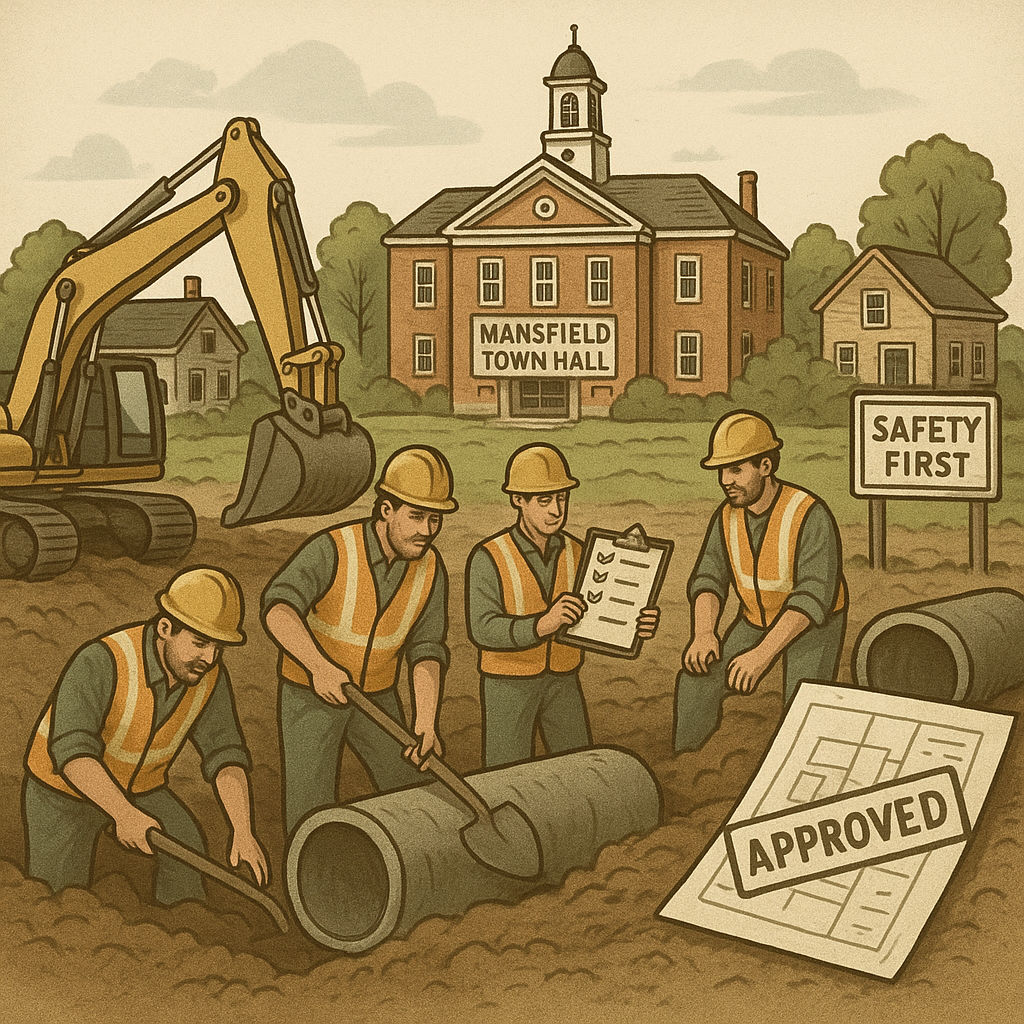
Think about the last time you flushed your toilet or watched water swirl down the sink drain. It disappears, and most of us never give it a second thought. But behind that simple act lies a hidden world of pipes, trenches, and careful planning. Towns like Mansfield are working hard to make sure that system stays reliable, safe, and ready for the future. And they are turning to a smart tool you might not have heard of before: surety bonds for drain layers and sewer design contractors.
If the phrase “drain layer ROW bond” makes your eyes glaze over, you are not alone. Let’s unpack it in plain English, explore why it matters for Mansfield’s streets and homes, and see how this quiet compliance initiative is actually a big step forward for the whole community.
What Is Happening in Mansfield?
Mansfield is investing in upgrades to its sewer and drainage infrastructure. With older systems needing repairs, and new developments adding to the network, the town needs to guarantee that every contractor who digs up a road or connects a sewer line does the job right. That’s where the Town of Mansfield Drain Layer Right-of-Way (ROW) Bond and the Sewer Design Bond come into play. These aren’t fees or taxes — they’re financial promises that protect taxpayers and property owners.
Simply put, before a contractor can work on a public sewer line or dig in the town’s right-of-way, they must secure a bond. Mansfield calls this a “compliance only” requirement. It means the contractor proves they are financially backed to complete the work correctly and fix any damage they might cause. It’s like a safety net that sits quietly in the background — until it’s needed.
Why Bonds? Why Now?
Imagine you hire someone to repave your driveway. They dig up the old asphalt, promise to finish in a week, but then vanish after leaving a pile of rubble. You’d be stuck with the mess and the bill to fix it. Now multiply that headache by a thousand — think burst pipes, collapsed roadways, or sewage backing up into basements. That’s the scale of risk a town faces every time an excavation contractor breaks ground.
Mansfield decided to tackle that risk proactively. By requiring a Drain Layer ROW Bond, the town ensures that any contractor performing excavation in public spaces has skin in the game. If the contractor walks away or does shoddy work, the bond steps in to cover the cost of repairs. No drawn-out lawsuits, no surprise tax hikes. Just a straightforward financial guarantee.
The Sewer Design Bond operates on a similar principle. When engineers design new sewer connections or extensions, the design must meet strict local and state codes. A tiny miscalculation could cause big problems down the line — flooding during heavy rain, pipe blockages, or environmental contamination. The bond holds the design professional accountable, ensuring that if the plans are flawed, funds exist to correct them without draining the town’s budget.
Decoding the Jargon: ROW, Sewer Design, and Compliance-Only Bonds
Let’s break down these terms until they feel as familiar as your morning coffee.
Right-of-Way (ROW) Explained
A right-of-way is land owned by the town (or the public) that typically runs along roads and sidewalks. Utility lines — water mains, sewer pipes, gas lines — often live right under that strip. When a drain layer needs to connect a house to the municipal sewer, they almost always have to dig in the ROW. Disturbing that area isn’t a casual thing. If they don’t restore the pavement, curb, and landscaping correctly, the whole neighborhood suffers. A ROW bond guarantees restoration will happen, even if the contractor disappears.
Sewer Design Bond: The Blueprint Guardian
Before any shovel hits dirt, an engineer draws up a sewer design plan. This isn’t a rough sketch on a napkin — it’s a precise set of calculations that covers pipe slope, diameter, connection points, and stormwater management. A mistake here could mean sewage smells in the park or worse. The Sewer Design Bond gives Mansfield a remedy if the design fails review or causes problems after installation. It encourages designers to triple-check their work because their bond is on the line.
“Compliance Only” — What Does That Really Mean?
You might see “Compliance Only” attached to these bonds. This label simply means the bond is required for the contractor to be allowed to work in Mansfield. It doesn’t replace insurance, and it doesn’t cover the contractor’s own tools or employees. Its sole job is to promise that the contractor will follow town rules, codes, and project specs. If they don’t, the town can make a claim to fix the situation. It’s a targeted tool, and that’s why it works so well.
How This Initiative Protects You — the Homeowner and Taxpayer
Maybe you’re not a contractor, so why should you care about bonds? Because infrastructure failures hit your wallet and your quality of life. Here’s what this shift means for everyday folks in Mansfield.
No More Stalled Projects: Have you ever driven past a torn-up street that stayed that way for months? With a bond in place, the project has a built-in deadline for proper completion. Delays become expensive for the contractor, which naturally speeds things up.
Cleaner Neighborhoods: After construction, the ROW must be returned to its original condition — or better. That means re-seeded lawns, smooth pavement, and trash-free gutters. The bond backs up that promise.
Avoiding Rate Shocks: When major sewer repairs go wrong, towns sometimes have to issue emergency bonds or raise utility rates to pay for fixes. By shifting risk onto the contractor’s bond, Mansfield avoids scrambling for unplanned funds. Your water and sewer bills stay more predictable.
Higher Standards for Contractors: Not just anyone with a backhoe can get bonded. Surety companies review the contractor’s credit, experience, and track record. The bonding process acts as a filter. Mansfield ends up with more qualified, reliable professionals doing the work.
The Contractor’s Perspective: A Hurdle or a Help?
It’s easy to see this as extra red tape. But many excavation and sewer contractors in Massachusetts actually appreciate clear rules. When Mansfield sets a compliance-only requirement, it creates a level playing field. Contractors who do excellent work won’t be underbid by someone who cuts corners and then vanishes. Knowing that every competitor must carry the same bond builds trust among businesses and town officials alike.
Securing a Drain Layer ROW Bond or a Sewer Design Bond is usually straightforward. A contractor contacts a surety bond agency, provides some basic financials, and pays a small premium — often a fraction of the total bond amount. Once the bond is in place, they can pull permits and get to work. The process takes days, not weeks, so responsible contractors can stay on schedule.
Let’s be honest: nobody loves paperwork. But this paperwork actually protects the contractor, too. If a dispute arises about the scope of work or the condition of a site, the bond documentation offers a clear, objective standard. It removes the “he said, she said” headaches.
Digging Deeper: Types of Projects Affected
What kinds of jobs trigger these bond requirements? They’re more common than you might think:
- New home connections: When a brand-new house ties into the town sewer, the builder’s drain layer must bond.
- Main replacements: If an old clay pipe collapses under a road, the repair crew digs in the ROW and must be bonded.
- Sewer extensions: Building out the network to serve a new subdivision? Both a design bond and an excavation bond apply.
- Commercial upgrades: A restaurant adding a grease trap or a larger connection also falls under these rules.
Mansfield’s approach covers the full lifecycle from blueprint to backfill. That comprehensive thinking is what transforms a patchwork of fixes into a lasting, resilient system.
Real-Life Analogy: Bonding Is Like a Deposit on an Apartment
Still struggling to visualize how a bond works? Think of renting your first apartment. The landlord asks for a security deposit. You take good care of the place because you want that deposit back. If you break a window or leave holes in the wall, the landlord uses your deposit to fix it. A contractor’s bond is that security deposit, held by a third party (the surety company), promising Mansfield that the contractor will leave the public property in move-in-ready condition. Only when the job is approved does the obligation end.
Mansfield’s Bigger Picture: Infrastructure You Can Count On
This initiative isn’t just about paperwork. It’s part of a larger effort to future-proof Mansfield’s underground utilities. Across the country, cities and towns are waking up to aging pipes and the high cost of emergency fixes. Prevention costs far less than crisis management. By requiring bonds now, Mansfield is borrowing a page from the playbook of much larger cities — but doing it with a hometown touch that’s easy for local contractors to navigate.
Have you noticed fewer disruptive road cuts or faster restorations after sewer work in your neighborhood? That’s no accident. It’s the ripple effect of holding work to a higher standard, backed by financial teeth. Good contractors rarely have claims on their bonds, so they see this as a badge of trustworthiness. Residents win. The environment wins, because properly designed sewers reduce leaks and contamination. Even the town’s balance sheet wins.
What This Means for the Future
As Mansfield grows, every new home, apartment building, and business will lean on the sewer system. The town’s decision to tighten compliance requirements now prepares it for that growth without lowering quality. The bonds also give town inspectors confidence. They can focus on technical approvals instead of worrying about whether a contractor will even finish the job.
Other Massachusetts communities are watching. The “Mansfield model” — requiring a drain layer ROW bond and a sewer design bond as a compliance-only first step — could easily spread. It’s a practical, market-based solution that doesn’t require massive bureaucracy.
Taking the Next Step
If you’re a contractor planning work in Mansfield, don’t view the bonding requirement as an obstacle. Think of it as an investment in your reputation. Start by reaching out to a surety bond agency that understands Massachusetts municipal requirements. The bond amounts vary based on project scope, so get a quote early in your estimating process. Once you have your Drain Layer ROW Bond and, if needed, your Sewer Design Bond squared away, your permit application will move smoothly, and you’ll join the pool of trusted professionals the town prefers to work with.
For residents, the message is simple: Mansfield is taking care of the unseen things that make daily life possible. The next time you see a crew digging near the curb, you might glance at the job site and know there’s a web of guarantees at work, keeping your streets whole and your sewer lines flowing.
Big improvements often start with small, unglamorous policy changes. Mansfield’s quiet boost to its infrastructure — through two little bonds — is proof that sometimes the most powerful protections are the ones you never need to use.