Contractors working on sidewalks, curbs, or public right-of-way in Providence must secure a contractor’s bond to protect the city and residents from incomplete or substandard work. The bond, typically costing 1-5% of its total value, ensures funds are available to fix issues if a contractor fails to meet city codes or abandons a project.
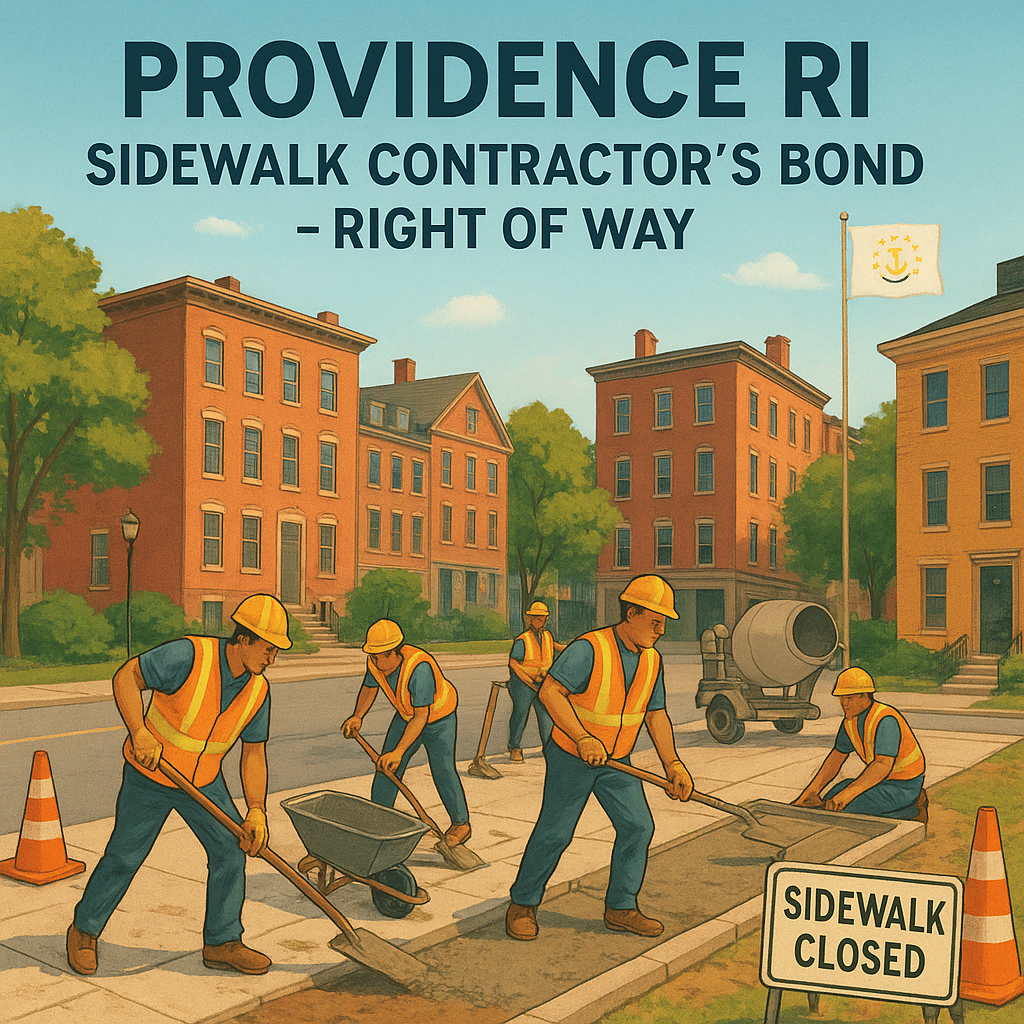
If you’re a contractor laying concrete, repairing curbs, or digging into the public right-of-way in Providence, you’ve probably heard the term “sidewalk contractor’s bond.” It might sound like just another piece of bureaucratic red tape. But think of it more like a promise note — one that protects the city, its residents, and even your business. Whether you’re brand-new to sidewalk work or you’ve been doing it for years, understanding this bond can save you from costly surprises.
What Exactly Is a Providence Sidewalk Contractor’s Bond?
Picture a three-way handshake. You have your contracting company, the City of Providence, and a surety company. The bond is a legal agreement among all three. It guarantees that you, as the contractor, will follow all the rules set out by the city when you work on sidewalks, curbs, driveways, and anything else in the public right-of-way.
This isn’t insurance for you. It’s protection for the city and the public. If your work doesn’t meet code, you leave a mess unfixed, or you fail to complete a required repair, the bond is there to cover the financial fallout. The surety company steps in to make things right — but make no mistake, you’ll have to pay them back every penny.
Why the City of Providence Requires This Bond
You might wonder, “Why does the city care so much about a bond?” The answer lies in safety, appearance, and long-term infrastructure. Providence sidewalks aren’t just pathways; they’re part of a shared public space. A poorly poured slab can turn into a tripping hazard. A trench left open for days can become a major liability.
The bond requirement keeps contractors accountable. It ensures that any company digging up the streets, replacing sidewalks, or performing right-of-way work leaves the area safe and fully restored. Without it, a project could be abandoned halfway, and taxpayers would be stuck footing the bill. The bond acts as that safety net, making sure there are funds available to fix things even if a contractor walks away.
Who Needs a Sidewalk Contractor’s Bond in Providence?
Generally, any contractor performing work within the city’s right-of-way needs a bond before pulling a permit. This applies to a wide range of professionals — concrete specialists, asphalt pavers, utility contractors, landscapers adjusting driveway aprons, and anyone else whose job involves cutting into or disturbing the sidewalk, curb, or road shoulder.
The requirement often comes from the Providence Department of Public Works. Before you break ground, you’ll present your bond certificate along with your permit application. It’s your ticket to start the job officially. Skipping this step isn’t just a paperwork oversight; it can lead to stop-work orders, fines, or even losing your ability to bid on future city projects.
How Much Does the Bond Cost?
Cost is always a top concern. You don’t pay the full bond amount upfront. Instead, you pay a small percentage — typically between 1% and 5% of the total bond amount — as a premium. So if the city requires a $10,000 sidewalk bond, your annual premium could be as low as $100 to $500, depending on your credit score and business history.
The exact bond amount varies based on the scope of your work or specific city regulations. Smaller patch jobs might require a lower bond, while large-scale sidewalk replacement along a commercial corridor may demand a higher amount. Your surety agent will help you figure out the right number. Strong personal credit often unlocks the best rates, but even contractors with less-than-perfect scores can usually get bonded through special programs.
The Step-by-Step Path to Getting Bonded
Getting your Providence sidewalk bond isn’t complicated. It often feels smoother than you might expect.
- Find a surety bond agency: Look for one familiar with Rhode Island municipal bonds. Experience with City of Providence requirements makes a big difference.
- Complete an application: You’ll provide basic business info, owner details, and, in most cases, a credit check. This helps the surety assess risk.
- Receive your quote: The agency presents a premium based on the bond amount and your financial standing.
- Pay the premium and sign: Once you accept, the bond becomes active. You’ll receive the official bond form to file.
- Submit to the city: Hand over the bond document alongside your permit application. Keep a copy for your records.
Many bonds renew annually. If you do recurring sidewalk work, you can set up a continuous bond that keeps you covered year after year without reapplying each time.
Common Situations Where the Bond Springs into Action
Let’s make this real. Imagine you’re replacing a cracked sidewalk panel in front of a Federal Hill home. You cut out the old concrete, pour fresh mix, and give it a smooth finish. But two weeks later, the new slab starts crumbling because the mix was off. The homeowner complains to the city. An inspector visits and slaps you with a notice: fix it within 30 days or the bond gets called.
That’s the bond doing its job. If you repair the problem promptly, no claim occurs. If you ignore it, the city files a claim against your bond. The surety then pays to hire another contractor to rip out and redo the slab. You’re now on the hook to reimburse the surety for every dollar spent — plus legal fees. That’s a financial gut punch you want to avoid.
What a Claim Could Mean for Your Business
A bond claim isn’t just a one-time inconvenience. It can trail you for years. Once a claim pays out, that money becomes your personal debt to the surety company. They will pursue repayment aggressively. Worse, a claim record makes you look risky. Future bond applications may face higher premiums, or you could be denied coverage altogether. Since many municipalities share contractor histories, a blemish in Providence could follow you to projects in Warwick, Cranston, or beyond.
That’s why it’s critical to treat the bond as more than a permit checkbox. It’s your professional reputation sealed in an agreement. Communication with inspectors, prompt corrections, and thorough cleanup go a long way to keeping your bond untapped.
Right-of-Way Bonds vs. General Contractor Bonds
You might already hold a general contractor license bond or a home improvement bond. So why add another? A right-of-way sidewalk bond is specialized. It specifically covers work in public spaces like sidewalks and road edges. General bonds often relate to the overall business license or consumer protection. The city wants a bond that explicitly addresses the public infrastructure you’ll touch.
Think of it as a targeted promise. Your general bond says, “I’ll run my company ethically.” The sidewalk bond says, “I’ll restore that public walkway exactly as the city demands.” They complement each other but aren’t interchangeable.
Protecting Your Business Beyond the Bond
While the bond protects the city, you still need your own safeguards. General liability insurance is a must. It covers property damage or injuries during construction. The bond doesn’t cover your tools, your truck, or an accident on the job. Pairing a strong insurance policy with your required bond creates a complete shield. If a passerby trips over your equipment, your insurance handles the medical claim, not your surety bond.
Also, document everything. Take dated photos before, during, and after every sidewalk job. Save your material receipts and concrete batch tickets. If a dispute arises, clear records can stop a bond claim in its tracks by proving you followed all specifications.
How to Avoid Bond Headaches Entirely
Staying out of trouble is usually straightforward. First, know the city’s specs cold. Providence has detailed standards for concrete mix, slope, reinforcement, and finishing. Don’t guess — get the latest guidelines from the engineering office. Second, conduct a thorough walk-through with the inspector before you pour anything. Third, maintain an open line of communication. If weather delays or material shortages push your timeline, notify the city proactively. They’d rather hear from you than discover an abandoned worksite.
Finally, never look at the bond as an excuse to cut corners. It’s there to catch you when honest mistakes happen, not to enable sloppy work. A reputable contractor views the bond requirement as a badge of trustworthiness that separates professionals from fly-by-night operators.
What If the Bond Amount Feels Too High?
Some contractors balk when they see a $25,000 or $50,000 bond requirement for a larger sidewalk project. It helps to remember you’re only paying the premium — that small fraction. If the premium stretches your budget, talk to your surety agent about financing or a phased payment plan. Some providers allow monthly installments on higher-bond premiums. You can also work on improving your credit to unlock lower rates over time.
Another option is to ask the city if bond amounts can be adjusted based on job value. For a small residential repair, the required bond amount might be substantially lower than for a full-block commercial overhaul. The bond should fit the risk, and many municipalities have tiered requirements.
Let’s Wrap It All Up
Securing sidewalk construction in Providence is about more than getting a permit. It’s about showing the city, your clients, and yourself that you stand behind your work long after the concrete sets. A sidewalk contractor’s bond is a simple tool with a big impact — it keeps public spaces safe, holds contractors accountable, and gives residents confidence that their streets and walkways will be properly maintained.
Once you understand the “why” and the “how,” the bonding process becomes just another manageable part of your project checklist. You’ll walk onto the job site knowing you have the right piece of paper in your pocket, the city’s trust, and a clear path to getting the work done right.