Contractors performing drainage or sewer work in Easton, Massachusetts must obtain a performance bond to guarantee compliance with town regulations. This three-party agreement protects the town and residents from substandard work, with costs varying based on the bond amount and contractor qualifications.
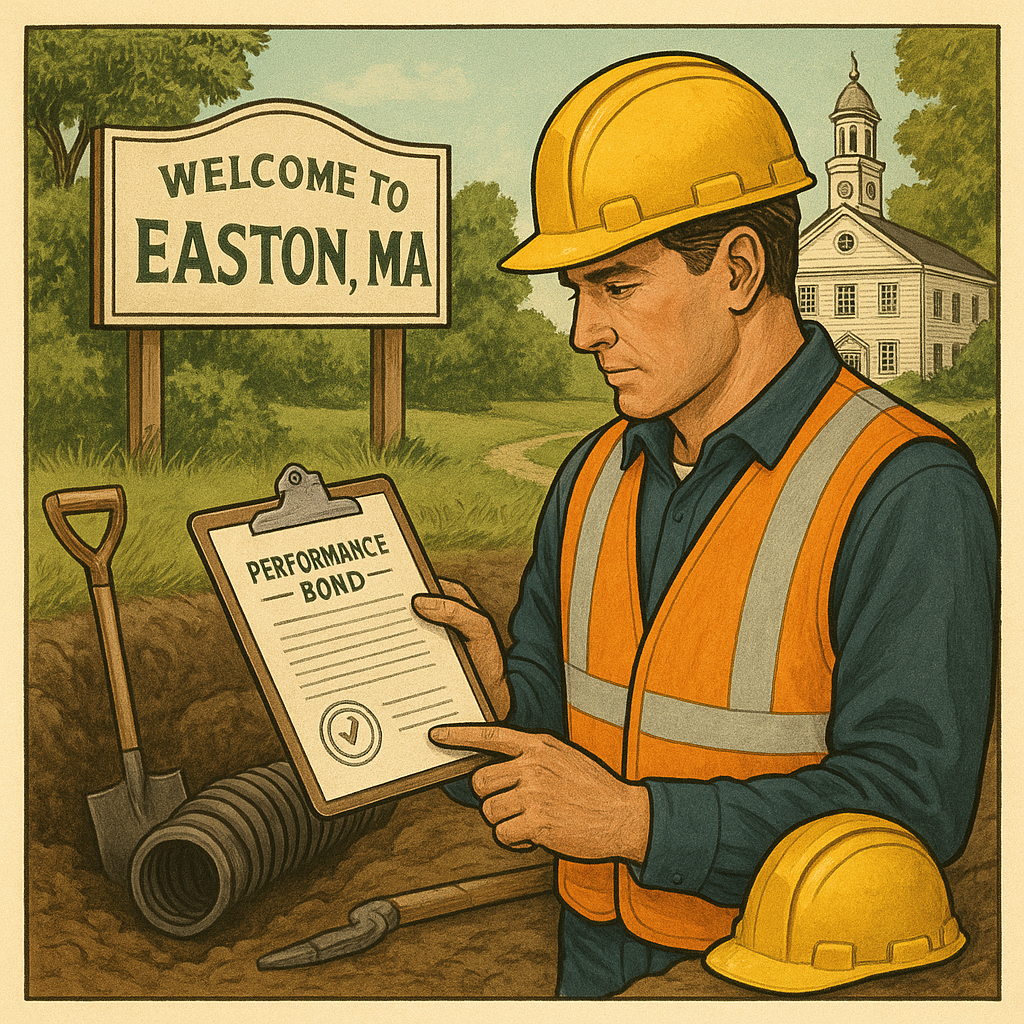
If you’re laying drain pipes or repairing sewer connections in Easton, Massachusetts, you might have heard the term “performance bond” tossed around. It sounds official, maybe a little intimidating. But it’s really just the town’s way of making sure everyone plays by the rules. Let’s unpack what the Easton MA drainlayer performance bond is, who needs it, and how you can get one without breaking a sweat.
What Exactly Is a Drainlayer Performance Bond?
Think of a performance bond like a security deposit for grown-ups. When you rent an apartment, you might hand over a deposit. If you leave the place trashed, the landlord keeps the money to fix things up. A performance bond works the same way—only instead of protecting a landlord, it protects the Town of Easton and its residents.
In plain terms, an Easton MA drainlayer performance bond is a three-party guarantee. You, the drainlayer, buy the bond from a surety company. The town is the “obligee” – the one who needs the promise. If you fail to follow Easton’s codes, complete the work properly, or meet your obligations, the town can file a claim on the bond. The surety steps in and pays the town, up to the bond amount. Then, you pay the surety back. It’s not insurance for you; it’s a financial shield for the community.
Why Does the Town of Easton Require This Bond?
You might wonder, “Why can’t I just do my job and be trusted?” It’s a fair question. The short answer is that drainage work isn’t just about one backyard—it affects everyone. A sloppy job can flood a neighbor’s basement, contaminate groundwater, or damage public roads. Easton wants to avoid those headaches.
The bond requirement, often labeled “Compliance Only,” emphasizes that this isn’t about guaranteeing a project’s completion in the traditional sense. Instead, it’s about guaranteeing you’ll stick to the town’s regulations, from the first shovel of dirt to the final inspection. The bond ensures you’ll secure proper permits, use approved materials, and fix any defects before they become public problems. Simply put, it’s Easton’s way of saying, “We’re happy to have you work here, but let’s keep our safety net in place.”
Who Needs a Drainlayer Performance Bond in Easton?
If you’re a contractor who digs, installs, alters, or repairs any drainage, sewer, or stormwater system within Easton town limits, this likely applies to you. That includes:
- Installing new residential drain lines.
- Connecting a property to the municipal sewer system.
- Repairing a collapsed pipe under a driveway.
- Setting up a commercial drainage system for a new building.
Even a small one-day job can trigger the requirement if it falls under the town’s drainage regulations. The rule of thumb is simple: before you break ground, confirm with Easton’s Building Department whether your license needs to be bonded. Don’t assume you’re exempt because you only do “minor repairs.” It’s always better to ask than to face a stop-work order.
How Much Does an Easton Drainlayer Bond Cost?
Here’s some good news: you aren’t paying the full bond amount out of pocket. The bond amount is set by the town—often a figure like $5,000, $10,000, or more, depending on the scope of work. But you only pay a small annual premium, typically a percentage of that total.
For most drainlayers with decent credit, that premium falls between 1% and 5% of the bond amount. So if Easton requires a $10,000 bond, you might pay as little as $100 a year. The exact rate depends on your personal or business credit score, your experience, and the surety company’s underwriting. A contractor with a strong track record and solid finances will sail through with a low rate. If your credit is a bit dented, don’t worry—you can still get bonded, often through special programs designed for higher-risk applicants. The cost simply adjusts to match the risk.
How to Get Bonded: A Simple Walkthrough
The process might feel unfamiliar, but it’s actually quite straightforward. Here’s a roadmap:
Step 1: Confirm the Bond Amount and Type
Call or visit the Easton Department of Public Works or Building Department. Ask them directly: “What’s the exact bond amount I need, and do you have a preferred bond form?” Some towns provide a specific form the surety must complete. Knowing this upfront prevents back-and-forth later.
Step 2: Apply with a Reputable Surety Agency
You can work with an independent insurance agent or a specialized bond company. The application is typically a one-page form asking about your business structure, years of experience, and maybe a couple of references. You’ll also grant permission for a credit check—soft pulls are common and won’t hurt your score.
Step 3: Receive Your Quote and Pay the Premium
Once you’re approved, the surety will send you a quote. Review the premium, make the payment, and sign the required indemnity agreement. That agreement is just your promise to repay the surety if a claim ever gets paid out.
Step 4: File the Bond with the Town
The surety will issue the actual bond document. You or your agent will then deliver it to the town clerk or the appropriate department. Keep a copy for yourself. The bond stays on file, and you’ll renew it annually—or as long as your Easton drainlayer license remains active.
What Happens If a Claim Is Filed?
Nobody likes imagining worst-case scenarios, but understanding the claim process helps you sleep better. Suppose a homeowner complains that your drainage work caused a sewage backup into their basement. The town investigates and finds you didn’t follow code. Easton can file a claim against your bond.
The surety company will then investigate, too. If the claim is valid, the surety pays the town up to the bond penalty. And here’s the crucial part: that payout is not a gift. Legally, you must reimburse every penny the surety spent. Think of the surety as a co-signer on a loan—they front the money, but you’re on the hook. That’s why it’s so important to do the job right the first time. A single claim can not only drain your wallet but also make it harder and more expensive to get bonded in the future.
Keeping Your Compliance Spotless
Worried about claims? Keep these habits in your toolbox:
- Know the specs. Easton has detailed regulations about pipe materials, trench depths, backfill methods, and more. Don’t rely on memory; grab the latest town code and keep it handy.
- Pull every permit. Even if the homeowner says “don’t bother,” the liability falls on you. No permit means no protection.
- Document everything. Snap photos of your work at every stage. If a question arises six months later, you’ll have proof you did things correctly.
- Fix issues immediately. If a customer points out a problem, respond fast. Blaming the soil or the weather won’t earn you points. The town values proactive problem-solvers.
Common Misconceptions About Drainlayer Bonds
Let’s clear up a few misunderstandings that float around Easton’s contractor community.
“My general liability insurance already covers this.” Not quite. Insurance protects you from accidents and property damage. A compliance bond guarantees you’ll follow the rules and finish the work properly. They serve different masters, and the town wants both.
“The bond is too expensive for a small operation.” When you break down the annual premium against the jobs you’ll win by being fully licensed, it’s minimal. A $150 bond premium is far cheaper than a $5,000 fine or a lost contract.
“Only big companies need to bother.” Easton’s rules apply to all drainlayers—large and small. In fact, as a solo operator, you have even more to lose if something goes wrong. The bond level is the same for everyone, so don’t count on slipping under the radar.
Why This Bond Is Actually a Good Thing for Your Business
It’s easy to view a required bond as just another bureaucratic hoop. But take a step back. This bond tells potential customers that you’re serious, vetted, and backed by a financial guarantee. Homeowners in Easton feel more comfortable hiring a bonded drainlayer because they know there’s recourse if things go sideways. You can use your bonded status as a marketing advantage—include it in your website, your business cards, and your quotes. It says, “I stand by my work, and the town trusts me to do it right.”
Renewals and Staying Current
Most drainlayer bonds run on an annual cycle. A month before expiration, you’ll receive a renewal notice from your surety. Pay the premium, and you’re good for another year. Miss the renewal, and the bond lapses. If your bond expires while a project is still underway, Easton can suspend your permit. Set a calendar reminder, and don’t let a simple oversight interrupt your cash flow.
Ready to Get Started?
Acquiring your Easton MA drainlayer performance bond doesn’t have to be a headache. The key is to reach out before you even bid on a job. A quick call to a bond professional can clear up the fog, get you a free quote, and put you on the path to full compliance. Remember, this bond isn’t here to trip you up—it’s here to let you work confidently, protect your reputation, and keep Easton’s infrastructure healthy for everyone.
Now that you understand the why, the how, and the what-next, you’re ready to tackle drainage projects with the town’s blessing. Go dig, and do it right.