Plainville, Massachusetts requires drainlayers to secure a performance bond labeled "compliance only," ensuring their work adheres to town codes and regulations. This bond acts as a financial guarantee that protects property owners and the community by providing a remedy if drainage work is non-compliant or left incomplete.
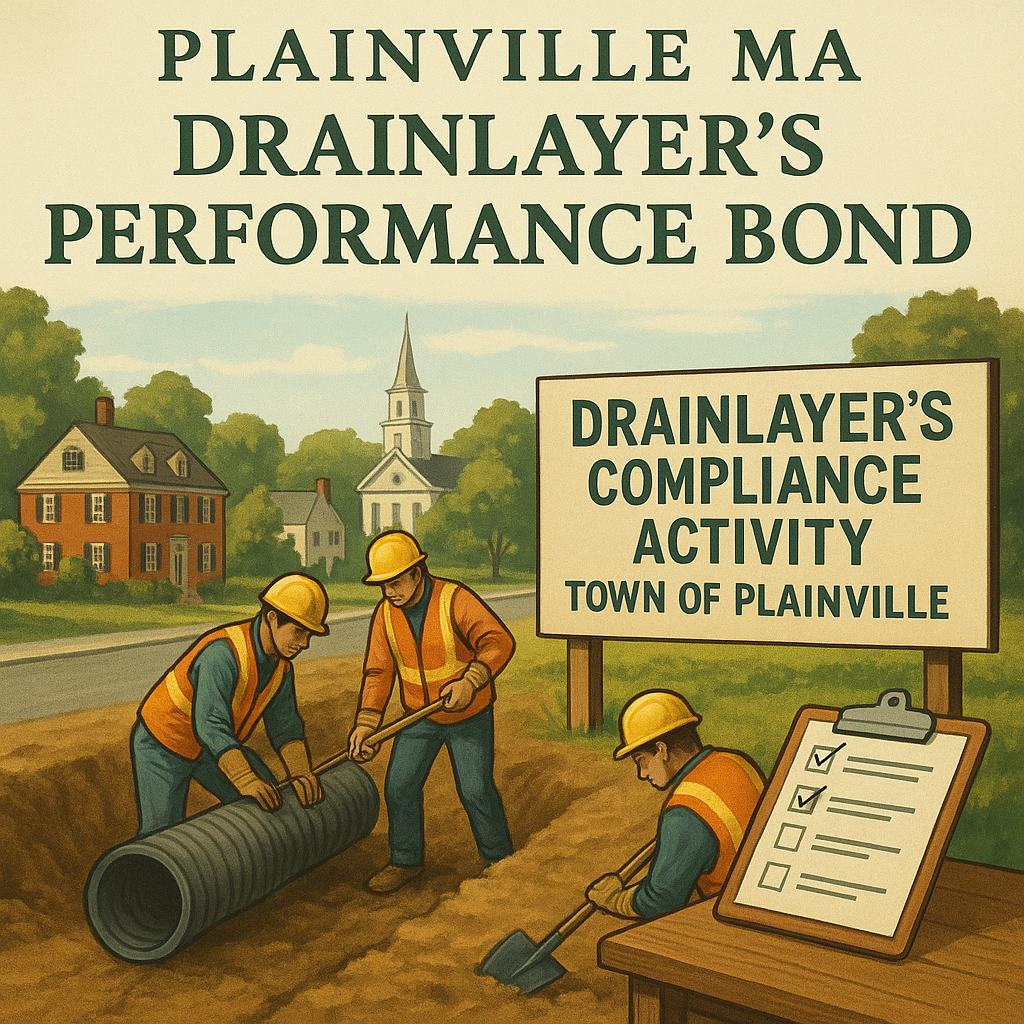
If you’re a drainlayer working in Plainville, Massachusetts—or you’re hoping to start—you’ve probably come across the term drainlayer performance bond. At first glance, it might sound like just another piece of red tape. But dig a little deeper, and you’ll find it’s actually a straightforward way the town makes sure drainage work is done right, protecting both property owners and the community.
So, what exactly is this bond? How does it affect you? And why does Plainville refer to it as a “compliance only” requirement? Let’s walk through everything in plain English, without the insurance-speak.
What Is a Drainlayer Performance Bond, Really?
Think of a performance bond like a safety net. When a contractor installs a new drainage system—say, connecting a home to the town sewer or repairing a storm drain—the municipality wants a guarantee that the job will meet local codes and standards. A performance bond is that guarantee, backed by a surety company.
In Plainville, the bond isn’t called a “license bond” or a “permit bond.” It’s specifically a drainlayer’s performance bond, but with a twist: it’s labeled “Compliance Only.” This means the bond is focused on ensuring the drainlayer follows all of Plainville’s rules and regulations for drainage work. If the work isn’t up to code, or if the drainlayer disappears halfway through a project, the bond provides a financial remedy.
Here’s a simple analogy. When you rent an apartment, you often pay a security deposit. That deposit isn’t a punishment—it’s a promise. If you leave the apartment in good shape, you get your money back. If you trash the place, the landlord uses the deposit to fix it. A drainlayer’s performance bond works the same way. You’re putting down a financial promise that your drainage work will be clean, safe, and compliant. If something goes wrong, the town can make a claim against that promise to cover repair costs.
Why Plainville Requires This Bond: The “Compliance Only” Angle
You might wonder why the town insists on a “compliance only” bond instead of a broader performance bond that covers every possible mishap. The answer lies in how Plainville structures its drainlayer licensing.
Drainlayers in Plainville must be licensed, and that license comes with conditions. The bond guarantees that the drainlayer will comply with all applicable town bylaws, regulations, and directives from the Department of Public Works or other relevant bodies. It’s not about insuring the contractor’s workmanship in a general sense—that’s what liability insurance is for. Instead, this bond is laser-focused on regulatory compliance. If you install a drainpipe that doesn’t meet the town’s slope requirements, or if you dig up a road without proper restoration, the bond can be tapped to bring things into line.
For residents, this is a huge relief. It means the town has a tool to enforce quality without relying solely on court battles or hoping the contractor voluntarily fixes mistakes. For drainlayers, it signals that Plainville takes its infrastructure seriously—and that everyone plays by the same rulebook.
Who Needs This Bond?
If you’re performing any kind of drainlaying work in Plainville—whether it’s installing new sewer connections, repairing lateral drain lines, or working on catch basins—you’ll almost certainly need to obtain this bond before pulling a permit. It’s not optional; it’s a prerequisite for being a licensed drainlayer in town.
This requirement covers both individual drainlayers and companies. Even if you’re a seasoned pro with decades of experience in nearby towns like North Attleborough or Wrentham, you’ll still need to secure a Plainville-specific bond. Each municipality sets its own rules, so a bond from another town won’t transfer over.
How Does the Bond Process Actually Work?
Let’s break it down into bite-sized steps so you know exactly what to expect.
1. Determine the Required Bond Amount
Plainville sets a fixed bond amount for drainlayers. The exact figure can change, so always check with the town’s Building Department or DPW. Often, the amount is a few thousand dollars—enough to cover typical correction costs without being overly burdensome on small businesses.
2. Apply Through a Surety Bond Provider
You can’t walk into a hardware store and buy this bond off the shelf. You’ll need to work with a licensed surety bond agency. The application is usually simple: you provide basic business information, possibly a credit check, and details about your license. Because this is a “compliance only” bond, the underwriting is often straightforward, and many agencies can quote you a premium within minutes.
3. Pay the Premium, Not the Full Bond Amount
One common misconception is that you have to fork over the full bond penalty upfront. You don’t. You pay a premium—a small percentage of the total bond amount. For a $5,000 bond, your annual premium might be a few hundred dollars, depending on your credit and business profile. This makes bonding accessible even for newer contractors.
4. File the Bond with the Town
Once you have the bond document, you’ll submit it to the Plainville town office that handles drainlayer licensing. The bond must be in place before you can be issued a license or pull your first permit. Keep a copy for your records, and note the expiration date. Most bonds renew annually, just like your license.
5. Do Great Work and Stay Compliant
The best way to treat this bond? Forget it’s there. As long as you follow Plainville’s drainage regulations, complete projects to code, and address any concerns promptly, you’ll never hear about a claim. The bond simply sits quietly in the background, allowing you to focus on your craft.
What Happens If a Claim Is Filed?
Let’s be realistic: even the most careful drainlayer can face a dispute. Maybe a homeowner complains that a trench wasn’t backfilled properly, or the town inspector flags a defective pipe slope after a heavy rain. If Plainville determines you violated a regulation, they can file a claim against your bond.
Now, here’s the part many contractors misunderstand. The surety company will investigate. If the claim is valid, the surety pays the town up to the bond limit to fix the problem. But—and this is crucial—you are still responsible for every penny paid out. The bond is not insurance for the drainlayer; it’s a financial guarantee for the public. The surety will then seek reimbursement from you. So, a claim means you not only have to correct the work but also repay the bond company. That’s why compliance is always the cheaper, smarter path.
Common Questions Drainlayers Ask
“I already have general liability insurance. Why do I need a bond?”
General liability insurance protects against bodily injury and property damage, but it doesn’t guarantee that your work will meet the town’s specific codes and bylaws. The compliance bond fills that gap. It’s about regulatory adherence, not just accidents.
“Can I use a bond from another town?”
No. A bond issued for Foxborough or Mansfield isn’t valid in Plainville unless the bond form specifically names Plainville and is accepted by the town. Each municipality has its own requirements and obligee wording. You’ll need a separate bond for Plainville.
“What if my credit isn’t perfect?”
Don’t panic. Compliance bonds are generally considered low-risk, so many surety companies offer programs for applicants with less-than-stellar credit. You may pay a slightly higher premium, but coverage is still within reach. Talk honestly with your bond agent—they can guide you to the right program.
“Is this the same as a performance bond for a specific construction project?”
Sort of, but not exactly. A classic project performance bond guarantees completion of a single, defined project. Plainville’s drainlayer performance bond is more of a blanket, continuous bond tied to your license. It covers all the drainage work you do under that license during the bond term. It’s ongoing compliance, not a one-shot deal.
Why This Bond Benefits You, the Drainlayer
It’s easy to see bonding requirements as a hurdle. But look at it from a different angle. Holding a Plainville drainlayer performance bond instantly tells customers and town officials that you’re a legitimate, responsible professional. It sets you apart from unlicensed handymen who might take shortcuts. When a homeowner sees that you’re bonded, they know there’s accountability behind your work. That can be a powerful marketing advantage in a competitive field.
Moreover, the bond requirement helps maintain high standards that protect everyone’s infrastructure. A poorly installed drain can cause groundwater contamination, road collapses, or basement backups—problems that ripple through the entire community. By requiring bonds, Plainville is actively preventing those headaches. And when you’re part of that system, you’re contributing to a safer, more reliable town.
Getting Started with Your Plainville Drainlayer Bond
Ready to check this task off your list? Start by contacting the Plainville Department of Public Works or the Building Department to confirm the current bond amount and exactly which forms they need. Then reach out to a reputable surety bond agency that understands Massachusetts municipal bonds. They can often issue your bond the same day, digitally or on paper.
Remember, this isn’t just bureaucratic paperwork. It’s a mutual promise between you, the town, and the people whose homes and businesses rely on sound drainage. And in Plainville, that promise is built on compliance—plain and simple.
So, whether you’re laying your first pipe in town or you’ve been serving Plainville for years, keeping that bond active and understanding its role will keep your business flowing smoothly, just like the drains you install.