The City of Meriden requires a right of way bond for any project disturbing public land, serving as a financial guarantee that work is completed correctly and damage is repaired. This surety bond protects the municipality from liability, ensuring property owners and contractors restore the right of way to its original condition.
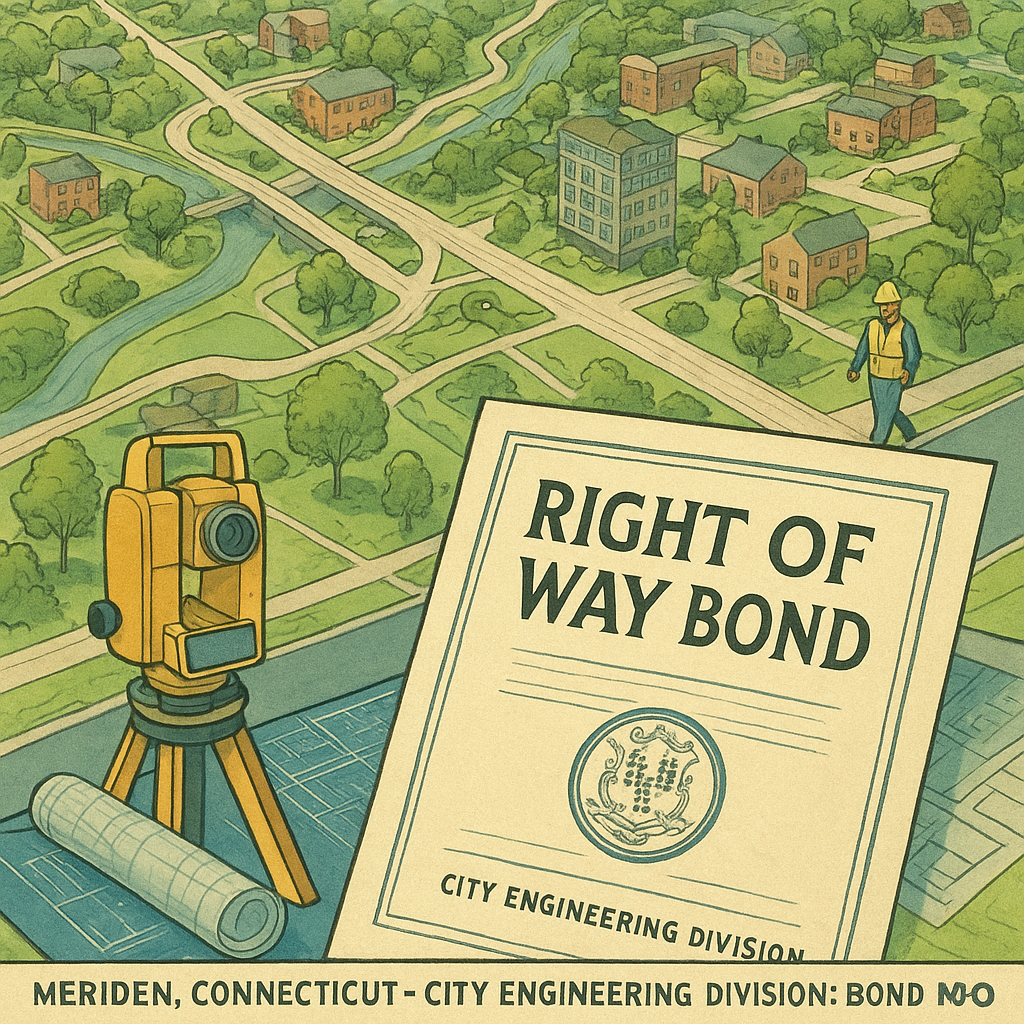
Have you ever glanced at that cracked sidewalk in front of your home and thought, “I should really fix that”? Or maybe you’re a contractor about to break ground on a utility line that crosses a city street. If your project touches the strip of land between your property and the pavement — what municipalities often call the “right of way” — the City of Meriden wants a little extra assurance that everything will be put back exactly the way it was. That assurance comes in the form of a Meriden CT Right of Way Bond.
At first blush, a bond can sound intimidating. You might picture stacks of paperwork and a confusing financial commitment. But a right of way bond is actually a very straightforward promise. Think of it as a security deposit you’d leave with a landlord, except it’s for the city’s land. You’re saying, “I promise to do this work correctly and repair any damage, and here’s a financial guarantee to back up my words.”
In this guide, we’ll break down everything a property owner or contractor needs to know about the City of Meriden Engineering Division’s right of way bond requirement. We’ll keep the language simple, the explanations human, and the path forward crystal clear.
What Exactly Is a Right of Way Bond?
A right of way bond is a type of surety bond. But what does that mean for you? In everyday terms, it’s a three-party agreement. You, the principal, are the person buying the bond. The City of Meriden is the obligee — the one who requires the bond and is protected by it. And a surety company is the financial muscle that provides the bond. If you fail to fix a broken curb or leave a trench unfilled, the city can claim against the bond to cover the cost of repairs, and the surety pays out first. Then, you’ll need to reimburse the surety. So the bond is not insurance for you; it’s a guarantee for the municipality.
Picture it as co-signing a loan. The surety co-signs your promise to the city, saying, “We trust this person, but if they don’t follow through, we’ll cover it.” It’s a powerful tool that keeps public spaces safe and attractive without the city having to chase property owners through court.
Why Does the City of Meriden Engineering Division Require It?
The Engineering Division is responsible for maintaining the integrity of Meriden’s public infrastructure. That includes streets, sidewalks, curbs, gutters, traffic signs, and underground utilities that run beneath the right of way. When you dig up a sidewalk to install a new sewer lateral or widen a driveway apron, you’re temporarily disturbing something the whole neighborhood relies on.
Without a bond, the city bears the risk. If a contractor does subpar work and then disappears, taxpayers end up footing the bill for emergency repairs. The bond requirement shifts that risk back to the person doing the project. It ensures that the work meets specifications, that debris is cleaned up, and that any settling or potholes are addressed later on. Essentially, the Engineering Division is simply being a good steward of public property — and the bond is the tool that makes sure your private project doesn’t become a public headache.
Who Needs a Meriden Right of Way Bond?
You might need one if you’re:
- A homeowner planning a driveway expansion that will cross a public sidewalk.
- A contractor installing or repairing a water service line from the street main to a house.
- A utility company burying cable or gas lines under a city street.
- A business owner replacing a section of sidewalk in front of a storefront.
- A developer creating a new subdivision with new road connections.
In short, any person or entity that will be excavating, altering, or even temporarily obstructing the public right of way within Meriden city limits will likely need this bond. The Engineering Division will notify you during the permit application process if a bond is required for your specific project.
How Does the Process Work? Step by Step
Getting a right of way bond doesn’t have to feel like navigating a maze. Here’s a typical journey, broken into manageable pieces.
1. Apply for a Permit with the Engineering Division
Everything starts at Meriden City Hall’s Engineering Division. You’ll describe your project, show plans, and fill out the necessary paperwork. The staff will review your proposal and determine what type of work falls within the right of way. If it does, they’ll inform you of the bond requirement and specify the bond amount. That amount is based on the estimated cost of restoring the public area to its original condition.
2. Request a Quote from a Surety Bond Provider
Once you know the required amount, you can approach any licensed surety company or an insurance agency that offers surety bonds. Many of them handle these bonds online. You’ll provide basic information about your business or personal finances, and they’ll run a quick credit check. For smaller bonds — say, under $25,000 — approval is often instant. Larger amounts might require a more detailed review. The good news? Right of way bonds are considered low-risk, so premiums stay quite affordable.
3. Pay the Premium and Receive Your Bond Form
Instead of paying the full bond amount upfront, you’ll pay a small percentage called the premium. For example, a $10,000 bond might cost you as little as $100 to $300 per year, depending on your credit and the exact scope of work. The premium is the only non-refundable cost you’ll pay out of pocket. Once paid, the surety issues a bond form. That’s your proof that the guarantee is in place.
4. File the Bond with the City
Take the original bond document to the Engineering Division. They’ll keep it on file and link it to your permit. Once the bond is recorded, your permit becomes active and you can start the physical work.
5. Complete Your Work and Schedule an Inspection
As you near completion, the city will inspect the job. If everything passes muster — proper compaction, smooth pavement, correctly placed forms — the bond obligation ends. At that point, the bond might be released or allowed to expire naturally, depending on any maintenance period that Meriden requires (often a year to ensure no settling).
What Factors Affect the Cost of the Bond?
The bond amount is set by the city, not by the surety. You don’t get to choose a lower amount to save money. But the premium you pay is influenced by a handful of personal factors:
- Your credit score: Applicants with strong credit often pay as little as 1% to 3% of the bond amount.
- Project complexity: A simple sidewalk replacement might carry a smaller bond amount than a deep utility trench that crosses a major intersection.
- Bond term: If the permit requires a bond to stay active for a multi-year maintenance period, the overall premium may be slightly higher.
How’s this for a relatable analogy? Imagine renting a tuxedo. You don’t buy the entire suit; you pay a rental fee. The rental fee is based on how long you need it and your history of returning things in good shape. The bond premium works the same way — it’s a small rental fee for a large promise.
Common Questions Property Owners Ask
Let’s address a few worries that often bubble up when people first hear about this requirement.
“Is this the same as insurance for my project?”
Not quite. A bond protects the city, not you. That said, it does give you a financial incentive to complete the job correctly. If you accidentally damage a buried fiber optic line, the bond can cover repair costs, but you’ll ultimately repay the surety. Many contractors also carry separate liability insurance to protect themselves. The bond and insurance work side by side, but they’re different tools.
“What if I don’t get a bond?”
Skipping the bond isn’t an option if the Engineering Division makes it a permit condition. Doing the work anyway could result in a stop-work order, fines, or even having to tear out unapproved installations at your own expense. It’s far less painful to secure the bond and keep everything above board.
“Can I use cash instead of a bond?”
Some municipalities allow a cash deposit in lieu of a bond, but Meriden typically requires the surety bond because it’s easier to administer and guarantees immediate funds without a legal battle. Always ask the Engineering Division staff — they’ll clarify which options are acceptable for your specific case.
How the Bond Benefits You, the Property Owner
Believe it or not, this bond is not just red tape. It protects you too. If a contractor you hire botches the restoration, the city can use the bond to force corrections without you being stuck in the middle. That leverage can motivate a contractor to show up and fix problems promptly. Also, a completed bond signals to future buyers that your property’s connection to city infrastructure was done legally and with oversight. When you sell your home, you won’t inherit hidden liabilities from unpermitted work.
A Real-World Scenario to Tie It All Together
Imagine Maria, a homeowner on Broad Street. She wants to replace her crumbling front walk and the narrow apron where her car scrapes the curb every day. Her contractor says they’ll need to cut into the public sidewalk to widen the slope. Maria applies for a right of way permit at the Engineering Division, and they assign a $4,000 bond. She contacts a surety agency online, pays a $120 premium, and gets the bond in her email the same day. Work begins, the city inspects, and six months later with no settling issues, the bond is released. Total extra cost: $120. Peace of mind: priceless.
Quick Tips for a Smooth Experience
- Start early: Don’t wait until the day before your contractor arrives. Bond issuance can take anywhere from a few hours to a few days.
- Ask for the bond amount in writing: Get it straight from the Engineering Division so you don’t accidentally buy the wrong coverage.
- Work with a knowledgeable surety agent: Someone who regularly handles Connecticut right of way bonds will make the process swift.
- Keep copies: Save a digital copy of the bond and the permit on your phone. If a city inspector stops by, you’ll have everything handy.
Wrapping It All Up
The Meriden CT Right of Way Bond is, at its heart, a promise to your neighbors and your city. It says you respect the shared spaces that connect us all — the sidewalks where kids ride bikes, the curbs that guide rainwater away from basements, and the streets that carry us home. While the requirement might feel like one more hoop to jump through, it’s actually a surprisingly affordable way to make sure your property improvement project becomes something you’re proud of, not something that haunts you later.
Next time you’re at the kitchen table planning that driveway, that new fence, or that trench for a French drain, don’t let the bond scare you. Embrace it as the simple, low-cost tool that keeps everything safe, legal, and looking great. And if you ever have questions, the City of Meriden Engineering Division is just a phone call away — they’ve guided countless property owners through the process and are happy to do the same for you.