Farmington, Connecticut requires a Right of Way Permit Bond for construction or utility work affecting public roads, sidewalks, or rights-of-way. This financial guarantee protects the town from costly damage or incomplete restoration, ensuring contractors fulfill their obligations to restore public spaces properly.
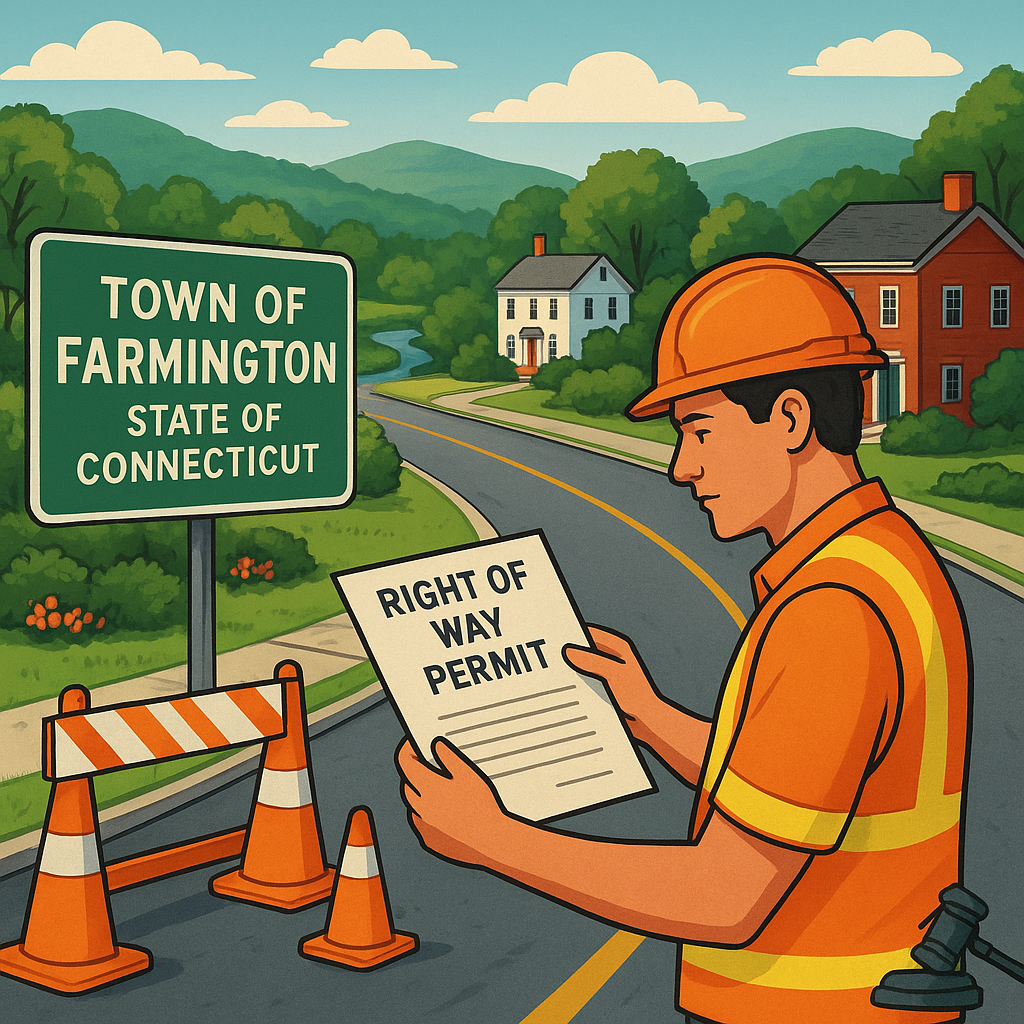
If you’re planning any kind of construction or utility work that touches a public road, sidewalk, or right-of-way in Farmington, Connecticut, you’ve probably stumbled across the term Right of Way Permit Bond. It might sound like just another piece of paperwork, but understanding it can save you from headaches, delays, and unexpected costs. Let’s break it all down in plain, everyday language.
What Exactly Is a Right of Way Permit Bond?
Think of a Right of Way Permit Bond as a promise you make to the Town of Farmington. You’re promising to do your work safely, follow local rules, and leave the public space in good shape when you’re done. But this isn’t just a verbal promise—it’s a financial guarantee backed by a surety company.
In simple terms, the bond involves three parties:
- The Principal – That’s you, the contractor or property owner doing the work.
- The Obligee – The Town of Farmington, which requires the bond to protect public property.
- The Surety – The insurance-like company that issues the bond and vouches for you.
If something goes wrong—say you dig up a sidewalk and don’t repave it properly, or you damage underground utilities—the town can file a claim against your bond. The surety would pay to fix the problem, and then you’d need to reimburse the surety. It’s a safety net for the community, not a free pass for shoddy work.
Why Does Farmington, CT Require This Bond?
Farmington is a beautiful town with well-maintained roads, sidewalks, and public spaces. Whenever someone needs to cut into a street, trench through a right-of-way, or temporarily block a sidewalk, there’s a risk of damage or incomplete restoration. The town uses the permit bond to make sure taxpayers aren’t left footing the bill for repairs that a contractor should handle.
It’s not about distrusting contractors. It’s about accountability. You might be the most careful excavator in the state, but mistakes happen. The bond ensures there’s a clear, funded path to set things right without involving lengthy legal battles or strained municipal budgets.
Who Needs a Right of Way Permit Bond in Farmington?
Not every project will trigger this requirement, but many do. You’ll likely need a bond if your work involves:
- Opening or excavating any part of a public road or shoulder.
- Installing, repairing, or replacing utilities like water, sewer, gas, electric, or telecommunications lines within the right-of-way.
- Constructing or repairing driveways that connect to a public street.
- Sidewalk installation or repair that encroaches on the public right-of-way.
- Landscaping or tree work that requires temporary closure of a sidewalk or lane.
Both contractors and private property owners can be required to secure the bond, depending on who’s pulling the permit. Always check with Farmington’s Engineering or Public Works Department before you start digging.
How Does the Bond Process Work?
Getting a Right of Way Permit Bond is usually straightforward, especially if you work with a surety bond agency that understands Connecticut’s local requirements. Here’s a quick step-by-step look at what you can expect:
Step 1: Determine the Bond Amount
The town will tell you how much coverage you need. This often depends on the scope of the project. A small driveway apron might require a $5,000 bond, while a major road cut for a new subdivision could need $50,000 or more. The bond amount is set to cover the estimated cost of restoring the public space to its original condition.
Step 2: Apply with a Surety Company
You’ll fill out a bond application, which usually asks about your business, credit history, and the specific project. For smaller bonds, approval can be quick—sometimes same-day. For larger ones, the surety might do a deeper review.
Step 3: Pay the Premium
You don’t pay the full bond amount upfront. Instead, you pay a small percentage called the premium. This can range from about 1% to 10% of the total bond value, depending on your credit score and financial strength. A $10,000 bond might only cost you $100 to $500 a year.
Step 4: Get Your Bond Form
Once approved, the surety issues the official bond document. You’ll submit this to the Town of Farmington along with your permit application. The bond stays on file until the work is completed and approved, and any required maintenance period has passed.
Step 5: Complete the Work and Close Out
After your project is finished and the town inspects the site, they’ll release or “exonerate” the bond if everything is satisfactory. If there’s a maintenance period (say, one year), the bond might remain active to cover any defects that show up later.
What Happens If Someone Files a Claim?
Nobody wants to deal with a bond claim, but it’s important to know how it works. If the town finds your restoration work is failing—like a sinking trench or crumbling asphalt—they’ll notify you and the surety. Ideally, you fix the issue yourself. If you don’t, the surety may step in, hire another contractor to make repairs, and then come after you for reimbursement.
This is why it’s crucial to treat the bond as a real obligation. It’s not just a fee you pay and forget. It’s a financial guarantee that you stand behind your work long after the equipment has left the site.
Common Mistakes to Avoid
Navigating the bonding and permitting process can be tricky. Here are some pitfalls we’ve seen other contractors stumble into:
- Guessing the bond amount. Always get the required figure directly from the town. An underbonded permit might be rejected, costing you valuable time.
- Not reading the permit conditions. Farmington might have specific restoration standards, like using certain materials or compaction requirements. The bond covers compliance with those rules, so ignoring them is asking for trouble.
- Forgetting the maintenance period. Some people think the bond ends the minute they backfill the hole. But many permits require you to maintain the repair for months or even a year. Keep your bond active until the town officially releases it.
- Treating the bond like insurance for yourself. The bond protects the town, not you. If you damage your own equipment, that’s on you. If you want protection for your own business, look into contractor liability insurance.
How Much Does a Right of Way Permit Bond Cost in Farmington?
Costs vary based on the bond amount and your financial profile. Let’s look at a few realistic scenarios to give you a ballpark idea:
Small project bond ($5,000): A contractor with good credit might pay around $100 per year. For someone with challenged credit, maybe $250-$500.
Mid-range bond ($25,000): Premiums often land between $250 and $1,250 annually, again depending on credit.
Larger bond ($50,000+): At this level, the surety might ask for more financial documentation. Premiums could be $500 to $2,500 or more.
The best way to lock in a low rate is to maintain solid credit and work with a specialized surety bond agency that has access to multiple markets. They can shop around for you.
Is This the Same as a Contractor License Bond?
Great question! No, they’re different. A contractor license bond is often required by the state or municipality just to be in business—it guarantees you’ll follow building codes and trade laws generally. The Right of Way Permit Bond is project-specific and focused solely on protecting public property during work in the right-of-way. You might need both, depending on your business and the job.
What Farmington Contractors and Homeowners Should Remember
Whether you’re a seasoned excavator or a homeowner installing a new driveway, the Right of Way Permit Bond is a tool that keeps everyone honest. It’s not meant to be a barrier—it’s a way to ensure that Farmington’s streets and sidewalks stay safe and attractive for everyone.
Before you break ground, give the town a call, check the bond requirement, and line up your surety bond early. That small step can prevent big headaches down the road. And when you drive past that clean patch of asphalt you installed months ago, you’ll know you did right by your community—and by your reputation.
Where to Get a Right of Way Permit Bond in Connecticut
You can obtain a bond through any licensed surety bond agency. Many agencies now offer online applications and instant quotes. Look for one that’s familiar with Connecticut municipal bonds and can guide you through Farmington’s specific requirements. A little expert help goes a long way in making sure your bond aligns perfectly with what the Town of Farmington expects.
In the end, the Right of Way Permit Bond is just one piece of a successful project. But understanding it fully puts you in control, keeps your job on schedule, and shows the town that you’re serious about doing quality work. And that’s good for business.