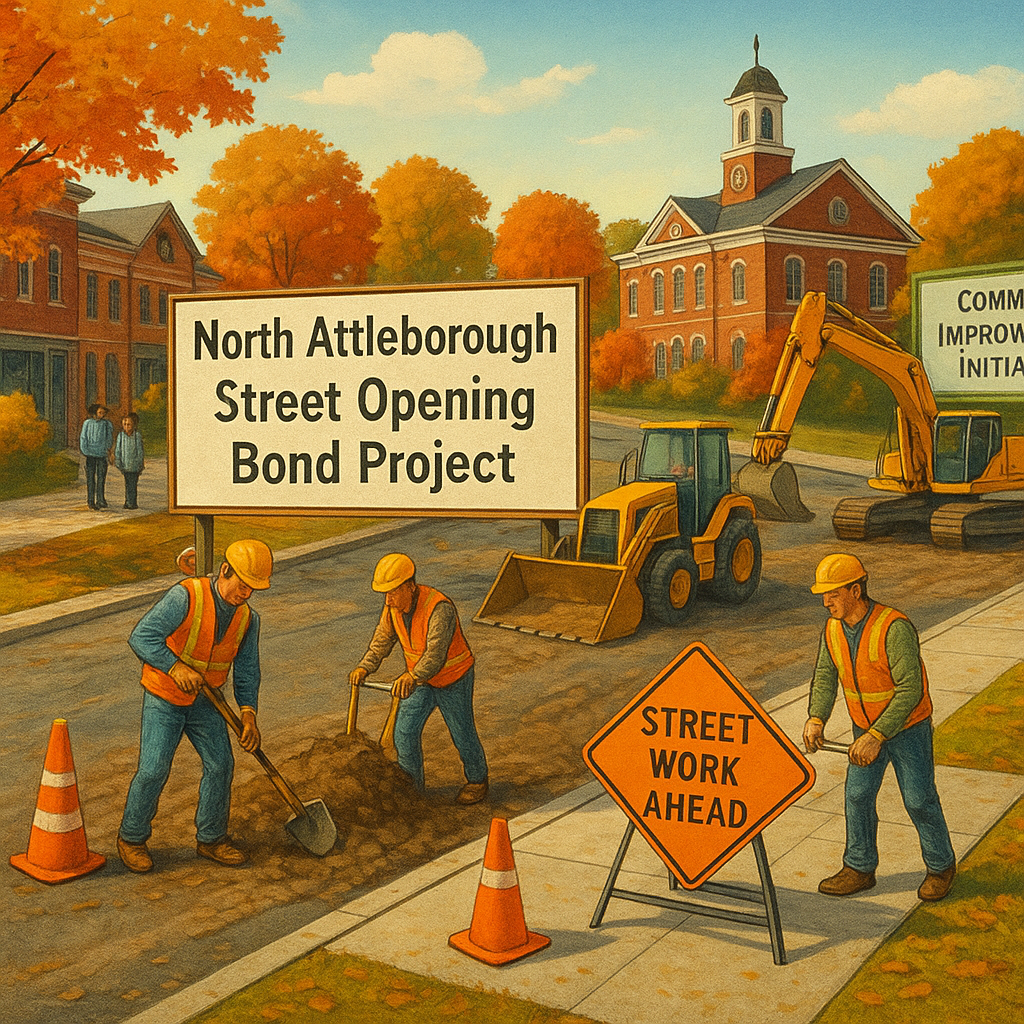
A street opening bond in North Attleborough, Massachusetts, is a surety bond required for any project disturbing a public way, guaranteeing that contractors and homeowners restore the road to town standards and cover costs if they fail. It provides financial protection, accountability, and standardized quality, applying to utility contractors, plumbers, and even homeowners doing DIY projects.
What Exactly Is a Street Opening Bond?
Imagine you’re about to dig up a section of public road to connect a new water line, repair a sewer pipe, or install underground fiber. The town says, “We trust you’ll do a great job—but we need a solid promise that you’ll put everything back the way you found it.” That promise comes in the form of a street opening bond. It’s a type of surety bond that guarantees you’ll follow local rules, complete the excavation safely, and restore the pavement to the town’s standards once the work is done. If something goes wrong along the way, the bond is there to cover the costs so taxpayers don’t foot the bill.
In North Attleborough, Massachusetts, this isn’t just a friendly handshake—it’s a legal requirement for most projects that disturb a public way. Think of it as a safety net that protects both the community and the person doing the digging. You put up the bond, do the work right, and everyone sleeps better at night.
Why Does North Attleborough Require a Street Opening Bond?
North Attleborough, like many New England towns, takes its roads seriously. Those asphalt ribbons aren’t just paths for cars; they hold water mains, gas lines, underground electric, and drainage systems that keep daily life humming. When someone needs to cut into the street, there’s risk—risk of a sloppy patch that turns into a pothole, risk of damaging buried infrastructure, or risk of leaving a trench that sinks over time. A street opening bond helps the town manage that risk without dipping into public funds.
By requiring a bond, the town ensures three key things:
- Financial protection – If the contractor walks away or botches the restoration, the bond money steps in to fix it.
- Accountability – Contractors and homeowners know they’re on the hook until the final inspection is passed.
- Standardized quality – The bond requirements often go hand in hand with a permit that spells out materials, compaction, and paving thickness, so every patch meets the same high bar.
For North Attleborough residents, that means fewer surprise potholes and a smoother commute long after the backhoe leaves.
Who Needs This Bond? (You Might Be Surprised)
The short answer: anyone approved for a street opening permit in North Attleborough. But let’s break that down because it’s not just big construction companies. You might need a street opening bond if you’re a:
- Utility contractor installing gas, electric, water, or sewer lines.
- General contractor handling new home construction or a major addition that requires connecting to public utilities under the street.
- Plumber or drain layer repairing a broken service line from the main to a house.
- Homeowner taking on a DIY project, such as replacing a driveway culvert that crosses the town right-of-way.
- Telecommunication company running fiber optic cable through a neighborhood.
Yes, even a homeowner might be asked to post a bond before getting the green light to open the road. In many cases, North Attleborough’s Department of Public Works (DPW) or engineering department determines the bond amount based on the scope of the work. The more extensive the cut, the larger the bond. It’s not a punishment—it’s simply a way to make sure the road looks as good as new when the job is finished.
How Does a Street Opening Bond Work in Plain Language?
Let’s picture a simple three-party arrangement. You have:
- The obligee – the Town of North Attleborough, which requires the bond.
- The principal – you, the contractor or property owner doing the work.
- The surety – the insurance company issuing the bond and standing behind your promise.
Here’s how the process typically unfolds, step by step:
- You apply for a street opening permit through the town. They’ll tell you the exact bond amount you need, often based on square footage of the disturbed area or a set fee schedule.
- You purchase the bond from a licensed surety agency. You’ll pay a small percentage of the total bond amount—not the full face value.
- The bond gets filed with the town, and your permit is issued. You can now start digging.
- Once the work is wrapped up and the street is restored, you request a final inspection.
- If the DPW signs off, the bond is released (or expires naturally after a maintenance warranty period, which is common in North Attleborough). If the restoration fails or is never completed, the town can make a claim against the bond to hire someone else to make it right.
An analogy: think of the bond like a security deposit on a rental car. You don’t pay the full value of the vehicle upfront. Instead, you promise to return the car in good condition, and the deposit is only used if you ding it. Similarly, you don’t fork over a mountain of cash to North Attleborough; you simply guarantee that your work will meet the town’s expectations.
What Does a Street Opening Bond Cost in North Attleborough?
Nobody loves hidden fees, so let’s talk numbers in a straightforward way. The cost of the bond—your premium—is usually a fraction of the total bond amount. For most street opening bonds in Massachusetts, you’ll pay somewhere between 1% and 5% of the bond’s face value, depending on your credit history and the size of the bond. If the town requires a $10,000 bond, you might pay as little as $100 to $500 for the year—or more if your credit is shaky.
North Attleborough’s bond amounts can vary widely. A small trench for a residential water service might need a $5,000 bond, while a large utility project cutting across a busy road could call for $50,000 or higher. The town will often set a minimum amount, such as $5,000, and adjust upward based on the linear feet or square yards of the excavation.
Another thing to keep in mind is the warranty period. North Attleborough may require a maintenance bond or have a “moratorium” on street openings on recently paved roads. In those situations, the bond might need to stay in force for up to two years after the trenches are backfilled, covering things like settlement and cracking. That extended timeline can slightly affect the premium, but it’s still a manageable expense when you’re planning your project.
How to Get Your North Attleborough Street Opening Bond (Without the Headache)
The process doesn’t have to be intimidating. In fact, you can handle most of it in a day or two if you have your documents ready. Follow this simple checklist:
1. Contact the North Attleborough DPW or Engineering Department
Before you buy anything, know what’s required. Ask about permit applications, bond forms, and the exact dollar figure. Every town has its own quirks, and North Attleborough is no different. You might need a specific bond form that names “Town of North Attleborough” as the obligee—using just “North Attleborough, MA” won’t cut it. Get the official language straight from the source.
2. Gather Your Business and Personal Information
If you’re a contractor, you’ll need your company’s legal name, address, and possibly your license number. Homeowners might only need a driver’s license and property address. The surety company will also run a soft credit check for larger bonds, so be ready for that.
3. Compare Quotes from Surety Bond Agencies
Not all agencies are equal. Some specialize in municipal bonds and understand Massachusetts regulations inside and out. Look for a provider who can offer instant online quotes or quick phone approvals. Ask about any hidden fees, renewal terms, and whether they file the bond directly with the town. A little comparison shopping can save you 20% or more.
4. Pay the Premium and Receive the Bond Document
Once you pay, you’ll get a bond form. Double-check that the principal name matches your permit application exactly. A typo can delay the whole project.
5. File the Bond with the Town
Hand-deliver or email the original bond to the permitting office. Keep a copy for your records. Once the town accepts it, you’re officially cleared to break ground.
Common Pitfalls That Trip People Up
Even a smooth process has a few bumps if you’re not paying attention. Watch out for these scenarios:
- Assuming the bond covers any type of damage. A street opening bond covers restoration of the road surface and base, not damage you cause to a gas line or fiber cable. That’s a different liability altogether.
- Forgetting that an expired bond means a stopped project. If the bond lapses while the trench is still open, the town can issue a stop-work order. Mark your renewal date on a calendar.
- Neglecting the maintenance period. In North Attleborough, your responsibility doesn’t end the moment the asphalt is laid. Many permits require a guarantee against defects for at least one year. If a low spot forms and water pools, you’ll be called back—or the bond will be tapped.
- Filing the wrong bond form. A generic “surety bond” form might be rejected. Always ask if the town requires its own template.
What Happens When a Claim Is Made?
Let’s be real: no one wants to think about claims. But understanding the worst-case scenario helps you avoid it. If the DPW inspects your restoration and finds depressions, crumbling edges, or a patch that’s already cracking, they’ll notify you to correct it. If you don’t act promptly, the town can file a claim against your bond. The surety company will investigate, and if the claim is valid, they’ll pay the town up to the bond penalty. But here’s the kicker: you have to reimburse the surety company for every penny they pay out. A bond isn’t insurance for you—it’s a credit line you’re ultimately responsible for.
That’s why doing the job right the first time, using proper compaction and materials, is the smartest money-saving move you can make.
Street Opening Bonds vs. Other Municipal Bonds: Clearing Up the Confusion
Sometimes people mix up street opening bonds with other permits and surety bonds. In North Attleborough, you might also hear about:
- Right-of-way permit bonds – Similar, but often used when you’re placing equipment or a dumpster in the road rather than excavating.
- Driveway apron bonds – If you’re cutting into the curb or sidewalk to build a new driveway, a specific bond might be needed.
- General contractor license bonds – This is separate and required by the state for certain trade licenses.
Make sure you’re getting the right bond for the exact permit you’re applying for. A quick call to the town can save you days of re-filing paperwork.
Are There Any Exemptions?
Good question. In some Massachusetts communities, small DIY jobs or emergency utility repairs may temporarily bypass the bond, relying instead on a cash deposit. But North Attleborough typically prefers a surety bond for anything more than a minor opening, because it provides a clear legal pathway for recourse. If you’re just putting a shovel in the ground to dig your own post hole on the edge of the right-of-way, you might not need one at all—but never assume. Always verify with the town before you start.
Real-Life Example: How the Bond Protected a Neighborhood
Let’s walk through a true-to-life story. A contractor was hired to replace a water service line on Elm Street in North Attleborough last summer. The trench cut across one lane, and the bond was set at $8,000. The work was done quickly, but rainy weather prevented proper compaction of the gravel base. A month later, a noticeable dip formed, forcing drivers to swerve. The DPW contacted the contractor, who had already moved on to another job and was slow to respond. The town filed a claim, the surety company paid $7,200 to bring in a fresh crew, and the patch was leveled properly within a week. Because the bond was in place, the neighborhood didn’t have to wait on a long budget battle—it was fixed almost immediately.
Stories like that show why towns like North Attleborough lean so heavily on these bonds. They keep things fair, fast, and functional.
Your Road to a Smooth Project Starts Here
By now, you know that a street opening bond in North Attleborough isn’t a bureaucratic hoop—it’s a shared agreement to protect public streets and private work alike. Whether you’re a homeowner tackling a sewer lateral or a contractor managing a utility trench, getting the right bond early puts your project on solid ground. The key is communication: talk to the town, talk to a surety professional, and talk to your team. With a little planning, you’ll have your permit in hand, your bond in place, and a road that looks untouched when you’re done.
So, what’s your next step? Grab your project details and reach out for a bond quote today. The sooner you secure it, the sooner you can trade paperwork for progress—and that’s a win for everyone who travels those North Attleborough streets.