A Trumbull CT street opening or encroachment bond is a surety bond guaranteeing that contractors and homeowners restore public property after excavation or placement work. It protects the town from the cost of repairing shoddy workmanship.
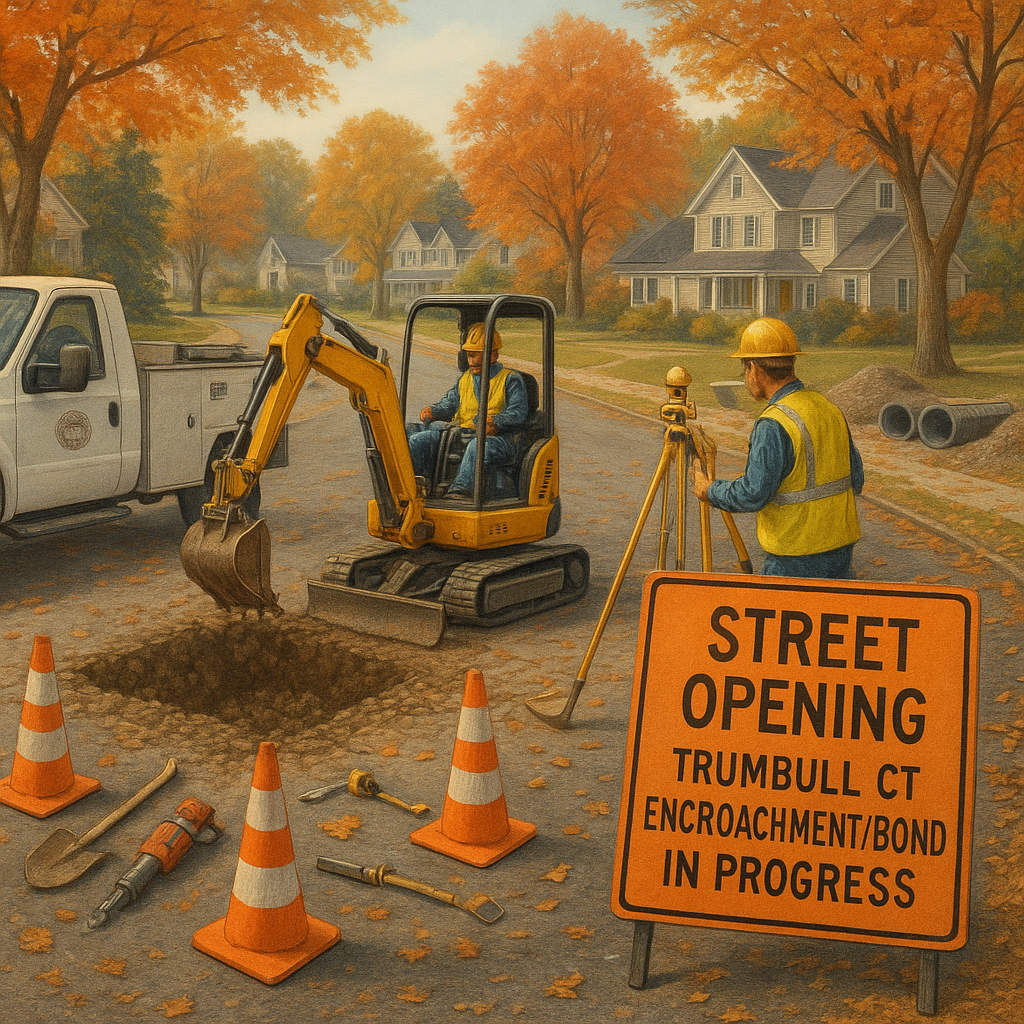
So, you’ve got a project coming up in Trumbull, Connecticut. Maybe you’re a contractor planning to connect a new water line, or a homeowner finally getting that driveway widened. The moment your work touches the town’s roads, sidewalks, or even the grass strip between the curb and the sidewalk, you’ll likely hear two words that can seem a little intimidating: street opening bond and encroachment bond. Before your stress levels shoot through the roof, let’s break this down in plain, everyday language. It’s not as scary as it sounds.
Think of these bonds as a promise you make to the Town of Trumbull. A promise that says, “I’ll dig up what I need to dig up, but I’ll leave it looking just as good as I found it.” It’s a bit like a security deposit on a rental apartment. The town wants to protect its public spaces, and this system has been working quietly behind the scenes for years. In this guide, we’ll walk through exactly what these bonds are, why they exist, how to get one, and what to expect along the way.
What Exactly Is a Street Opening or Encroachment Bond?
Let’s strip away the official jargon. A street opening bond (often called a Trumbull CT encroachment bond when it involves sidewalks or other public property) is a type of surety bond. In simple terms, it’s a three-party agreement. The town (the Obligee) asks you (the Principal) to buy a bond from an insurance company (the Surety). This isn’t insurance for you, though. It’s a financial guarantee for the town. If you cut open a freshly paved road to install a sewer line and then do a sloppy patch job that sinks six months later, the town can make a claim on that bond to fix it properly without spending taxpayer money.
Notice how we mentioned two slightly different names? Here’s the quick difference:
- Street Opening Bond: Required when you physically cut into or excavate any part of a public street or right-of-way. Installing a gas line, repairing a water main, or even repaving an apron where your driveway meets the road often falls here.
- Encroachment Bond: Needed when you place something on, over, or under a public right-of-way that wasn’t there before. This could be a fence, a sign, a dumpster placed on the street during construction, or even a new driveway that crosses a sidewalk.
Both serve the same core purpose: making sure public property gets restored to the town’s standards.
Why Does Trumbull Require These Bonds?
Picture this: it’s winter in Connecticut. The ground freezes and thaws, over and over. If a trench in the road wasn’t properly compacted back in August, by February you’ve got a pothole the size of a kitchen table. That’s a safety hazard. The town’s streets, curbs, and sidewalks are shared assets, and repairing shoddy work can cost thousands of dollars. Without a bonding requirement, that bill could land right on the residents. Trumbull’s ordinance puts the responsibility squarely where it belongs: on the person or company doing the digging.
The bond acts as a powerful motivator. It’s in your best interest to follow the rules, use proper materials, and call for required inspections, because if you don’t, the surety company will pay the town and then come after you for reimbursement. It’s a safety net that keeps everyone accountable. So whether you’re dealing with a street opening bond in Trumbull CT for a major utility project or a small encroachment for a home improvement, the logic is the same: protect the community’s infrastructure.
When Do You Need to Worry About This?
You might be wondering, “Does my small project really trigger this?” If you answer yes to any of these questions, you’ll likely need a bond before your permit is issued:
- Are you digging up any part of the public street, including the asphalt, gravel shoulder, or curbing?
- Will your work disturb a public sidewalk or the tree lawn (that grassy strip by the curb)?
- Are you installing, replacing, or widening a driveway apron that connects to the town road?
- Do you need to temporarily place a large container, scaffolding, or construction fence in the public right-of-way?
- Is your project connecting to a public water, sewer, or drainage system?
Even if you’re just a homeowner hiring a contractor, the permit and bond responsibilities usually need to be sorted out before shovels hit the dirt. A reputable local contractor will know this drill inside out. But if you’re managing a project yourself, a quick call to the Trumbull Engineering Department can save you days of delay. They’ll clarify exactly what type of bond your specific job calls for.
How Do You Get a Bond? Step by Step
Getting a Trumbull street opening bond isn’t a complicated treasure hunt. It follows a fairly predictable path. Here’s how it typically flows:
1. Visit the Town Engineering Department
Start at the source. The town will give you the exact bond form, listing the required amount and the specific work. They won’t just guess a dollar figure. The bond amount is often calculated based on the area of pavement being disturbed, linear feet of curb, or an estimate of what it would cost the town to repair the site if you walked away. A small driveway apron might require a $2,000 bond, while a large subdivision road opening could be $50,000 or more.
2. Contact a Surety Bond Agency
You can’t walk into a regular insurance office and grab one of these. You need an agency that specializes in surety bonds. Don’t worry, they’re easy to find online and many know the exact Trumbull CT encroachment bond form by name. You’ll provide your information, project details, and the bond form from the town.
3. Pay a Small Premium
Here’s a pleasant surprise: you don’t pay the full bond amount. You pay a small percentage, called the premium. For most small to medium street opening bonds, the premium is often as low as 1% to 3% of the total bond value if you have good credit. So, a $5,000 bond might only cost you $100 to $150. It’s a very small price for a big guarantee. The premium is generally a one-time payment covering the life of the permit period, which might be six months to a year.
4. File the Bond and Get Your Permit
Once you have the bond document in hand, you take it right back to Trumbull’s Engineering Department. They’ll keep the original on file. Only then can they release your street opening or encroachment permit. Then, at long last, the real work begins.
What Could Go Wrong? The Claim Process Simplified
Nobody likes thinking about worst-case scenarios, but understanding the claim process actually shows why the system works so well. Let’s say a contractor rushes a sidewalk replacement and it crumbles after the first frost. A resident complains. The town engineer inspects the site and finds the work wasn’t up to standard. The town will notify the contractor and the surety company. If the contractor refuses to fix it, the town files a claim against the bond. The surety then investigates and, if valid, cuts a check to the town for the needed repairs. The surety will then turn to the contractor and demand reimbursement. It’s a tidy way to ensure the public doesn’t get stuck with the bill.
This is why doing the job right the first time is so important. A bond claim isn’t just a hassle; it can make it much harder and more expensive for you to get bonded on future projects. Your bondability is like a credit score for construction work.
Real-World Examples to Make It Click
Let’s look at a few everyday situations where you might bump into these bonds.
Example 1: The Homeowner’s New Driveway. Maria wants to widen her driveway and needs to replace the apron where it meets the street. Even though she’s on her own property, the apron is inside the town’s right-of-way. Trumbull requires a small encroachment bond to ensure the new concrete is poured to proper thickness and slope. Maria hires a bonded contractor who handles the permit and bond, and the town inspects the pour. Everyone’s happy.
Example 2: The Utility Company’s Emergency Repair. During a cold snap, a water main bursts under a busy road. The utility company already has a blanket street opening bond on file with the town, so they can mobilize immediately. That standing bond allows them to open the road, fix the pipe, and do a temporary patch fast, with the promise to return for a permanent restoration as soon as the asphalt plants open in spring.
Example 3: The Landscaper’s Dumpster. A landscaping company needs to put a large debris dumpster on the street in front of a house for a week. Because it’s an encroachment on public space, a short-term bond may be required to cover any damage to the pavement from the heavy container and the delivery truck.
Common Questions You Might Be Asking
Can I just add my project to my contractor’s existing bond? Sometimes, yes. Many established contractors already carry a blanket bond with Trumbull that covers routine work. Always ask them before you purchase anything yourself. If they’re covered, you just need to make sure your specific job is included under their permit.
How long does the bond remain in effect? Typically, the bond stays active through the construction period and a maintenance period afterward. For a street opening, Trumbull often requires a two-year maintenance bond period after the final restoration is accepted. That means if the patch settles or fails during those two years, the bond is still there to fix it.
What if I never close my permit? Don’t let this happen. An open permit without a closed-out bond can cause headaches when you try to sell your house or start a new project. Always get a final inspection and formal acceptance from the town. They will then release your bond obligation.
Looking at the Bigger Picture
It’s easy to see bonds as just another hoop to jump through. But when you see the streets of Trumbull—well-maintained, safe, and free of random sunken trenches—that’s the bond system in action. A street opening or encroachment bond is simply the tool that keeps our public spaces protected, one driveway, one trench, one sidewalk slab at a time.
So, as you get ready for your next project, whether you’re a seasoned contractor or a first-time homeowner, you can walk into Trumbull’s Town Hall with confidence. You know the language, you know the steps, and you know that this small upfront cost is just a sign that you’re doing things right. Grab that bond, pull your permit, and build something solid. The road will be glad you did.