Rocky Hill, Connecticut requires private contractors working in public rights-of-way to secure a bond that guarantees proper site restoration and protects the town from financial loss. The bond serves as a security deposit, screening out unreliable operators while ensuring taxpayers aren't left footing the bill for unfinished or damaged work.
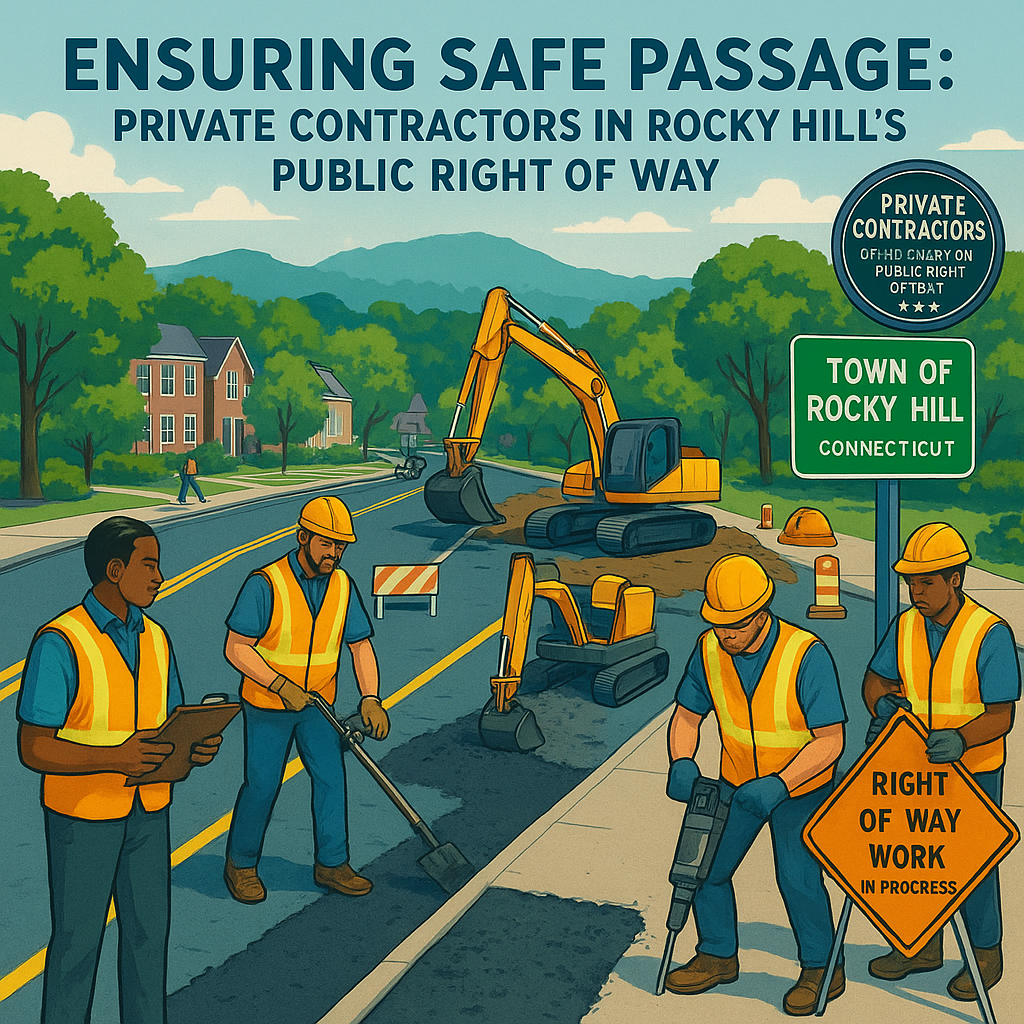
Picture this: You’re a contractor getting ready to run new fiber optic lines, repair a water main, or install a sidewalk in a quiet neighborhood. Your crew is set, the equipment is ready, and the permit is in hand. Then someone from the town office says, “Don’t forget your right-of-way bond.” If you’re scratching your head, you’re not alone. Many private contractors working in Rocky Hill, Connecticut, hear the term “Public Right of Way Bond” and wonder exactly what it is, why it’s needed, and how to get one smoothly. Let’s walk through it together so you can focus on the job, not the paperwork.
What Is a Right-of-Way Bond, Really?
Think of a right-of-way bond as a promise backed by money. When the Town of Rocky Hill gives you permission to dig up a street, cut into a sidewalk, or do any work in the public right-of-way, they’re trusting you to put everything back the way it was—or better. The bond is a three-party agreement between you (the contractor), a surety company, and the town. If the job isn’t finished properly or the site is left in a mess, the town can tap the bond to fix the problem. It’s not exactly insurance, though it acts like a safety net. With insurance, you protect yourself. With a bond, you protect the town and its residents.
In simpler terms, you’re leaving a kind of security deposit that guarantees your work won’t leave potholes, damaged utilities, or unfinished restorations. If all goes well, the bond stays dormant and eventually gets released. If something goes sideways, the funds are there to make things right without costing the taxpayers a dime.
Why Rocky Hill Requires a Bond for Contractors
You might wonder, why the extra hoop? Rocky Hill, like many Connecticut municipalities, maintains a vast network of public roads, sidewalks, tree belts, and utility strips. Every time someone excavates, it creates a risk. Underground pipes could be hit, asphalt could settle unevenly, or erosion could cause long-term damage. A bond requirement does two very important things. First, it screens out fly-by-night operators who might otherwise take a deposit and disappear. Second, it gives the town a financial cushion to complete the job correctly if the original contractor fails to do so.
In the past, communities dealt with headaches when contractors left behind open trenches or poorly patched pavement that turned into sinkholes after the next storm. By mandating a right-of-way bond, Rocky Hill makes sure there’s a clear path to quality restoration. It’s a classic case of an ounce of prevention being worth a pound of cure.
Who Needs a Right-of-Way Bond in Rocky Hill?
The short answer: almost any private contractor who plans to operate on public property right-of-way needs one. This includes plumbers, electricians, excavators, paving crews, landscapers doing major hardscaping near the road, and telecom installation teams. It doesn’t matter if you’re a large utility contractor or a two-person landscaping business. If your project touches the town’s sidewalks, streets, or adjacent grassy strips, the bond requirement will likely apply.
Typically, the process starts when you apply for a permit through the Rocky Hill Engineering Department or the Department of Public Works. The town will review your scope of work and let you know the exact bond amount required. This amount often depends on the scale and duration of the project. A small trench for a residential water service might need a few thousand dollars in coverage, while a large commercial development impacting multiple streets could require a significantly higher bond.
How the Bond Protects Everyone Involved
Safety nets aren’t just for tightrope walkers. This bond creates a circle of protection that touches the contractor, the town, and every person who drives or walks through the work zone. Let’s break it down.
- For the town and its residents: The bond guarantees that public spaces will be restored to their pre-project condition or better. If a contractor goes out of business mid-job or cuts corners, the surety company steps in to either hire another contractor or compensate the town so it can finish the work.
- For the contractor: While it feels like an extra expense, holding a bond boosts your credibility. It tells clients and municipal officials that you’re trustworthy, financially stable, and serious about your work. Many contractors find that having a bond on file speeds up future permit approvals because the town already has confidence in your reliability.
- For the surety company: They’re essentially vouching for you. In exchange for a premium—often a small percentage of the bond amount—they take on the risk. If a claim arises, they’ll investigate and pay out if warranted. Then they’ll seek reimbursement from you, so maintaining good practices is still your best bet.
Obtaining Your Right-of-Way Bond: A Step-by-Step Glimpse
Securing a bond doesn’t have to be a headache. Here’s a realistic look at how the process usually flows for Rocky Hill projects.
First, confirm the exact bond amount and any specific language the town requires. You can find this information on the permit application or by reaching out to the Engineering Department. Next, contact a surety bond agency that is licensed in Connecticut. Provide them with some basic business information, such as your company’s history, financial statements, and credit score. Personal credit often plays a role, especially for smaller bonds. Don’t panic if your credit isn’t perfect—many agencies work with a range of profiles and can find solutions, sometimes with a slightly higher premium.
Once approved, you’ll pay a premium. For a typical right-of-way bond, this might be anywhere from 1% to 3% of the total bond amount per year, though that can vary. The agency issues the bond document, which you then file with the town. Keep a copy for your records. The bond remains active until the town inspects your work and formally releases it. After final approval—often following a restoration period where any settling or defects are monitored—the bond gets exonerated, and your obligation ends.
Common Questions About Rocky Hill Right-of-Way Bonds
Every contractor has a few burning questions. Here are some that come up time and again.
Is the bond amount refundable?
No, the bond is not a deposit you get back. The premium you pay to the surety company is a fee for the coverage. However, the bond itself is a guarantee; you don’t part with the full bond amount upfront unless a claim occurs. Once the bond is released, your liability ends, but the premium is not returned—it’s the cost of doing business in the public right-of-way.
What triggers a claim against my bond?
Claims typically arise from incomplete restoration, damage to underground utilities, or failure to meet town specifications. A pothole that forms six months after your patch job, a sunken trench that creates a hazard, or a severed water line left unrepaired can all prompt the town to file a claim. That’s why quality work and a thorough final walkthrough are your best defense.
Can I use the same bond for multiple projects?
It depends. Some bonds are project-specific and expire once that job is finished. Others may be blanket bonds that cover all your operations within the right-of-way for a set term, usually one year. Discuss the nature of your work with the surety agent to determine the most cost-effective option. If you’re doing ongoing maintenance work, a renewable blanket bond could save time and money.
What Happens If You Skip the Bond?
Not having the required bond can stop your project in its tracks. The town won’t issue permits without proof of bonding. If you begin work anyway, you could face stop-work orders, fines, or even legal action. Worse, if you cause damage without a bond, you’ll be personally liable for all repair costs—and those can skyrocket fast, especially when a water main break or asphalt failure is involved. It’s simply not worth the risk.
Beyond penalties, being unbonded might harm your reputation. Municipal officials talk. Word can travel that you attempted to bypass requirements, making it harder to win public or even private jobs in the region. A proactive, compliant approach keeps doors open.
Tips for a Smooth Bonding Experience
Veteran contractors know that a little preparation goes a long way. Here are a few practical pointers to make the bonding process almost painless.
- Start early: Don’t wait until the day before your dig date. Surety bonds can often be arranged in a day or two, but leaving a buffer helps avoid last-minute panic.
- Build a relationship with a surety broker: Having a go-to expert who understands municipal bonds will streamline the process every time you need a new bond or a renewal.
- Maintain solid financial records: Even if you’re a sole proprietor, organized books and a decent credit score can lower your premium and speed up approvals.
- Document your work thoroughly: Take photos before, during, and after your project. If a claim ever comes up, a clear timeline and visual evidence can be a lifesaver.
- Communicate with town inspectors: A friendly check-in during and after the job can catch small issues before they morph into big bond claims. Inspectors appreciate transparency, and you’ll learn exactly what they look for during a final review.
Connecting the Dots: Why This All Matters
At first glance, a right-of-way bond might seem like one more bureaucratic layer. But step back, and you can see it’s actually an elegant system that balances progress with protection. Rocky Hill gets to maintain its charming, safe streets while contractors get a clear framework to work within. Each party holds a stake in getting the job done right. The bond simply formalizes that shared interest.
Imagine a town where every trench was filled with loose dirt, every sidewalk patch crumbled after winter, and nobody could be held accountable. The cost of repairs would drain public funds, and everyone would feel the impact. The bond requirement prevents that scenario, shifting responsibility to the parties who disturb the ground and making sure the community’s infrastructure remains intact for years to come.
So next time you bid on a project that touches a Rocky Hill sidewalk or street, welcome the bond requirement as a sign that the town values quality and accountability. It’s not a barrier—it’s a bridge that leads to completed projects, satisfied officials, and safer neighborhoods. With the right preparation and a trusted surety partner, you’ll be turning in that bond paperwork with confidence and getting your crew exactly where they need to be: on the job, making things happen.