bookmark_borderWethersfield CT Street Excavation and Curb Layering Insights

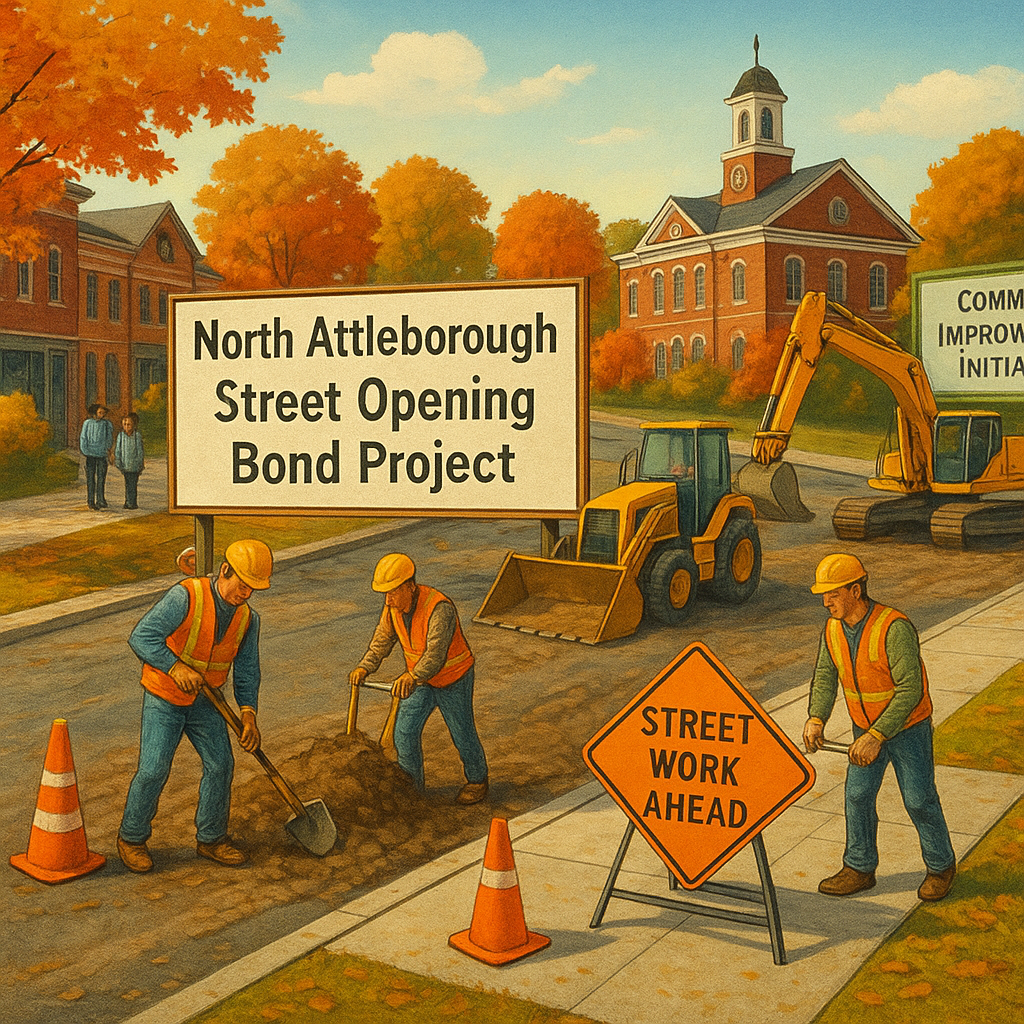
If you’ve ever watched a crew tear up a road in Wethersfield, Connecticut, you’ve probably noticed a whole lot more going on than just jackhammers and asphalt. Behind the scenes, there’s a paperwork dance that protects everyone—homeowners, contractors, and the town itself. You might hear terms like “street excavation bond,” “drain layer bond,” or “curb and walk layer’s bond.” They sound official, maybe a bit dry, but they’re basically promises written in dollars. So let’s unpack what these bonds mean, why they exist, and how they keep Wethersfield’s streets, sidewalks, and drains safe for all of us.

Why Bonds Matter When You Dig Into a Street

Think of a bond as a security deposit you might put down when renting an apartment. If you leave the place a mess, the landlord keeps your deposit to fix the damage. A municipal bond works much the same way. When a contractor or homeowner wants to excavate a public road, curb, or walkway, the Town of Wethersfield requires a financial guarantee. This ensures the work area gets restored properly—not just dumped and forgotten. It’s a safety net that keeps our neighborhoods looking good and functioning well.

Without these bonds, the town might have to chase after people for sloppy backfilling, cracked sidewalks, or poorly connected drains. That’s nobody’s idea of a fun afternoon. By requiring a bond upfront, Wethersfield makes sure the project doesn’t leave behind a lasting headache.

Street Excavation Bond: A Promise the Road Will Be Whole Again

At its heart, a street excavation bond is all about the road itself. Maybe you’re putting in a new water line, fixing a sewer connection, or running fiber optic cable. Any time you cut into a public street, you’re disturbing layers that were carefully engineered to handle traffic, New England winters, and the occasional heavy truck. Patching it up isn’t just slapping on some cold patch and calling it a day. The town wants to see a restoration that meets specific depth, compaction, and paving standards.

The bond amount is set by the town’s engineering or public works department. It usually reflects the size and location of the excavation. A small trench across a quiet residential lane might require a bond of a few thousand dollars. A major opening on the Silas Deane Highway? That number jumps up because the risk and repair costs are higher. If the contractor does everything correctly and passes inspection, the bond gets released. If not, the town can use those funds to hire someone else to fix it right. Simple as that.

What Happens Without a Bond?

Picture this: a utility company cuts a neat rectangle out of the street in front of your house. They finish their work, toss in some gravel, and tamp it down casually. A few months later, that patch sinks into a pothole the size of a kiddie pool. Every car that hits it sends a jolt through the neighborhood. Without a bond, who pays for the proper repair? You, the taxpayer. The bond requirement shifts that responsibility back where it belongs—to the person who broke the street in the first place.

Drain Layer Bond: Keeping Water Where It Belongs

Water is a sneaky force. It finds every crack and weak spot. In Wethersfield, with its mix of older homes and newer developments, proper drainage isn’t optional—it’s essential. A drain layer bond applies to anyone connecting a building’s sewer or storm drain to the town’s main lines. The “drain layer” is the licensed professional who physically does this work. Their bond assures the town that they’ll follow code, use proper materials, and not accidentally damage the public drainage system.

Ever had a basement flood because a neighbor’s poorly connected drain overwhelmed the system? That’s the kind of nightmare this bond helps prevent. It covers work like setting the correct slope, sealing joints, and avoiding cross-connections that could contaminate clean water. If the drain layer botches the job, the bond money steps in to fund corrections without leaving the town holding the bag.

Right-of-Way and Why It Changes the Game

You’ll often see “drain layer – right of way” tagged onto permits. The right-of-way is the strip of land the public has access to, even if it looks like part of someone’s front lawn. It usually extends beyond the edge of the road and includes sidewalks and the grassy verge. When drainage work happens in this space, the bond covers any disturbance to the public realm. So whether a contractor is replacing a sewer lateral that runs under the sidewalk or installing a new catch basin at the curb, they’re working in sacred territory. The bond says, “I respect this shared space, and I’ll make it whole again.”

Curb and Walk Layer’s Bond: The Sidewalk Story

Sidewalks and curbs are the unsung heroes of a walkable town like Wethersfield. They take a beating from tree roots, freeze-thaw cycles, and daily foot traffic. When someone needs to replace a curb cut, repair a damaged sidewalk square, or install a new walkway, they need a curb and walk layer’s bond. This is separate from roadwork because the materials and techniques are different. Concrete finishing is an art, and a botched pour can leave trip hazards that last for decades.

The bond ensures that the new concrete matches the town’s specifications for thickness, slope, and finish. No one wants a sidewalk panel that tilts into a mini-lake every time it rains, or a curb that crumbles after one winter. If the finished work doesn’t meet the mark, the bond funds a redo. Walkers, joggers, and kids on bikes all benefit—and so does your property value.

How the Process Works in Wethersfield, CT

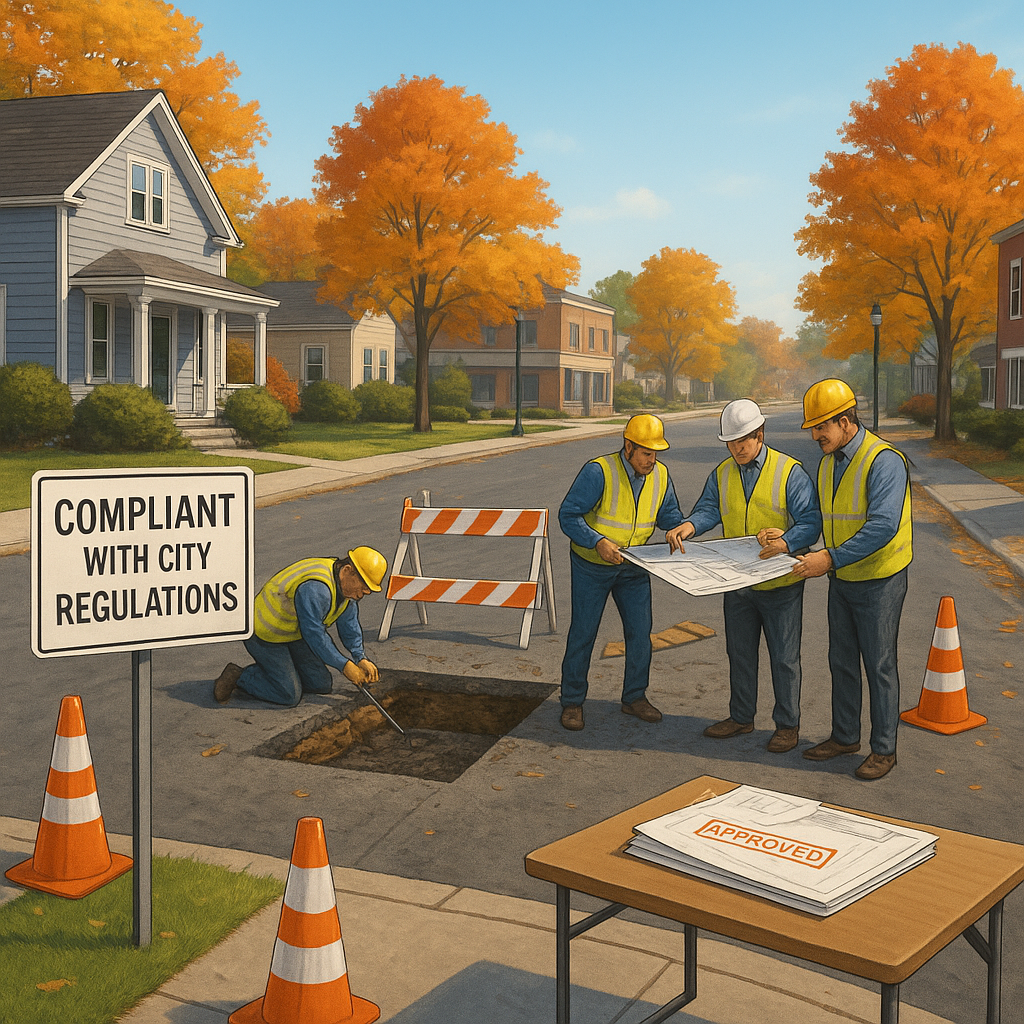
So you’ve got a project that touches the street, a drain, or a sidewalk. What’s the step-by-step? First, you or your contractor visits the Wethersfield Town Hall, usually the Engineering or Public Works Department. You’ll fill out an application explaining what you want to do and where. A plan might be required, especially for bigger jobs. The town then reviews it and calculates the necessary bond amounts. Often a single project needs two or all three bonds—don’t be surprised if your kitchen addition’s sewer line upgrade triggers a drain layer bond, a street excavation bond, and a curb and walk bond in one go.

Once the bonds are secured (often through an insurance company or a cash deposit), the work can begin. A town inspector will visit at key stages: before the trench is backfilled, after the gravel base goes in, and when the final pavement or concrete is placed. If everything passes, the bonds are returned or canceled. The whole process feels a little bureaucratic, but it’s designed to protect everyone from long-term grief.

Practical Tips for Homeowners and Contractors

If you’re hiring a contractor, ask them point-blank: “Do you carry the required bonds for Wethersfield, or do I need to arrange them myself?” Many experienced local contractors already have blanket bonds on file with the town. That can save you a trip to the bonding agent. If you’re doing the work yourself as a homeowner, you’ll likely need to provide a cash bond. The amount varies, so don’t guess—call the town first. A quick phone call can save you from a stop-work order halfway through the project.

Another tip: take photos before, during, and after the work. If there’s ever a dispute about whether you restored the area properly, those pictures are worth more than a thousand emails. And remember, weather matters. Wethersfield’s freeze-thaw cycles can wreck fresh concrete if it’s poured too late in the season. Plan accordingly and use the bond timeline to your advantage—complete the work, get inspected, and get your bond released before winter hits.

Common Questions People Ask

  • Do I really need a bond for a tiny patch of sidewalk? Yes, usually. The town wants to ensure even small repairs meet code. It might seem like overkill, but one uneven square can become a lawsuit waiting to happen.
  • How much does a bond cost me out of pocket? If you go through an insurer, you’ll pay a fraction of the total bond amount as a premium—often 1–3% depending on credit and history. For a $5,000 bond, you might only spend $100–$150 on the premium.
  • What if I skip the bond altogether? You’ll likely face fines, a stop-work order, and the possibility of being billed for any damage caused. The town takes right-of-way integrity seriously, and the long-term costs of doing it illegally far outweigh the upfront paperwork.
  • How long does the bond last? It typically remains in effect until the town formally releases it, often after a final inspection and sometimes a waiting period (like one year for street settlements). Patience is part of the process.

Connecting the Dots: Community and Responsibility

Behind all this bond talk is a very human idea. Wethersfield isn’t just a collection of houses and roads—it’s a place where people walk their dogs, push strollers, and grab coffee at the center. The street outside your home is shared. So is the storm drain that carries rain away and the sidewalk that connects neighbors. These bonds might seem like red tape, but they’re really threads in a social contract. They say, “I’ll dig here, but I’ll also make it right.” When everyone follows that rule, the whole town wins.

Next time you see a construction crew on a Wethersfield street, you’ll know there’s more than just dust and noise. There’s a quiet financial promise riding on every bucket of asphalt and every bag of concrete. And that promise helps keep our town safe, beautiful, and wonderfully connected.

bookmark_borderWindsor Town Updates Street Excavation Compliance for Contractors in Connecticut

If you’re a contractor who digs up streets in Windsor, Connecticut, you’ve probably heard the rumblings. No, not the sound of a backhoe tearing through asphalt—I’m talking about the recent updates to the town’s street excavation compliance rules. Whether you’re a seasoned excavator or just starting to bid on municipal work, understanding these changes is critical. It’s not just about avoiding fines; it’s about keeping your business running smoothly and your reputation solid.

Why Windsor Is Paying Close Attention to Street Cuts

Think of a town’s roads like the veins in your body. When they’re healthy, traffic flows, emergency vehicles get through, and everyone’s happy. But every time a contractor opens up the pavement to repair a water main, install fiber optic cables, or fix a sewer line, it’s like a small incision. If that incision isn’t closed properly, you end up with potholes, sinking patches, and long-term damage. Windsor wants to make sure every street cut heals perfectly, and that’s where the street excavation compliance updates come in.

The town recently refined its rules to protect public infrastructure, minimize disruptions, and ensure taxpayer money isn’t wasted on preventable road decay. For contractors, this means a sharper focus on bonding, permits, and restoration quality. If you’re wondering, “What does this actually mean for my day-to-day work?”—you’re in the right place.

The Heart of the Matter: The Street Excavator Excavating Bond

At the core of Windsor’s compliance framework is something called a Street Excavator Excavating Bond. It might sound like a mouthful, but the concept is simpler than you think. Let’s break it down together.

A street excavator bond is essentially a promise—a financial guarantee you provide to the town. By securing this bond, you’re telling Windsor, “If I cut open your street and don’t restore it to the required standard, you can use this money to fix it.” It’s like a security deposit on an apartment, but instead of covering scuffed floors, it covers cracked pavement and subpar compaction.

How Does the Bond Protect Everyone?

You might be asking, “Is this just another hoop to jump through?” Fair question. But look at it from the town’s perspective. They’re entrusting a public asset—roads paid for by residents—to a private company. If that company does a poor job and then disappears, taxpayers foot the bill. The bond ensures that doesn’t happen. For you, the contractor, having a bond also boosts your credibility. It signals that you’re serious, financially stable, and committed to doing the job right.

What’s New in Windsor’s Compliance Updates?

While Windsor has always required permits for street excavation, the recent updates tighten the screws in a few key areas. The goal isn’t to make life harder for honest contractors, but to weed out bad actors and standardize the restoration process. Let’s walk through the most important changes so you can stay ahead of the curve.

1. Stricter Bond Requirements

The town now mandates that street excavating contractors hold a valid Street Excavator Excavating Bond in amounts that reflect the scope of work. For smaller patch jobs, the bond limit might be lower, but for larger infrastructure projects, you’ll need more coverage. Windsor has updated its bond thresholds to better match the potential risk. It’s wise to double-check the latest figures with the town clerk’s office before you pull a permit.

2. Enhanced Trench Restoration Standards

Remember that analogy about veins and incisions? Windsor is now paying extra attention to the “healing” part. The town has outlined more detailed specifications for backfill material, compaction testing, and temporary patching. You can’t just toss some cold patch in the hole and call it a day. The updated rules require proper compaction in lifts, use of specified gravel, and a final surface that matches the surrounding pavement seamlessly. If your crew skips steps, the bond claim process can be triggered.

3. Clearer Permit Timelines and Renewals

Under the old system, permit renewals could get a bit fuzzy. Some jobs lingered with open excavations longer than anyone liked. Now, Windsor has introduced strict timelines. Your permit will have a clear expiration date, and if you need more time, you must apply for an extension before that date passes. This prevents roads from looking like a construction zone indefinitely and keeps traffic flowing. It also means you’ll need to plan your project schedule more carefully.

4. Increased Inspections and Documentation

A town inspector might now visit your site more than once—during the excavation, after backfill, and after final restoration. You’ll also need to document your work more thoroughly. That could mean taking photos, keeping material delivery tickets, and filing post-work reports. Think of it as a “prove-you-did-it-right” file. If a pothole appears six months later, you’ll want that evidence to show you followed the rules.

Who Needs to Worry About These Changes?

The short answer: almost anyone who opens the ground in Windsor’s public right-of-way. This includes utility contractors, site developers, paving companies, and even landscapers installing irrigation lines under a sidewalk. If your project involves cutting into a town street, alley, or sidewalk, the updated street excavation compliance rules apply. If you’re only working on private property and never touch public roads, you can breathe a little easier—though a utility connection near the curb might still trigger the requirement.

Are There Any Exceptions?

Emergency repairs often follow a slightly different path. If a water main bursts at 2 a.m., you don’t have time to wait for a permit. But Windsor still expects you to notify the town as soon as possible and secure the proper permits and bonds retroactively. Skipping the bond entirely because it was an emergency is not a loophole. The town will catch up with you, and that can lead to fines or even suspension from future work.

How to Stay Compliant Without Losing Your Mind

Okay, so rules have tightened. That doesn’t mean your job has to become a bureaucratic nightmare. With a little organization, you can glide through the process and build a sterling reputation. Here are some practical steps to keep your projects on track.

Get Your Bond in Order Early

Don’t wait until the day before digging to sort out your Street Excavator Excavating Bond. Contact a surety bond provider who knows Connecticut municipal requirements. They can guide you on the exact bond amount Windsor requires for your project size. The cost is typically a small percentage of the total bond amount, and you can often wrap it into your project bid. Think of it as insurance that works for both you and the town.

Train Your Crew on the New Standards

Your foreman might have been doing this for twenty years, but if they haven’t brushed up on Windsor’s latest compaction specs, you’re at risk. Hold a brief training session. Print out the updated restoration details and keep them in your truck. When everyone knows what the inspector will be looking for, you’ll avoid costly rework and bond claims.

Communicate with the Town’s Engineering Department

I can’t stress this enough. The town’s engineers aren’t your adversary—they want the roads to last, just like you want your work to last. Ask questions before you start. Clarify which trench detail applies to your project. If something unexpected comes up underground, shoot them an email or make a call. Document that communication. It can save you a headache later.

Build a Compliance Calendar

With permit expiration dates now rigidly enforced, a simple calendar reminder can keep you out of trouble. Set alerts a week before your permit expires. If your job is running behind, submit that extension request before it’s an emergency. This small habit can prevent work stoppages and heated phone calls.

What Happens If You Don’t Comply?

Let’s be realistic: mistakes happen. But ignoring the rules deliberately can cost you dearly. Windsor has a few enforcement tools, and they’re not shy about using them. First, you could face daily fines for working without a valid permit or letting a permit expire. Those fines add up fast and can eat your profit margin alive.

Second, the town can make a claim against your bond. That means the surety company pays for the repairs, and then they come after you for reimbursement. A bond claim can also damage your ability to get bonded in the future—making it harder to bid on other municipal jobs. In the worst-case scenario, the town can revoke your right to work in Windsor altogether. Your reputation would take a hit, and word travels fast in the contracting community.

The Bigger Picture: Why Compliance Builds Better Business

It’s easy to view these updates as red tape, but stepping back reveals a different story. When every contractor follows the same high standards, the roads last longer, residents complain less, and the town can spend its budget on new projects instead of patching shoddy old work. For the contractor who plays by the rules, that means a more predictable bidding environment and a competitive edge. Homeowners and businesses notice when you leave a neat, durable patch behind. That leads to word-of-mouth referrals and repeat work.

So, while “Windsor Town Street Excavator Excavating Bond” might not be the most thrilling phrase, it represents something valuable: trust. And in the construction world, trust pays better than cutting corners ever will. If you’re a contractor in Connecticut, especially around Windsor, now is the time to revisit your compliance checklist. Reach out to the town, dust off your bond paperwork, and make sure your team is ready to dig—the right way.

When you treat compliance not as a hurdle but as a foundation, your business stands on solid ground. And after all, solid ground is exactly what we’re all trying to create.

bookmark_borderStreet Opening Permit Bond: A Guide for Naugatuck Residents

Let’s have a real conversation about something that might sound a little dry at first: the street opening permit bond in Naugatuck, Connecticut. If you’re planning to dig into a road, curb, or sidewalk—maybe to connect a sewer line, repair a water main, or run underground utilities—you’ve likely heard this term tossed around. It can feel like just another hoop to jump through. But in truth, it’s a simple promise that protects everyone in our community. By the time you finish reading, you’ll not only understand what this bond is, you’ll see exactly how it fits into your project and why Naugatuck requires it.

What Exactly Is a Street Opening Permit Bond?

Think of a street opening permit bond as a financial safety net, stitched together by three parties. The Town of Naugatuck (the obligee) asks you, the contractor or homeowner (the principal), to get a bond from an insurance company (the surety). The bond says, “If this person or company doesn’t follow the rules and restore the street properly, the surety will pay to fix it.” It’s not insurance for you. It’s protection for the town and its residents.

In plain English: When you cut into a public street, you’re borrowing public property. The bond is your promise to return it in the same condition—or better. If you don’t, the town has a way to pay for the repairs without dipping into tax dollars.

Did you ever borrow a neighbor’s tool? You probably promised to bring it back clean and working. A street opening bond works on the same principle, just on a much bigger scale.

Why Naugatuck Insists on This Bond

Naugatuck’s roads and sidewalks belong to all of us. Every trench, cut, or excavation creates a potential weak spot. If an opening isn’t backfilled correctly, potholes, sinkholes, and drainage problems can appear months later. Snow plows might catch on uneven patches. Water can seep in and freeze, cracking the pavement. The town’s engineers know this. The bond requirement isn’t about bureaucracy; it’s about making sure a temporary construction cut doesn’t become a permanent headache for drivers, pedestrians, and the public works department.

Local regulations in Naugatuck are designed to keep our infrastructure sound. By asking for a bond, the borough ensures that the person doing the work has skin in the game. If something goes wrong—like a poorly compacted trench that sinks six inches after the first heavy rain—the town can call the bond. No finger-pointing, no drawn-out court battles over who pays. The funds are already set aside.

Who Needs a Street Opening Permit Bond in Naugatuck?

The short answer: Almost anyone planning to break ground on public right-of-way. This might include:

  • Utility contractors installing gas, electric, cable, or water lines.
  • Plumbers connecting a new home to the sewer main under the street.
  • Driveway installers who need to cut the curb or alter the sidewalk.
  • Homeowners taking on a major renovation themselves, though in many cases your contractor will pull the permit and secure the bond. Always ask.
  • Public works subcontractors performing specialized repairs for the town.

If you’re not sure, a quick call to the Naugatuck Public Works Department or the Borough Engineer’s office will clear things up. It’s better to ask early than to have your project halted because a bond wasn’t in place.

How Does the Bond Actually Work?

Let’s break the process down into a story. Imagine Maria, a local contractor, lands a job to replace a water service line. The work requires trenching across a residential street. Maria applies for a street opening permit from the town. As part of the permit package, she must post a bond in an amount set by Naugatuck—typically based on the size and impact of the cut. She contacts a surety company, pays a small premium (more on that in a moment), and receives the bond. She files it with the town.

Now Maria does the work, repaves the trench, and a town inspector signs off. The bond remains in effect for a maintenance period—often two years or longer—just to make sure the patch holds up through seasonal changes. If the pavement settles or cracks during that time, and Maria doesn’t fix it, the town can make a claim against the bond. The surety would pay the cost of repairs, and then Maria would have to reimburse the surety company. No free rides.

The Cost: How Much Does This Bond Run?

Here’s some good news: You almost never pay the full bond amount upfront. The bond might be $10,000, $25,000, or even $50,000, depending on the project’s scope and Naugatuck’s requirements. But the premium—the amount you actually pay—is just a small percentage, typically between 1% and 5% of the total bond. So a $20,000 bond might cost you as little as $200 to $1,000.

What determines that percentage? The surety looks at your credit score, business history, and experience. A contractor with solid credit and years of clean work might breeze through with a 1% rate. Someone new or with rocky credit could pay a bit more, but the process is still accessible. Even if your credit isn’t perfect, there are bond programs that can help. You don’t have to figure it out alone; a reputable surety agent can guide you.

Typical Bond Amounts for Naugatuck Projects

  • Small curb cuts or sidewalk repairs: $5,000 – $10,000 bond (premium maybe $100 – $300)
  • Standard utility trench (across a local road): $20,000 – $25,000 bond
  • Major roadway excavation or multiple cuts: $50,000+ bond

These figures are ballpark. Naugatuck’s engineering department determines the exact amount when you apply.

Step by Step: How to Get Your Street Opening Permit Bond

Okay, so you’re ready to move forward. What does the path look like?

1. Visit Naugatuck’s Public Works or Engineering Office. They’ll give you the permit application and tell you the required bond amount. You might also need a traffic control plan or other documents. Get the bond amount in writing.

2. Find a surety bond provider. Many local insurance agents offer bonds, or you can work with specialized bond companies online. The key is working with someone who understands municipal bonds, not just any insurance office. Ask upfront about turnaround times.

3. Complete a quick application. You’ll need basic business and personal info. The surety runs a soft credit check (usually no impact on your score) and reviews your experience. For a homeowner pulling their own permit, the process might be simpler; the bond often ties to the property.

4. Pay the premium and receive your bond form. The surety will issue the bond document. Confirm it matches the town’s requirements exactly. A wrong name or dollar amount can cause delays.

5. Submit the bond with your permit application. Once the town accepts everything, you’re issued the street opening permit. Post the permit on-site as required and get to work.

From start to finish, the bond can often be in your hands the same day if you’re working with a responsive provider.

What Happens If You Skip the Bond?

It’s tempting to think, “Nobody will notice if I just do a quick repair and move on.” But Naugatuck’s code enforcement and public works crews are active. If you’re caught opening a street without a permit and bond, the consequences can be serious. You might face stop-work orders, fines, and even liability for any damage. Worse, if your unpermitted work fails later and causes an accident or property damage, you could be personally on the hook for far more than any bond premium would have cost. The bond isn’t a nuisance—it’s a shield for your own financial safety, too.

Common Misunderstandings, Cleared Up

“The bond covers my tools and equipment.” No. That’s what contractor’s insurance does. The bond only steps in if you don’t fulfill your obligations to the town.

“I only need a bond if I’m doing the work myself.” Even if you hire a contractor, make sure they have their own bond. A reputable company will carry one. If they don’t, and something goes wrong, the town might look to you as the property owner. Protect yourself by verifying.

“Once the paving looks good, the bond is released.” Not quite. There’s typically a maintenance period. The town wants to see how the patch performs through winter and summer. Only after that final inspection will the bond be released or canceled.

A Little Local Context

Naugatuck is a tight-knit community with a mix of historic neighborhoods and new development. The Whist and Pond areas, the tree-lined streets near downtown—these roads matter. They’re not just asphalt; they connect us to our homes, schools, and businesses. Every time a street is opened responsibly, with a bond in place, the town can reinvest in its infrastructure without unexpected costs. It’s a quiet system that works, protecting the character and safety of our streets for years to come.

Your Next Move

If your project requires cutting into a Naugatuck road, don’t let the bond intimidate you. It’s a simple, affordable step that shows you’re serious about doing the job right. Start by reaching out to the town for your permit requirements. Then connect with a surety professional who can walk you through the credit check and get the bond issued fast. With that piece in place, you’re free to focus on what matters: completing a quality project and leaving the street as good as new.

Have a question about your specific situation? Drop a comment or contact Naugatuck’s Public Works Department. The rules are there to help us all be good stewards of our shared spaces—and a little clarity goes a long way.

bookmark_borderUnderstanding Norwalk CT’s Street Opening and Encroachment Permit Bonds

If you’re a contractor, utility company, or even a homeowner planning to dig into the ground in Norwalk, Connecticut, you’ve probably stumbled across the term “Street Opening and Encroachment Permit Bond.” It sounds like a mouthful, doesn’t it? But don’t worry—by the time you finish reading this, you’ll know exactly what it is, why it exists, and how it affects your project.

What Exactly Is a Street Opening and Encroachment Permit Bond?

Think of this bond as a financial promise. It’s a type of surety bond required by the City of Norwalk before anyone can cut into a public street, sidewalk, or right-of-way. The bond guarantees that if you cause damage or leave the job unfinished, funds are available to fix the mess. In simple terms, it’s like a security deposit for the city, but instead of handing over a stack of cash, you purchase a bond through a surety company.

The bond covers two main activities: street openings (that’s when you dig up pavement to access underground utilities) and encroachments (when something like a fence, sign, or construction equipment extends into the public right-of-way). Both actions can disrupt traffic, threaten public safety, and damage public infrastructure. The bond helps make sure the city isn’t stuck footing the repair bill.

Why Does Norwalk Require This Bond?

Imagine a neighborhood where a contractor digs up the road to repair a water main, but they do a poor job repaving it. Three months later, potholes form, and rainwater starts pooling. The city has to step in and fix it, using taxpayer dollars. That’s exactly the scenario Norwalk wants to avoid. The bond shifts the financial risk back onto the person or company doing the work.

Beyond that, Norwalk’s streets are a shared resource. When you break ground, you’re not just working in a vacuum—you’re affecting commuters, school buses, emergency vehicles, and local businesses. The bond requirement ensures that permit holders take their restoration responsibilities seriously. It’s a layer of accountability that says, “We trust you to do the work, but we’re going to make sure you have skin in the game.”

Who Needs to Get a Street Opening Bond in Norwalk CT?

You might assume this only applies to huge construction firms, but the net is wider than you’d think. Here’s a quick list:

  • Utility companies installing gas lines, fiber optic cables, or water mains.
  • General contractors connecting new buildings to sewer or power lines.
  • Plumbing and excavation specialists tackling underground repairs.
  • Homeowners who need to extend a driveway apron, install a new sewer lateral, or work within the city’s right-of-way.

If your project involves breaking the surface of a public street, alley, or sidewalk within Norwalk city limits, you’ll almost certainly need the bond as part of your permit application. The city’s Department of Public Works is the go-to authority for exact requirements, and they can tell you what bond amount applies to your specific job.

How Does the Bond Work in the Real World?

Let’s break it down with a practical example. Say you’re a plumber hired to replace a collapsed sewer line under a residential street in Norwalk. You pull the permit and secure the necessary street opening bond—let’s say it’s a $10,000 bond. You dig the trench, replace the pipe, and backfill the hole. But six weeks later, the pavement sinks, creating a hazard. The city inspects the site and determines your backfill wasn’t properly compacted. They give you a chance to fix it, but if you don’t, they can make a claim against your bond. The surety company pays the city up to the bond limit to hire someone else to restore the road properly. Afterward, the surety comes to you for reimbursement. That’s a key point: a bond is not insurance for you—it’s protection for the city and the public.

The Connection Between Encroachment Permits and Bonds

An encroachment happens when a private structure or material enters public space. Picture a restaurant setting up outdoor seating on part of the sidewalk, a construction fence that spills over the curb, or scaffolding that hangs above a public alley. These situations require an encroachment permit, and yes, they often require a bond too. The city wants to be certain that if that café abandons its patio and leaves broken bricks behind, there’s money to restore the area to its original condition. The bond acts like a cleanup guarantee.

How Much Does a Norwalk Street Opening Bond Cost?

There’s no one-size-fits-all answer. The required bond amount depends on the scope and location of the project. A small sidewalk replacement might need a bond of a few thousand dollars, while a major utility installation could require $50,000 or more. The good news? You don’t pay the full face value upfront. You pay a premium—usually a small percentage of the bond amount, often between 1% and 5% for applicants with strong credit. So for a $10,000 bond, your out-of-pocket cost might be as low as $100 to $500.

Your credit score, business financials, and past bond claims (if any) influence that rate. A contractor with a long history of successful jobs and great credit might snag a low 1% premium, while a new business owner might pay a bit more. It pays to shop around and work with a surety agency that understands Connecticut’s municipal requirements.

Getting the Bond: The Step-by-Step Process

Ready to move your project forward? The process is pretty straightforward, but each step matters. Here’s how it typically goes:

  • Confirm your permit needs: Contact Norwalk’s Public Works or Engineering Department. They’ll tell you whether you need a street opening permit, an encroachment permit, or both, and the exact bond amount required.
  • Gather your paperwork: You’ll need business details, the permit application, and sometimes a project description or site plan.
  • Apply for the bond: Work with a licensed surety bond provider. Many offer online applications with quick turnaround.
  • Pay the premium: Once approved, pay the premium and you’ll receive the bond document.
  • File the bond with the city: Submit the original bond form alongside your permit application. Keep a copy for your records.

It’s wise to start this process early. While you can often get bonded in a day or two, city permit reviews take their own time. Waiting until the last minute could delay your groundbreaking.

Common Misconceptions That Trip People Up

You wouldn’t believe how many people confuse a permit bond with liability insurance. Let’s clear the air. The bond protects the city’s property and ensures you follow the rules. Liability insurance protects you if a third party gets hurt or property gets damaged outside the immediate work area. You may need both, but they serve completely different purposes.

Another myth? “I’m just a homeowner digging a small trench—I don’t need this.” If your project touches the public right-of-way, even planting a tree near the sidewalk could trigger a bond requirement in some cases. Always check with the city first. It’s far cheaper to get a small bond upfront than to pay fines and restoration costs later.

What Happens If You Skip the Bond?

Trying to dodge the bond requirement is a recipe for trouble. The city can issue a stop-work order, levy hefty fines, and even revoke your permit. Beyond that, if you cause damage without a bond in place, you’ll be personally on the hook for repairs. That could mean a five-figure bill for asphalt replacement, concrete work, or sidewalk repairs. Considering how affordable a bond premium is, the risk just isn’t worth it.

Keeping Your Project—and Your Bond—Claims-Free

A bond claim can be a black mark that follows your business. So how do you avoid one? It boils down to meticulous work and clear communication.

  • Follow the city’s specs for trench depth, backfill material, and compaction to the letter.
  • Take “before” photos of the worksite to document pre-existing conditions.
  • Notify the city promptly if you encounter unexpected underground conditions.
  • Don’t rush the restoration phase. Let the ground settle, and patch pavement smoothly.
  • Keep the public safe with proper signage, barricades, and lighting during the work.

Think of the bond as a silent partner. You don’t want to have a conversation with it—you just want it to sit quietly in the file until the permit is closed out successfully.

How the City of Norwalk Benefits—and So Do You

While the bond requirement can feel like extra red tape, it actually streamlines projects in the long run. The city doesn’t have to fight with contractors to pay for shoddy repairs because the bond provides a clear enforcement mechanism. For conscientious contractors, it levels the playing field, ensuring that competitors can’t underbid a job by cutting corners on restoration. Homeowners and business owners sleep better knowing the infrastructure will be restored properly. It’s a system that, when everyone plays by the rules, keeps Norwalk’s streets safe, smooth, and fully functional.

Questions You Might Still Be Wondering

Still have doubts? That’s okay. Let’s tackle a few final thoughts.

Do I need a separate bond for each project? Often, yes. The city typically requires a bond that’s tied to a specific permit and location. Some contractors, though, may qualify for an annual blanket bond if they do frequent work in Norwalk. Ask the city about that option.

Can the bond amount ever be refunded or reduced? No, the bond itself isn’t refunded. You pay a non-refundable premium for the bond period. However, once the city inspects your restored work and signs off, the bond obligation ends. Make sure to formally close out your permit to release your liability.

Is this bond the same in every Connecticut town? Not exactly. While the concept is similar across the state, each municipality sets its own bond amounts, permit fees, and specific rules. Never assume another town’s bond will cover Norwalk work. Always check locally.

Wrapping It All Up

Navigating permit bonds doesn’t have to feel like an uphill battle. The Norwalk CT Street Opening and Encroachment Permit Bond exists for a clear, common-sense reason: keeping public spaces safe and well-maintained while giving the city a financial safety net. Whether you’re a seasoned contractor or a first-time homeowner taking on a big project, understanding this bond means you can plan your budget, avoid delays, and build a reputation for reliable, responsible work. When in doubt, lean on the folks at Norwalk Public Works and a knowledgeable surety bond professional—they’ll guide you toward the right bond for the right job, without all the stress.

bookmark_borderUnderstanding Connecticut Motor Fuel Distributor Bonds and Their Benefits

Have you ever filled up your car at a gas station and wondered how the fuel got there? Behind every gallon of gasoline or diesel is a complex system of distributors, taxes, and rules. And one important piece of that puzzle in Connecticut is a special kind of financial promise called a motor fuel distributor bond. If you’re new to the fuel business or just curious, this guide will walk you through what these bonds are, why they matter, and how they protect everyone involved—all in plain, everyday language.

What Exactly Is a Connecticut Motor Fuel Distributor Bond?

Let’s break it down. A Connecticut motor fuel distributor bond is a type of surety bond. Think of it as a three-party safety net. There’s the fuel distributor (that’s you or your business), the state of Connecticut, and a bond company. The bond is a legal agreement where the bond company guarantees that the fuel distributor will obey all state tax laws related to motor fuel.

If the distributor fails to pay the taxes they owe, the bond covers the loss. In other words, it’s a shield for the state—and ultimately for all of us who use public roads, because those fuel taxes fund highway repairs and transportation projects. So a CT fuel distributor tax bond isn’t just a formality. It’s a promise that keeps the system fair.

Who Needs a Motor Fuel Distributor Bond in Connecticut?

Not everyone in the fuel industry needs one, but many do. Generally, if you operate as a motor fuel distributor in the state, you’ll need to secure this bond before you can get or renew your license. That includes businesses that import fuel, refine it, blend it, or deliver it in bulk.

Here’s a simple way to look at it: if you’re responsible for collecting or paying motor fuel taxes to the Connecticut Department of Revenue Services, a bond is very likely required. Even if you’re a small operation, the state wants assurance that you’ll follow through on your tax obligations. It’s like a landlord asking for a security deposit before you move in. The state wants to know you’re good for the money.

Why Does Connecticut Require This Bond?

You might wonder, “Why can’t I just pay my taxes on time and skip the bond?”. The state requires a Connecticut tax fuel distributor bond as a form of financial responsibility. Motor fuel taxes generate significant revenue for Connecticut. They pay for road maintenance, bridge repairs, and public transit. If a distributor goes out of business or simply doesn’t pay, the state loses funds that were already earmarked for important projects.

The bond acts as a safety net. It ensures that taxpayers don’t foot the bill for a delinquent distributor’s mistakes. It’s a proactive measure, much like car insurance. You hope you’ll never need it, but it’s there if something goes wrong.

How Does a CT Fuel Distributor Tax Bond Work? An Everyday Analogy

Imagine you’re renting an apartment. The landlord asks for a security deposit. You give the deposit to a trusted neutral third party, not directly to the landlord. If you damage the apartment, the landlord can claim part of that deposit to cover repairs. If you leave the place spotless, you get your full deposit back.

A motor fuel distributor bond operates on a similar principle. You (the distributor) don’t hand over a pile of cash to the state. Instead, you work with a surety company. You pay a small percentage of the total bond amount as a premium. The surety company then issues the bond. If you fail to pay your motor fuel taxes, the state can make a claim on that bond. The surety pays the claim up to the bond limit, but here’s the key difference: you must repay the surety company every penny. The bond isn’t insurance for you; it’s a guarantee for the state.

What Are the Main Benefits of a Connecticut Motor Fuel Distributor Bond?

At first glance, the bond might feel like just another cost of doing business. But it brings several meaningful benefits to the table.

  • Builds trust with the state. Holding a valid bond shows the Connecticut Department of Revenue Services that you’re a responsible business. It can speed up licensing and reduce scrutiny.
  • Protects public infrastructure. By ensuring taxes are paid, the bond helps maintain the roads and bridges we all rely on every day.
  • Levels the playing field. When all distributors follow the same rules, honest businesses aren’t undercut by those looking to skip their tax duties.
  • Enhances your reputation. Customers and suppliers often see a bonded company as more credible and stable. It can open doors to bigger contracts.
  • Provides a clear financial guarantee. Instead of complicated legal battles, the bond offers a straightforward remedy if tax payments go missing.

How Much Does a Connecticut Fuel Tax Bond Cost?

The bond amount is set by the state, usually based on your expected tax liability. For many fuel distributors in Connecticut, the required bond can range from a few thousand dollars to over a hundred thousand dollars. But don’t panic—you don’t pay the full amount upfront.

You pay a premium, which is a small percentage of the total bond. The exact percentage depends on factors like your personal credit score, business financials, and experience. A distributor with strong credit might pay just 1-3% of the bond amount annually. That means for a $50,000 bond, the annual premium could be as low as $500. It’s an affordable way to meet state requirements without tying up all your cash.

Step-by-Step: How to Get Your CT Fuel Distributor Bond

Getting bonded doesn’t have to be a headache. Follow these simple steps, and you’ll be on your way.

1. Know Your Required Bond Amount

Check with the Connecticut Department of Revenue Services or your license application instructions. The state will tell you exactly how much coverage you need based on your fuel taxation activity.

2. Find a Reputable Surety Bond Company

Not all bond providers are the same. Look for one with experience in fuel tax bonds and a strong rating. An independent insurance agent who specializes in surety bonds can also guide you.

3. Submit a Simple Application

You’ll typically provide basic business information and personal details for a credit check. This helps the surety assess risk and set your premium rate.

4. Pay the Premium and Receive Your Bond

Once approved, you pay the annual premium. The surety then issues the bond document, which you file with the state as part of your license application. Most bonds can be processed in a day or two if your paperwork is in order.

5. Renew on Time Every Year

Motor fuel distributor bonds usually need annual renewal. Mark your calendar to avoid lapses. A canceled bond can lead to license suspension, so stay on top of it.

Common Misconceptions About CT Fuel Distributor Bonds

Let’s clear up a few myths that often float around.

“It’s the same as business insurance.” Not quite. Insurance protects your business from unexpected losses. A bond protects the state and requires you to pay back any claims. It’s a guarantee, not a cushion for your own risks.

“Only big companies need one.” Even a small jobber or a family-run fuel delivery service might fall under the bonding requirement. If your business activity triggers motor fuel tax obligations, size doesn’t exempt you.

“The bond money sits in an account I can’t touch.” That’s not how it works. You aren’t depositing the bond amount anywhere. You pay only the premium and the surety extends the full guarantee on paper.

“Once I have the bond, I’m free to handle taxes however I want.” Absolutely false. The bond is there to ensure you follow the rules. If you don’t, the claim will be painful, and the state can still impose fines or revoke your license.

What Happens if a Claim Is Filed Against Your Bond?

Let’s say a distributor doesn’t remit the taxes collected on fuel sales. The state will investigate and, if the claim is valid, demand payment from the surety company. The surety pays the state up to the bond amount. But then the surety turns to the distributor and demands full reimbursement—plus any legal fees. It’s not a gift. It’s a debt that can damage credit, lead to lawsuits, and cripple a business. That’s why it’s so critical to pay your motor fuel taxes on time and in full.

Consider this scenario: A small fuel-hauling business misses a tax deadline due to poor record-keeping. The state files a claim for $15,000. The surety pays, but now the owner must repay that amount plus interest and maybe even attorney costs. A simple oversight turns into a financial nightmare. Staying organized with your fuel inventory and tax filings can prevent such headaches.

Tips for Keeping Your Bond in Good Standing

Maintaining a Connecticut motor fuel distributor bond is straightforward if you build good habits.

  • Keep accurate records. Track every gallon of fuel you buy, sell, or blend. Use modern software to simplify tax calculations.
  • Pay taxes promptly. Set reminders for filing deadlines. Late payments are a major trigger for claims.
  • Stay in touch with your surety. If your business grows and your tax liability increases, you might need a higher bond amount. Notify your surety to adjust coverage accordingly.
  • Protect your credit. A strong credit score keeps your premium low and signals financial reliability to both the state and the bond company.
  • Don’t ignore notices from the state. Address any questions or audits immediately. Transparency goes a long way.

Why This Small Piece of Paper Matters for Every Connecticut Driver

You might not be a fuel distributor yourself. So why should you care about fuel tax bonds? Because we all benefit from the roads they help fund. Every time you drive to work, take your kids to school, or rely on emergency vehicles, you’re using infrastructure supported by motor fuel taxes. The bond system ensures that the companies handling those taxes don’t leave a gaping hole in the budget. It’s a behind-the-scenes safeguard that keeps our transportation network running smoothly.

There’s also an economic ripple effect. Reliable road systems attract businesses, create jobs, and keep local economies alive. The State of Connecticut has set up this bond requirement not to burden honest business owners, but to protect the collective interest. So the next time you see a fuel tanker on the highway, you’ll know there’s a strong system of checks and balances making sure everything is done right.

Ready to Fuel Your Business Growth?

Understanding a CT fuel distributor tax bond might feel intimidating at first, but it’s really just a tool for accountability. It protects your business by keeping you in good legal standing, it protects the state’s revenue, and it protects everyone who uses Connecticut’s roads. With affordable premiums and a straightforward application process, there’s no reason to delay. Contact a trusted surety bond expert today, and you’ll be compliant and confident in no time. The road ahead is waiting—make sure your bond is along for the ride.

bookmark_borderUnderstanding Excavator Bond Requirements for Fairfield Connecticut Contractors

If you’re an excavation contractor working in Fairfield, Connecticut, you’ve probably heard about something called an excavator bond. Maybe a town official mentioned it, or you spotted it on a permit application. At first glance, it can feel like just another bureaucratic hoop to jump through. But here’s the good news: understanding this requirement isn’t complicated once you break it down. Think of it as a handshake agreement with the town—one that has a financial backbone to make sure everyone plays by the rules.

In this post, we’ll walk you through exactly what the Town of Fairfield expects, why this bond exists, how much it costs, and how you can get one without pulling your hair out. Whether you’re a seasoned pro or just starting your excavation business, this guide will give you the clarity you need.

What Exactly Is an Excavator Bond?

Let’s strip away the jargon. An excavator bond, sometimes called an excavation contractor bond or a compliance bond, is a type of surety bond. It’s not insurance for your equipment or your crew—it’s a promise to the town that you’ll follow all the local rules when you dig.

Imagine you’re borrowing a neighbor’s fancy lawnmower. They might ask for a small deposit, just in case you damage it. The excavator bond works kind of like that deposit, except instead of cash upfront, a bonding company vouches for you. If you mess up—let’s say you accidentally hit a utility line and don’t fix it properly—the bond money can be used to make things right. You’ll still be responsible for paying it back, but the town and the public are protected in the meantime.

In Fairfield, this bond is strictly a compliance bond. That means its sole purpose is to guarantee that you’ll adhere to the town’s ordinances, codes, and safety requirements. It’s not a license bond, and it doesn’t replace your contractor’s license. It’s another layer of accountability, one that helps keep everyone’s property and the town’s infrastructure safe.

Who Needs an Excavator Bond in Fairfield, Connecticut?

Short answer: if you’re an excavation contractor planning to dig within the Town of Fairfield’s jurisdiction, you almost certainly need one. The bond is required before you can obtain a permit for excavation work. This applies whether you’re digging a foundation for a new home, trenching for utility lines, grading a commercial lot, or doing any other work that disturbs the earth.

The town is specific about this. The bond is often referred to as the “Town of Fairfield CT Official Excavators Bond.” If you see that language on a permit application, you know what you’re dealing with. It’s not a generic statewide bond—it’s tailored to Fairfield’s own ordinances. So even if you already hold a bond for another Connecticut municipality, you’ll likely need a separate one for Fairfield. Each town has its own rules, and Fairfield takes its infrastructure integrity seriously.

Are you a subcontractor on a larger project? The requirement can still fall on you if your name is on the permit. It’s always best to check with the town’s engineering or public works department before you start any excavation. They can tell you exactly what’s needed for your specific project.

Why Does the Town of Fairfield Require This Bond?

It’s easy to see requirements like this as just another fee, but there’s a solid reason behind them. Fairfield is a community with an extensive underground network—water mains, sewer lines, gas pipes, fiber optic cables, and more. One wrong move with a backhoe can knock out internet for a whole neighborhood or, worse, create a dangerous gas leak. The bond serves as a financial incentive for contractors to work carefully and fix any damage they cause.

Beyond the immediate safety concerns, the bond also protects the town’s roads, sidewalks, curbs, and drainage systems. If you cut into a street to lay pipe and don’t restore the pavement to the town’s specifications, the bond provides a way for the town to fund the repairs without taxpayer dollars. Think of it as a safety net that keeps public funds from being used to correct private mistakes.

For contractors, this might sound like the town is being overly cautious, but in practice, it builds trust. Homeowners and business owners feel more comfortable hiring a bonded excavator because they know there’s a layer of financial protection. It signals that you’re a legitimate operator who stands behind your work.

How Does an Excavator Bond Work in Real Life?

Let’s walk through a typical scenario so you can see the bond in action. Picture this: you’re digging a foundation for a new house. During the excavation, you accidentally hit an old, unmarked storm drain. Water backs up and floods a neighboring property. The town steps in, inspects the damage, and determines that you were at fault because you didn’t use proper potholing techniques to locate the drain.

At this point, the homeowner whose property was flooded can file a claim against your bond. The bonding company will investigate. If the claim is valid, they’ll pay out up to the bond amount to cover the repairs—say, $10,000. Here’s the crucial part: you’re still on the hook for that $10,000. The bonding company will then come to you for reimbursement, plus any legal costs they incurred. This is why it’s not insurance. Insurance spreads risk among many policyholders; a surety bond is more like a line of credit that you must repay.

In reality, most bonded contractors in Fairfield never have a claim filed against them. The bond simply sits there as a quiet guarantee. But if something does go wrong, it’s a far better alternative than being sued directly and facing immense out-of-pocket costs overnight.

What’s the Cost of an Excavator Bond in Fairfield?

Now for the number everyone wants to know. The bond amount required by the Town of Fairfield is typically set at a specific sum—commonly $10,000, though it can vary based on the project scope. You don’t pay the full $10,000 to get bonded. Instead, you pay a small percentage, called the bond premium. For well-qualified applicants, this premium is often 1% to 3% of the bond amount. So for a $10,000 bond, you might pay only $100 to $300 for a one-year term.

Several factors influence that premium. The bonding company will look at your personal credit score, your business financials, and your experience in the field. If you have strong credit and a clean track record, you’ll likely snag the lowest rate. If your credit history is a bit rocky, don’t worry—you can still get bonded, but your premium might be a little higher. Some surety companies offer programs specifically designed for folks with less-than-perfect credit.

It’s also worth noting that the bond is renewable annually. Many contractors simply build this small cost into their project estimates. Think of it as a license to operate within Fairfield’s limits—a modest investment that opens the door to working in a desirable part of Connecticut.

How to Get Your Fairfield Excavator Bond: A Simple Process

Getting bonded isn’t a long, drawn-out ordeal. In fact, you can often have your bond in hand the same day you apply. Here’s a straightforward path you can follow:

  • Step 1: Confirm the Bond Requirement. Reach out to the Town of Fairfield Public Works or Engineering Department. Ask for the exact bond amount and any specific bond form they require. It’s important to get this right because the town may reject a bond that doesn’t match their language.
  • Step 2: Find a Reputable Surety Bond Provider. Look for a company that specializes in contractor bonds. An experienced agent will know exactly what Fairfield needs and can guide you through any nuances.
  • Step 3: Complete a Quick Application. You’ll provide basic information about yourself and your business—name, address, social security number (for a personal credit check), and possibly some business financials if the bond amount is larger.
  • Step 4: Receive Your Quote and Pay the Premium. Once approved, you’ll see the premium amount. Pay that, and the bond is issued.
  • Step 5: File the Bond with the Town. Your bond provider will send you the official bond form. You’ll sign it as the principal and then submit it to the appropriate Fairfield department. Keep a copy for your records.

That’s it. The whole thing can often be wrapped up in less time than it takes to get your morning coffee. And once the bond is on file, you can pull permits and get to work with peace of mind.

Common Questions Fairfield Contractors Have

“Is this the same as my liability insurance?”

No, and this is a common point of confusion. General liability insurance protects you if someone gets hurt or property gets damaged. The bond is a guarantee to the town that you’ll follow their specific excavation rules. They serve different purposes, and you’ll need both.

“What happens if I let my bond expire?”

If your bond lapses, you’re technically out of compliance. The town can suspend your permits or even revoke your right to work there until the bond is active again. It’s much easier to just stay on top of the renewal. Mark your calendar for a month before the expiration date.

“Can I use the same bond for multiple towns?”

Usually not. Most municipalities, including Fairfield, want a bond that names them as the obligee. You might need separate bonds for Westport, Norwalk, or Bridgeport. It’s a bit of a pain, but a knowledgeable bond agent can help you manage multiple bonds efficiently.

“Do I need a bond if I’m just doing minor hand digging or landscaping?”

If your work doesn’t involve serious excavation—like just planting shrubs or small fence posts—you might not trigger the bond requirement. However, Fairfield’s definitions can be strict. Always check with the town if you’re unsure. It’s better to ask than to face a stop-work order.

A Small Step That Makes a Big Difference

Securing an excavator bond for Fairfield, Connecticut might feel like just another item on your to-do list. But when you look at the bigger picture, it’s one of those things that separates the professionals from the rest. It tells the town, your clients, and everyone on the job site that you’re serious about doing things right.

Next time you’re preparing a bid for work in Fairfield, remember that this bond isn’t a hurdle—it’s a tool that builds trust. And in a business built on reputation, that trust is worth far more than the modest cost of a surety bond. So ask the right questions, partner with a solid bonding company, and dig knowing you’ve got everything covered. The ground beneath Fairfield’s streets might be complicated, but your compliance doesn’t have to be.

bookmark_borderUnderstanding Drain Layer’s Bond and Right of Way in East Hartford

Have you ever wondered what it takes to dig a trench, lay a drain pipe, or connect a new sewer line along a public street in East Hartford, Connecticut? If you’re a contractor—or even a homeowner managing your own project—you might have bumped into a phrase that sounds a little old-fashioned: Drain Layer’s Bond. It’s not something most people talk about at the dinner table, but it’s a vital piece of the puzzle whenever underground work meets public property. Let’s unpack this requirement in plain English, look at why it exists, and explore how it ties into the concept of the “Right of Way” in the Town of East Hartford.

What Exactly Is a Drain Layer’s Bond?

Think of a surety bond as a promise with a financial backbone. A Drain Layer’s Bond is a specific type of surety bond that the Town of East Hartford requires from anyone who wants to perform drain-laying work within the public right of way. In simple terms, it’s a three-party agreement:

  • The Principal – That’s you, the drain layer or contractor doing the work.
  • The Obligee – The Town of East Hartford, which needs protection.
  • The Surety – The insurance company that backs the bond financially.

If the contractor fails to follow the rules—think shoddy workmanship, an open excavation left unmarked, or damage to public utilities—the town can make a claim against the bond. The surety then steps in to cover the costs, up to the bond amount. After that, the contractor has to repay the surety. It’s like having a co-signer on a loan, but for your professional promises.

Why Does East Hartford Require This Bond?

Picture a busy street with underground utilities crisscrossing like spaghetti. A drain layer’s job isn’t just about pipes; it’s about protecting what’s already there—gas lines, water mains, fiber optic cables, and more. The town’s requirement for a Drain Layer’s Bond serves a few key purposes:

  • Public safety: Open trenches and poorly restored pavement can cause accidents. The bond ensures that a contractor will restore the area to a safe condition.
  • Infrastructure protection: If a backhoe accidentally hits a water main, the bond can help cover emergency repairs without draining taxpayer dollars.
  • Compliance assurance: The bond gives the town leverage to demand that work follows local codes, permits, and specifications. It’s a financial incentive to do things right the first time.

You could say the bond is like a safety net that catches problems before they land on the community’s lap.

Right of Way: More Than Just a Strip of Grass

The phrase “Right of Way” might conjure images of traffic signs and who goes first at an intersection. In the world of drain laying, the Right of Way (often abbreviated as ROW) refers to the strip of land that is dedicated for public use—typically the area where streets, sidewalks, and utility easements sit. When you dig in the ROW, you’re working on land that belongs to the town or is governed by public access rules, even if it’s right in front of a private home.

Because the ROW is public, any work there requires special permission. A drain layer can’t just show up with an excavator and start digging. They need a Right of Way permit from the Town of East Hartford, and to get that permit, they must post the required Drain Layer’s Bond. It’s a classic “show us you’re responsible before we hand over the keys” approach.

Common Scenarios That Trigger the Requirement

You might be asking, “When exactly do I need this bond?” Here are a few real-world examples:

  • Connecting a new house to the municipal sewer main that runs under the street.
  • Repairing or replacing a collapsed storm drain pipe beneath a sidewalk.
  • Installing a driveway culvert that crosses a public drainage swale.
  • Upgrading an old clay drain line that runs from a building to the curb.

In each case, the work intrudes into the public Right of Way—so the town wants that bond in place before the first shovel hits the ground.

Breaking Down the East Hartford Drain Layer’s Bond Process

Navigating municipal requirements can feel like untangling a knotted hose. Let’s smooth it out with a step-by-step look at how things typically work in East Hartford.

1. Check Your License and Registration

Before a bond is even discussed, the contractor usually needs to hold a valid drain layer’s license or registration with the town, or meet state-level requirements. East Hartford often requires contractors to be registered and in good standing. The town wants to know who is doing the work and that they have the right qualifications.

2. Obtain the Bond in the Correct Amount

The bond amount is set by the town. It can vary, but common amounts for drain layer bonds range from $5,000 to $25,000. The precise figure depends on the scope of work and the town’s current ordinances. The bond must name the Town of East Hartford as the obligee. Contractors can purchase this bond from a licensed surety company or an insurance agent who specializes in contractor bonds.

3. Apply for the Right of Way Permit

With bond in hand, you’ll apply for a Right of Way (ROW) permit through the East Hartford Department of Public Works or the Engineering Division. The application typically requires:

  • Proof of the Drain Layer’s Bond.
  • Certificate of liability insurance naming the town as an additional insured.
  • A detailed sketch or site plan showing where the work will happen.
  • Payment of permit fees, which are separate from the bond premium.

This step is where the bond acts as your golden ticket. Without it, the permit stays locked in the filing cabinet.

4. Do the Work and Follow the Rules

Once the permit is issued, you can start the job—but the town’s inspectors will likely stop by to make sure you’re following their standards. This includes proper compaction of backfill, temporary patching of asphalt, and safety measures like traffic control. The bond’s presence reminds everyone involved that cutting corners has real financial consequences.

5. Final Inspection and Bond Release

After the drain work is complete and the site is restored, the town performs a final inspection. If everything checks out, the permit is closed out. The bond doesn’t just vanish, though. Usually, the bond remains in effect for a set period—sometimes a year or more—to cover any latent defects. After that maintenance period, the contractor may request a cancellation of the bond or simply allow it to expire, provided no claims have been made.

What Happens If Something Goes Wrong?

Let’s be honest—even careful professionals can have a bad day. Imagine a drain layer accidentally severs a neighbor’s water service line. The town could file a claim against the bond to pay for emergency repairs. The surety would investigate, and if the claim is valid, they’d pay the town up to the bond’s limit. The contractor would then need to reimburse the surety. It’s a straightforward system, but it underscores how seriously East Hartford takes its public infrastructure.

For minor issues, the town often gives the contractor a chance to fix the problem before making a claim. Communication is key. If you’re forthcoming and correct the error quickly, the bond remains just a protective tool rather than a source of financial pain.

How Much Does a Drain Layer’s Bond Cost?

This is where people perk up. The cost of the bond is typically a small percentage of the total bond amount, not the full face value. For a $10,000 bond, a drain layer with good credit might pay between $100 and $300 per year, depending on the surety’s rates and the contractor’s financial history. It’s an affordable way to unlock the permit process. The premium is a business expense that peace of mind easily justifies.

Practical Tips for Contractors and Homeowners

Whether you’re a seasoned excavator or a homeowner planning a DIY drainage project (which may still require hiring a bonded professional), these pointers can save you headaches:

  • Call the town early. Before you draw up plans, reach out to the East Hartford Engineering or Public Works office. They’ll confirm if your project touches the Right of Way and what the current bond requirements are.
  • Don’t confuse the bond with insurance. Contractor liability insurance protects against bodily injury or property damage. The bond specifically guarantees compliance with town regulations and proper completion of work in the ROW. Both are often needed.
  • Work with a knowledgeable surety agent. Not all agents specialize in municipal bonds. Find one who deals with Connecticut contractor bonds—they’ll know East Hartford’s specific form language and avoid rejection delays.
  • Budget for restoration. The bond isn’t your only cost. You’ll still need to pay for high-quality pavement patches, topsoil, and seed. The bond just ensures you’ll actually do it.

The Bigger Picture: Why Bonds Build Better Communities

It’s easy to view bonds as just another hoop to jump through. But step back for a moment. A Drain Layer’s Bond is part of a larger social contract. When contractors handle public property responsibly, the roads stay smooth, the sidewalks remain level, and underground utilities keep humming without interruption. Taxpayers don’t have to foot the bill for slipshod work. The bond creates a level playing field where reputable contractors aren’t undercut by those willing to skip restoration or ignore codes.

In essence, East Hartford’s requirement is a quiet guardian. It whispers, “We trust you to do the job, but we’re prepared in case things go sideways.” That trust, backed by a financial guarantee, keeps projects moving and communities thriving.

Frequently Asked Questions About the Drain Layer’s Bond

Let’s wrap up with some quick answers to questions that often pop up.

Can a homeowner pull a Right of Way permit without a bond?

Generally, no. Most municipalities, including East Hartford, require that anyone doing drain work in the ROW provides a bond or cash deposit. A homeowner might be allowed to do their own work, but they’ll still have to secure the bond or meet alternative security requirements. It’s best to ask directly.

Does the bond cover work on private property?

The Drain Layer’s Bond specifically covers work in the public Right of Way. It typically does not extend to portions of the drain system that lie entirely on private land, though local plumbing codes still apply there. Always confirm the scope with the town.

How long does it take to get a bond?

For straightforward cases, a surety can issue the bond within 24 to 48 hours once the application is submitted and credit is reviewed. Planning ahead avoids delays on the permit side.

What if the bond amount changes?

If East Hartford updates its ordinances and increases bond requirements, existing permit holders may need to provide a rider or a new bond. Keeping in touch with the town’s engineering department helps you stay ahead of changes.

Final Thoughts

Navigating the world of drain layer bonds and Right of Way permits in East Hartford doesn’t have to feel overwhelming. Think of it as a partnership: the town wants safe, durable infrastructure, and you want to complete your project without unnecessary hiccups. By understanding the role of the Drain Layer’s Bond—and treating it as the valuable tool it is—you can dig into your next job with confidence and a clear conscience.

So the next time you see a neatly patched trench in the street, you’ll know there was a bond standing behind it, making sure that slice of public land was returned as good as new. And if you’re the one holding the shovel, that bond is your badge of reliability in the Town of East Hartford, Connecticut.

bookmark_borderUnderstanding Cromwell’s Drain Layer Compliance and Bond Requirements

So, you’re a drain layer in Cromwell, Connecticut. Or maybe you’re about to become one. You’ve got the tools, the know‑how, and the crew ready to go. But then, someone mentions a “drain layer’s bond,” and suddenly it feels like you’ve hit a bureaucratic pothole. What even is it? Is it a tax? Insurance? A secret handshake at Town Hall?

Take a deep breath. You’re not alone, and it’s nowhere near as complicated as it sounds. In fact, once you understand the “why” behind it, this little piece of paperwork starts to make a whole lot of sense. Let’s walk through everything you need to know about the Town of Cromwell CT drain layer’s bond — the one marked “Compliance Only” — in plain, friendly English.

First Things First: What Exactly Is a Drain Layer’s Bond?

Imagine you’re loaning your favorite ladder to a neighbor. To make sure it comes back in one piece, you ask for a small deposit. If the ladder returns scratch‑free, your neighbor gets the deposit back. If it’s damaged, you use the deposit to fix it. A surety bond works kind of like that, just on a bigger scale.

A drain layer’s bond is a three‑party promise:

  • The Principal: That’s you, the drain layer or contractor.
  • The Obligee: The Town of Cromwell, Connecticut, requiring the bond.
  • The Surety: The company that issues the bond and guarantees you’ll play by the rules.

If you do your work according to local codes and regulations, the bond sits quietly in the background. If you slip up and cut corners, the bond kicks in to make things right. It’s not insurance for you. It’s a financial safety net for the town and its residents.

The “Compliance Only” Part: Why Those Two Words Matter

You might have noticed that Cromwell specifically labels this a “Compliance Only” bond. That’s a big clue, and it actually makes your life easier. In the world of surety bonds, there are generally two types you’ll run into:

  • Performance Bonds: These guarantee that you’ll complete the entire project. If you walk off a job, the bond covers the cost for someone else to finish it.
  • Compliance Bonds (or License & Permit Bonds): These guarantee that, as long as you’re working, everything you do will meet the town’s codes, ordinances, and regulations.

Cromwell’s drain layer bond falls squarely into that second camp. The town isn’t asking the bond to babysit your project timeline or make sure you finish on budget. They’re asking for a promise that every trench you dig, every pipe you connect, and every backfill you compact follows the rules designed to keep groundwater clean, properties safe, and streets from flooding.

Why Does the Town of Cromwell, CT Require This Bond in the First Place?

It might feel like red tape, but there’s a very down‑to‑earth reason. Drainage work is one of those things that’s invisible until it goes wrong. A poorly installed drain line can quietly undermine a foundation, contaminate a drinking water well, or turn a neighbor’s basement into an accidental wading pool. Once the problem shows up, fixing it often means tearing up driveways, sidewalks, or even parts of the road.

By requiring a compliance bond, the Town of Cromwell creates a layer of financial protection. It says, “We trust you, but we also want to make sure that if a mistake happens, the money is there to correct it without sticking taxpayers with the bill.” Essentially, the bond helps keep everyone on the same page — you, the homeowner, and the town.

Who Needs a Drain Layer’s Bond in Cromwell?

If you put shovel to soil and handle subsurface water — even on your own property — you might be surprised who needs this bond. Generally, the requirement catches:

  • Independent drain layers and plumbing contractors doing new installations or replacements.
  • Excavation and site‑utility contractors whose work includes storm drains, footing drains, or dry wells.
  • Any business owner pulling a permit specifically for drain‑related work within Cromwell’s town limits.

Not sure if you fall under the rule? A quick call to the Cromwell Building or Public Works Department can save you a headache. It’s always better to ask, “Am I covered?” before you start digging.

How Does the Bond Process Actually Work?

Here’s where the rubber meets the road — and trust me, it’s smoother than laying a brand‑new PVC pipe on a sunny day. Getting your Cromwell CT drain layer’s bond involves just a few steps.

Step One: Confirm the Required Bond Amount

The town sets the dollar figure. It’s the maximum amount the surety could pay out on a valid claim. Think of it as the coverage cap, not what you pay out of pocket. Typical license bonds in small to mid‑sized Connecticut towns often sit in the $5,000 to $10,000 range, but always check with Cromwell directly because requirements can change.

Step Two: Reach Out to a Surety Bond Provider

You don’t go to Town Hall to buy the bond. You go to a licensed surety company or an agency that specializes in contractor bonds. Many independent insurance agents in Connecticut can help you, and there are online platforms built for exactly this.

Step Three: Answer A Few Quick Questions

The application is usually simple — especially for a compliance‑only bond. You’ll share basic business details and, in most cases, permit a soft credit check. Don’t let the word “credit” spook you. For smaller bonds, the underwriting is lightning‑fast, and approval often happens the same day.

Step Four: Pay a Small Premium, Get Your Bond

Here’s the beautiful part. You don’t pay the full bond amount. You pay a premium — a tiny percentage, often as low as 1% to 3% of the bond total. So if Cromwell requires a $10,000 bond and your premium is 2%, you pay just $200. The bond is then issued, and you’re on your way to pulling permits.

What Does a Cromwell Drain Layer’s Bond Cost?

Since everyone’s situation is a little different, premiums aren’t one‑size‑fits‑all. The biggest factor is usually your credit score. A strong score can push premiums to the lowest possible rates. If your credit has a few dings, don’t panic. Many surety companies offer programs that look past a number and still get you bonded, sometimes for just a slightly higher premium.

You can generally expect:

  • Excellent Credit (700+): Premiums around 1% – 2% of the bond amount.
  • Good Credit (650‑699): Premiums roughly 2% – 3%.
  • Credit Challenges: Premiums might climb to 5% – 10%, but specialized programs can keep it affordable.

For a compliance bond in Cromwell, we’re often talking about a cost that costs less than a nice pair of work boots — and you only pay it once for the bond term, typically one year. After that, you renew and pay a similar premium to stay compliant.

But Wait… Is This Just Another Form of Insurance?

I’m glad you asked — because the answer is a firm “no,” and knowing the difference could save you a lot of money. With insurance, you pay a premium, and if something goes wrong, the insurance company pays for the loss and doesn’t ask for the money back. A surety bond is more like a line of credit with a cosigner.

If a legitimate claim is paid out on your drain layer bond, the surety will come to you for every single penny. You are ultimately responsible for the full amount. The bond simply guarantees that the town doesn’t have to chase you down; the surety does that part instead. This is why doing good, code‑compliant work remains your best shield against any bond trouble.

What Happens If Something Goes Wrong? The Claim Process

Let’s paint a realistic picture. You install a drainage system for a homeowner, but you accidentally tie into the wrong municipal line or damage an existing water main. The town inspects it, finds a code violation, and the correction is expensive. The homeowner or the town itself can file a claim against your bond.

The surety investigates. If the claim is valid, they cut a check up to the bond’s penal sum to make the situation right. Then, as we just discussed, they’ll come to you for reimbursement. That’s why many drain layers view the bond as a powerful motivator to double‑check measurements and follow Cromwell’s ordinances to the letter.

But here’s a hopeful statistic: claims on compliance‑only bonds like this are genuinely rare. Most drain layers do solid work, and the bond simply acts as a quiet badge of trustworthiness.

Keeping Your Bond (and Your Business) in Good Standing

Once you hold a drain layer’s bond, a few simple habits keep everything humming:

  • Renew on time: Letting the bond lapse can halt your ability to pull permits. Mark your calendar.
  • Stay updated on local codes: Cromwell may tweak drainage regulations. A friendly check‑in with the town once a year can keep you ahead.
  • Document your work: Photos, invoices, and inspection reports are your best friends if a dispute ever arises.
  • Communicate openly: If you hit an unexpected snag during a job, talking to the town inspector before covering things up often prevents misunderstandings that could lead to a claim.

Common Questions You Might Be Asking Right Now

Does my general liability insurance cover the same thing?
No. General liability protects you against bodily injury and property damage claims. The bond specifically enforces town code compliance and is a separate requirement.

Can I use the same bond for other Connecticut towns?
Usually not. The bond is issued to the Town of Cromwell as the named obligee. If you work in multiple towns, you’ll likely need a separate bond or a blanket bond that lists each municipality. Check with your surety agent.

What if I’m a new business with no credit history?
You can still get bonded. Many sureties look at your experience and personal financial standing rather than just your business credit file. Be ready to share evidence of your skills and perhaps pay a slightly higher premium for the first year.

Wrapping It Up: A Small Step for a Stronger Business

The Town of Cromwell CT drain layer’s bond might seem like one more item on a long to‑do list, but reframe it for a moment. It’s really a signal. It tells your customers that you stand behind your work so confidently that a third party is willing to back you up financially. It tells the town you’re a professional who cares about getting the details right. And it protects your community from the kind of hidden drainage nightmares nobody wants to discover.

So grab that bond, pull your permit, and dig in — both literally and figuratively. With the compliance side settled, all that’s left is doing what you do best: keeping water moving in the right direction, one trench at a time.

bookmark_borderEnsuring Smooth Infrastructure with Windsor’s Right of Way Drain Layer

Have you ever thought about what’s happening under your feet when a crew digs up the street to fix a drain? In Windsor, Connecticut, there’s a little something called a drain layer excavating bond that makes sure those projects go smoothly and the neighborhood doesn’t end up with a mess. Whether you’re a contractor looking to do work in the town’s right-of-way or a curious homeowner, this guide will walk you through everything you need to know in plain, everyday language.

What Exactly Is a Drain Layer Excavating Bond?

Let’s keep it simple. A drain layer excavating bond is really a financial promise. Think of it like a security deposit you might put down when renting an apartment—except this one is for digging up public property. The Town of Windsor asks contractors to post this bond before they start any excavation work related to drains in the public right-of-way. The right-of-way is that strip of land usually next to the road where utility lines, sidewalks, and drainage systems live. It belongs to the town, not the homeowner, so any work there needs special permission.

If the contractor causes accidental damage to the street, sidewalk, or existing pipes—or if they don’t clean up properly—the bond money can be used to pay for repairs. That way, the town doesn’t have to chase anyone down, and taxpayers aren’t left holding the bill.

Why Does Windsor Require This Bond?

Picture a neighborhood street after a drain project. Maybe the pavement was cut open, heavy equipment came through, or traffic was disrupted. Now imagine the contractor finishes the job and drives away, leaving behind a cracked curb or a sunken patch of asphalt. Without a bond, fixing that would fall on the town—and ultimately on every resident. The Town of Windsor CT drain layer excavating bond is the town’s way of saying, “We trust you to do the work, but we also need a safety net.”

This isn’t just about big mistakes. Even small things like forgetting to compact the soil properly can lead to a sinkhole months later. The bond acts as a long-term guarantee that the contractor will meet the town’s standards and fix any issues that pop up within a set period.

Who Needs a Windsor Town Drain Layer Excavating Bond?

If you’re a drain layer, plumber, or excavation contractor who plans to dig in the right-of-way anywhere in Windsor, Connecticut, you’ll likely need one. This applies to:

  • Installing a new drainage system for a home or business
  • Repairing or replacing an old, collapsed drain pipe
  • Connecting a private property’s drainage to the municipal system
  • Any excavation that disturbs the ground within the public right-of-way

It doesn’t matter if the project is small—like fixing a single downspout drain—or a large-scale municipal job. The bond requirement is there to cover any activity that could affect the town’s infrastructure.

How Does the Bond Process Work? It’s Easier Than You Think

Nobody loves paperwork, but getting a drain layer right-of-way bond in Windsor is a straightforward process once you understand the steps. Here’s a typical path:

1. Check with the Town of Windsor

Before you even pick up a shovel, reach out to the Engineering or Public Works Department. They’ll tell you the exact bond amount needed for your project. The amount often depends on the scope of work—maybe a $5,000 bond for a small residential job or a much larger one for a commercial development. You might hear the term Windsor Town Drain Layer Excavating Bond used interchangeably with a right-of-way bond, but it’s all the same idea.

2. Obtain the Bond from a Surety Company

Most contractors get a surety bond through an insurance agent or bonding company. You pay a premium—a small percentage of the total bond amount—and the surety company backs you. If you’re a well-established contractor with good credit, the premium could be as low as 1-3% of the bond value. Cash bonds are another option, where you deposit the full amount directly with the town, but that ties up working capital.

3. File the Bond with the Town

Once you have the bond in hand, you’ll submit it along with your excavation permit application. The town reviews everything, and once approved, you’re cleared to start digging. Keep in mind, the bond isn’t a permit—it’s one piece of the puzzle. You’ll still need the actual right-of-way permit.

4. Complete the Work Cleanly

Do the job right. Restore the surface, compact the soil, repave where necessary, and leave the site looking like you were never there. The town will inspect the work. If everything passes muster, the bond obligation is released after a maintenance period, which might be a year or more. During that time, any defects that surface are your responsibility to fix.

What Kind of Things Can Go Wrong Without a Bond?

It’s easy to think, “Why bother with another expense?” But skipping out on the bond can lead to serious headaches. Let’s say a drainage contractor accidentally nicks a water main while digging. The resulting repair could cost thousands, not to mention the water damage to nearby homes. Without a bond, the contractor could simply declare bankruptcy or vanish, leaving the town and residents in a lurch. The bond is the safety net that catches those worst-case scenarios.

Another common issue: improper backfilling. If a trench isn’t filled and compacted correctly, a depression forms over time. That low spot collects water, freezes in winter, and becomes a pothole. The bond ensures the contractor comes back to fix the sinking pavement, even months after the initial job.

The Human Side of the Bond: Protecting Neighbors and Communities

Think of the drain layer excavating bond as a promise to your neighbors. Mrs. Johnson down the street might not care about municipal codes, but she sure cares if the sidewalk in front of her house is suddenly a tripping hazard. This bond isn’t just bureaucracy—it’s a commitment to keeping Windsor’s streets safe, smooth, and functional for everyone. When contractors follow the process, it builds trust and keeps small problems from becoming big, expensive ones.

For contractors, having the bond also signals professionalism. It tells potential clients, “I play by the rules, and I have the financial backing to stand behind my work.” That can be a competitive advantage when homeowners are comparing bids.

Frequently Asked Questions (Because You Asked)

How much does the bond cost me as a contractor?

You don’t pay the full bond amount out of pocket. With a surety bond, you only pay the premium. For a $10,000 bond, a 2% premium would be $200. Costs vary based on your financial history and the bond size. It’s a small price for the ability to work legally in Windsor’s right-of-way.

Is the bond the same as insurance?

Not quite. Insurance protects you, the contractor, from unexpected events. The bond protects the town (and sometimes the property owner) from your failure to perform. If the bond pays out, you’re ultimately responsible for reimbursing the surety company. So it’s a credit-backed guarantee, not a coverage policy.

What if I only do tiny residential jobs?

The requirement usually still applies. The Town of Windsor CT is pretty clear: any excavation in the right-of-way needs a permit and a bond. The amount might be lower for small projects, but you can’t skip it. Always check with the town first—they’re surprisingly helpful and can guide you.

Can a homeowner pull the bond instead of the contractor?

Rarely. The bond is tied to the licensed drain layer doing the work. If you’re a homeowner managing a DIY drain project in the right-of-way (which itself requires permission), you’d likely need to work with a bonded professional or post a cash deposit directly with the town. Talk to the Engineering Department to explore your options.

Keeping Windsor’s Infrastructure Smooth for Years to Come

The next time you drive down a perfectly smooth road in Windsor or notice a new catch basin draining a parking lot without issue, you can thank the behind-the-scenes protections like the drain layer excavating bond. It’s not the flashiest topic, but it’s one of those quiet heroes that keeps a community running. By ensuring contractors take responsibility for their excavation work, the town preserves the quality of public spaces and protects everyone’s investment.

So whether you’re a contractor preparing to dig, a homeowner overseeing a drainage project, or just a resident who appreciates well-maintained streets, understanding this bond gives you a glimpse into the thoughtful planning that keeps Windsor, Connecticut moving forward. If you’re ready to start your project, reach out to the town, secure your bond, and dig in—the right way.

bookmark_borderUnderstanding Drain Layer Bonds for Compliance in Fairfield, Connecticut

Have you ever watched a crew dig up a street to install new drainage pipes and wondered, “Who makes sure this job is done right?” That’s exactly where a drain layer bond comes into the picture. If you’re a contractor in Fairfield, Connecticut—or a homeowner hiring one—this little piece of paperwork is a big deal. Let’s walk through what these bonds are, why the town requires them, and how they protect everyone involved. No confusing jargon, just a friendly chat about compliance and peace of mind.

What Exactly Is a Drain Layer Bond?

Think of a drain layer bond as a financial promise. It’s a three-party agreement that acts like a safety net. The Town of Fairfield asks drain layers to secure this bond before they start digging. If the contractor doesn’t follow local rules, damages public property, or leaves a project unfinished, the bond steps in to cover the costs. It’s not insurance for the contractor—it’s protection for the town and you, the taxpayer.

This specific bond falls under the “compliance only” category. That means its sole purpose is to guarantee that drain layers follow all applicable codes, ordinances, and regulations set by Fairfield. It doesn’t cover workmanship disputes between a contractor and a private homeowner. Instead, it makes sure the public right-of-way—streets, sidewalks, curbing, and underground utilities—remains safe and properly restored.

Why Fairfield, Connecticut Requires This Bond

Fairfield is a beautiful coastal town with a complex network of stormwater and sanitary drainage systems. When a contractor cuts into a road or ties into a public drain, the risk of damage or improper installation is real. A poorly repaired trench could sink, a clogged drain could flood a neighborhood, and a broken utility line could cut off essential services. The town can’t afford to rely on a handshake and a promise. The bond creates a layer of accountability long before the first shovel hits the ground.

From a regulatory standpoint, the bond is a non-negotiable piece of the licensing process. The town’s engineering or public works department won’t issue a drain layer permit unless the bond is on file. It’s their way of saying, “We trust you, but we also have a backup plan.” And honestly, that backup plan saves everyone stress and money down the road.

Who Needs a Drain Layer Bond in Fairfield?

Not every contractor working in Fairfield needs this bond. It applies specifically to professionals who install, repair, or connect drainage systems within the town’s public right-of-way or on properties where work must tie into the municipal system. You’ll typically see this requirement for:

  • Excavation and site development contractors
  • Plumbers handling storm or sanitary drain connections
  • Utility specialists installing culverts or catch basins
  • Landscapers doing major grading that affects drainage infrastructure

If you’re a contractor picking up a job in Fairfield for the first time, ask the building department early on: “Do I need a drain layer bond?” Never assume your general liability insurance covers this requirement—it doesn’t. The bond is a separate, compliance-specific instrument the town will ask for by name.

How the Bond Works: A Simple Breakdown

Let’s break down the three parties involved so it’s crystal clear:

  • The Obligee: The Town of Fairfield, which requires the bond and is protected by it.
  • The Principal: The drain layer (that’s you, the contractor) who buys the bond and promises to follow the rules.
  • The Surety: The insurance company or bonding agency that backs the bond financially.

If a contractor completes the job according to code and restores any excavated areas properly, the bond just sits there quietly. But if something goes wrong—say a trench collapses six months later because it wasn’t compacted correctly—the town can step in and make a claim against the bond. The surety will investigate and, if the claim is valid, pay out up to the bond amount. The contractor is then responsible for reimbursing the surety company in full. So it’s not free money; it’s an incentive to do the job right the first time.

How Much Does a Fairfield CT Drain Layer Bond Cost?

The bond amount is set by the town, often at a figure like $10,000, $25,000, or more, depending on the scope of the work permitted. But here’s the good news for contractors: you don’t pay that full amount to get bonded. You pay a small percentage, called the premium, typically ranging from 1% to 5% of the total bond. So a $10,000 bond might cost as little as $100 to $500 per year.

What determines your exact premium? The bonding company will look at your personal credit score, business financials, and experience. Someone with strong credit and a clean track record will land on the lower end. Even if your credit isn’t perfect, there are programs to help you get bonded—you might just pay a slightly higher rate. The key is to shop around or work with a bond specialist who knows Fairfield’s specific requirements.

Staying Compliant: More Than Just Buying the Bond

Compliance doesn’t end the moment the bond certificate is filed with the town. There are ongoing responsibilities that contractors need to keep on their radar:

  • Renewal: The bond is usually required on an annual basis. Mark your calendar—letting it lapse can stop a permit in its tracks.
  • Licensing alignment: Your drain layer license and the bond typically need to stay in sync. If one expires, the other becomes invalid.
  • Notification of changes: If your business structure changes, or if you need to increase the bond amount for a larger project, you must update the town and your bonding company.
  • Claims management: Any claim, even a small one, must be taken seriously. It can affect your ability to get bonded in the future.

Put yourself in the town’s shoes. They’re responsible for maintaining infrastructure that thousands of residents rely on every day. A drain layer who takes shortcuts isn’t just breaking rules—they’re jeopardizing public safety. Compliance with the bond requirement is one way to show you respect that responsibility.

What Happens If You Work Without a Bond?

Working without the required drain layer bond in Fairfield is a gamble you don’t want to take. The town can issue stop-work orders, levy fines, and even revoke your permit or license. Beyond the legal headaches, an uninsured incident can cost you your reputation and your wallet. Imagine damaging a main water line and having to pay the repair costs entirely out of pocket. With a bond in place, the town has a clear path to recover funds quickly, and you have a structured way to resolve the issue. Without it, you’re exposed to lawsuits and emergency repair bills that could sink a small business.

Practical Steps to Get Your Drain Layer Bond in Fairfield

Ready to get bonded? The process is straightforward when you know the steps:

  1. Confirm the exact bond amount and form: Call the Fairfield Engineering or Public Works Department and ask for the latest drain layer bond requirements. They’ll give you the bond amount and any specific language needed on the form.
  2. Gather your documents: Have your business license, personal identification, and possibly a financial statement ready. Bond providers want to see that you’re a legitimate operation.
  3. Reach out to a reputable surety bond agency: Look for an agency experienced with Connecticut municipal bonds. They’ll walk you through a quick application, often online.
  4. Review your quote: Once approved, you’ll receive a premium quote. Make sure the bond terms align with Fairfield’s requirements before you pay.
  5. File the bond with the town: The surety company will issue the original bond document. You deliver that to the town, keeping a copy for your records. The town will then activate your drain layer permit or license.

Pro tip: ask the bonding company if they offer a multi-year option or automatic renewal reminders. It’s one less administrative task to juggle during your busy season.

A Bond for the Entire Community

It’s easy to view a drain layer bond as just another bureaucratic hurdle. But step back and see the bigger picture. When every drain layer follows the same rules and carries the same bond, the whole town benefits. Roads get dug up and returned to smooth, safe condition. Stormwater flows where it’s supposed to, reducing flood risks for your neighbors. Property values stay stable because the neighborhood is well-maintained. The bond is a small tool that quietly upholds Fairfield’s quality of life.

Are you a homeowner planning a drainage project? Don’t be shy about asking your contractor, “Can I see a copy of your bond certificate?” A reputable professional will be happy to show it. It’s your assurance that the person working on your property takes their role in the community seriously.

Common Questions About Drain Layer Bonds in Fairfield

Does a drain layer bond cover my business property or tools?

No. A bond strictly exists to protect the town (and indirectly the public). It doesn’t cover your equipment, vehicles, or workmanship disputes with private clients. You’ll still need general liability insurance and possibly workers’ compensation to fully protect your business.

Can I use the same bond for multiple towns in Connecticut?

Usually not. Each town sets its own bond requirements and obligee name. Fairfield wants a bond that lists “Town of Fairfield” as the protected party. You might need separate bonds for Westport, Bridgeport, or Trumbull. Some surety companies can bundle or streamline the process, but the bonds themselves remain distinct.

What if my credit score is low? Can I still get bonded?

Absolutely. Many bonding programs exist specifically for contractors with less-than-perfect credit. You may pay a higher premium, but denial is rare. Work with an agent who specializes in bad credit surety bonds. They’ll find a market that fits your situation.

How long does it take to get the bond once applied?

For most applicants, the process can take as little as 24 to 48 hours. If you’re in a rush, mention that to your bonding agency. They can often expedite the paperwork and email the bond for a same-day permit pickup.

Bringing It All Together

At its heart, the Fairfield CT drain layer bond is about trust, accountability, and community protection. It’s not a complex puzzle designed to frustrate contractors—it’s a clear set of rules that keep our roads intact and our drains flowing. Whether you’re laying a new sewer connection or upgrading a culvert, having the right bond shows you’re a professional who stands by your work. And for everyone who calls Fairfield home, it’s one more reason the town runs so smoothly, even after the backhoes go quiet.

Next time you see a drain layer’s truck parked along the curb, you’ll know there’s a bond behind that project. And now you understand exactly why that matters.

bookmark_borderWindsor Connecticut Ensures Safe Sidewalks with New Contractor Compliance Strategies

Have you ever tripped on an uneven sidewalk slab while pushing a stroller or walking your dog? It’s more than just an annoyance—it’s a safety hazard. In the charming town of Windsor, Connecticut, local leaders are taking fresh steps to make sure every sidewalk repair, curb replacement, and excavation job is done right the first time. A big part of that peace of mind comes from something called a curb and walk layer excavating bond. But what does that even mean, and why should it matter to you? Let’s break it down in plain English, no hard hat required.

Why Sidewalk Safety Starts Before the First Shovel Hits the Ground

Sidewalks are the unsung heroes of any neighborhood. They connect us to schools, parks, local shops, and each other. When a concrete panel lifts or a curb crumbles, it’s not just ugly—it can lead to twisted ankles, lawsuit risks, and expensive emergency repairs. The Town of Windsor understands that the key to long-lasting, safe walkways isn’t just good concrete; it’s holding the contractor accountable from day one.

Think of it like hiring a babysitter. You wouldn’t hand over your house keys without checking references, right? Similarly, the town wants to make sure that anyone tearing up public right-of-ways or working near property lines has the skills, insurance, and a financial safety net in place. That’s where the new compliance strategies shine.

Decoding the “Curb & Walk Layer Excavating Bond”

You might see the official term “Town of Windsor CT Curb & Walk Layer Excavating Bond” and feel your eyes glaze over. Let’s turn that jargon into a simple story. A bond, in this context, is not a sticky glue. It’s a three-party promise: you (the resident or the town), the contractor, and a surety company. It guarantees that the contractor will follow local codes, finish the job properly, and pay any valid claims if things go sideways.

Breaking Down the Name Piece by Piece

  • Curb & Walk Layer: This refers to the specific trade of installing concrete curbs, sidewalks, gutters, and flatwork.
  • Excavating: Before fresh concrete goes down, the old, damaged surface has to come out. That digging and grading work is the excavation part.
  • Bond: The financial guarantee that protects the public and ensures compliance with town regulations.

So, when a sidewalk contractor in Windsor, Connecticut pulls a permit for a project that disturbs the curb or walk layer, they’re often required to post this bond. It’s like a security deposit on good behavior, making sure the contractor won’t cut corners and leave you with a sunken mess come springtime.

New Contractor Compliance Strategies in Windsor, CT

The Town of Windsor isn’t just relying on the same old paperwork. They have been sharpening their compliance toolkit. What’s actually changing? The focus has shifted from a simple box-checking exercise to a more proactive, transparent process. Here’s what that looks like for you.

Clearer Communication Right from the Permit Office

Gone are the days of confusing forms and crossed fingers. The town’s engineering and public works departments are working together to make sure every excavation contractor knows exactly which bond amount applies to their specific job. Whether it’s a tiny patch in front of a single-family home or a full streetscape replacement, the bonding requirement is spelled out upfront. No surprises.

Stricter Enforcement During and After the Project

Having a bond on file is great, but it only works if someone checks the work. Windsor is ramping up its field inspections. Inspectors are now looking not just at the final concrete smoothness but also at how the base was prepared. Did they compact the soil correctly? Is the slope right so ice doesn’t pool in front of your driveway? If the answer is no, the contractor can’t just walk away. The bond can be called upon to fix the issue, even if the original company drags its feet.

Protecting Homeowners from Fly-by-Night Operators

Imagine hiring a guy with a truck who gives you a cheap quote for replacing your sidewalk apron. He digs it up, pours something that looks okay, and disappears. Two months later, a crack widens into a crevice. Without the bond requirement, you’re stuck paying again. Windsor’s strategy ensures that only contractors who have secured the proper curb and walk layer excavating bond are allowed to do this regulated work. That filters out the less-reliable operators before they can do damage.

How Does This Bond Actually Protect You?

Let’s paint a real-world picture. Mrs. Thompson on Poquonock Avenue needs her walkway replaced because tree roots have turned it into a miniature mountain range. She hires a licensed local excavator. As part of pulling the town permit, that contractor’s bond is active. Here’s the safety net sequence:

  • Step 1 – The Promise: The contractor agrees to meet all Windsor building codes and safety standards.
  • Step 2 – The Problem: The contractor finishes the pour but fails to restore the grassy strip between the curb and sidewalk properly, leaving a tripping hazard.
  • Step 3 – The Claim: Mrs. Thompson contacts the town. An inspector verifies the fault. Since the contractor didn’t fix it voluntarily, a claim is filed against that excavating bond.
  • Step 4 – The Fix: The surety company pays out to hire a different qualified crew to correct the work, so Mrs. Thompson isn’t left hanging.

Without this mechanism, the only alternative would be a messy legal fight or taxpayer-funded repairs. The bond keeps the responsibility squarely on the contractor’s shoulders where it belongs.

What Every Windsor Contractor Needs to Know

If you’re an excavation pro operating in the Town of Windsor, compliance isn’t optional—it’s your ticket to a good reputation. The Windsor Town Curb & Walk Layer Excavating Bond is not a big scary expense; it’s an investment in your credibility. Typically, the premium is a small percentage of the total bond amount and can be obtained quickly through a surety agency. Talk to your insurance provider. They’ll guide you based on the value of work you usually bid on.

Staying ahead of the new compliance strategies means you can confidently tell clients, “Yes, we’re fully bonded with the town.” That’s a powerful sales point. Homeowners feel safer. Commercial property managers see less risk. It’s a win-win.

Questions You Might Be Asking Yourself

“Is this bond the same as my contractor’s liability insurance?”

No, and here’s the crucial difference. Insurance protects the contractor if something unexpected happens, like accidentally hitting a gas line. The bond protects you, the property owner and the town, from a contractor’s failure to perform the job as agreed. They work together like a seatbelt and an airbag—different layers of protection.

“How do I even check if a sidewalk contractor has this bond?”

Simple. Don’t be shy. Ask the contractor for their bond certificate or check with the Town of Windsor Building Department. A reputable contractor will be proud to show you they’re compliant. If they hesitate, that’s a bright red flag.

“Does this make my sidewalk repair cost more?”

It might add a tiny, marginal cost to the contractor’s overhead—but it doesn’t directly bill you extra. Think of it as cheap insurance. It actually saves you money in the long run by preventing botched work that you’d have to pay to redo. Paying a little more upfront for a bonded pro is far cheaper than paying for the same job twice.

Why This Matters for the Future of Windsor, Connecticut

Windsor is a community that blends historic charm with modern living. Safe, accessible sidewalks are part of that equation. As the town grows and aging infrastructure gets replaced, these compliance strategies ensure that every new stretch of concrete contributes positively to walkability. No more mysterious sinking corners. No more patching disasters that crumble after one New England winter.

The move towards rigorous bonding and smarter enforcement reflects a broader trend: treating public pathways as valuable assets, not afterthoughts. When a Connecticut sidewalk contractor knows their work will be checked against a tangible financial guarantee, the quality of work naturally rises. It’s that simple.

The Simple Takeaway

If you’re a homeowner in Windsor staring at a cracked walkway, take a deep breath. The town has your back. Before you sign any contract, mention that you’re aware of the curb and walk layer excavating bond requirement. Ask the hard questions. A trustworthy contractor will smile and pull out their paperwork. The bond might seem like dull bureaucracy on the surface, but deep down, it’s a pledge—a promise that your sidewalk will be safe, sturdy, and built to last for all your neighbors to enjoy, one step at a time.

bookmark_borderBoosting Infrastructure: Berlin, CT’s Latest Right of Way Initiative

What’s Happening in Berlin, CT? A Fresh Look at the Right-of-Way Push

Have you driven through the Town of Berlin, Connecticut lately and spotted survey flags dotting the roadsides? Maybe you’ve noticed a few more orange cones than usual, or a notice from the town hall about upcoming work. There’s a new energy in town, and it all revolves around a phrase you’re going to hear a lot more often: right of way. Berlin, CT is rolling out a forward-thinking infrastructure plan, and at its heart sits something called a Town Continuous Bond. If those words sound a little intimidating, don’t worry. Think of this blog as your friendly guide to what’s going on, why it matters to your daily life, and how it’s setting Berlin up for a smoother, safer future.

So, What Exactly Is a Right-of-Way?

Before we dive into Berlin’s specific initiative, let’s break down the basics. A right-of-way is simply permission to pass through or use a strip of land owned by someone else for a specific purpose. You see examples every day without even thinking about it. When utility crews dig up a section of your street to repair a water main, they’re working within a right-of-way. When a sidewalk extends past the edge of a private lawn, that paved path sits inside a public right-of-way.

It’s a lot like having a shared driveway with your neighbor. The driveway itself might be partially on your property and partially on theirs, but you both have the legal right to drive over the whole thing to reach your garage. For a town like Berlin, CT, managing these strips of land is essential. They’re the unseen arteries that carry our water pipes, sewer lines, gas mains, fiber optic cables, and electrical wires beneath our feet.

Berlin’s new right-of-way initiative is all about updating, expanding, and better organizing these critical spaces. Instead of handling each small project as a one-off headache, the town is taking a big-picture approach. This brings us to the financial tool that makes it all possible and keeps your tax dollars safe: the continuous bond.

The Town Continuous Bond: A Financial Safety Net You Can’t See

Let’s talk about the “continuous bond” part. Imagine you hire a contractor to build a new deck. Before they start, you might ask for a security deposit or proof that they’re bonded and insured. That way, if they accidentally damage your siding or walk off the job halfway through, you’re not left holding the bill. A Town Continuous Bond works on a similar principle, but on a much larger, community-wide scale.

In the context of Berlin’s right-of-way projects, a continuous bond acts like an umbrella insurance policy. It covers multiple contractors and multiple projects over a set period of time—hence the word “continuous.” Whenever a utility company or a construction firm needs to dig into a public right-of-way to install new fiber lines or upgrade a gas pipe, they must file a permit and demonstrate they have the financial backing to restore the area properly. The Berlin Town Continuous Bond streamlines this. Instead of every subcontractor scrambling to secure a separate, single-use bond, the town’s mechanism can ensure that restoration money is always in place.

Why does this matter to you? Simple. Without a strong bonding requirement, a contractor could tear up your street, patch it poorly, and then disappear. A few winters later, that patch turns into a pothole that swallows your car’s tire. The continuous bond guarantees that funds are available to fix things right, even if the original contractor doesn’t. It’s your guarantee that the town’s infrastructure can be repaired to a high standard, every time.

Connecting the Dots: Right of Way Meets Financial Security

Now you see the beautiful partnership. The right-of-way defines where the work happens. The continuous bond guarantees how it gets done, with a safety net sewn tightly underneath. Berlin, CT isn’t just patching potholes; it’s weaving these two ideas into a long-term strategy that protects residents and encourages smart growth.

Berlin’s Latest Initiative: More Than Just Digging and Paving

So what does this look like on the ground in the Town of Berlin, Connecticut? The initiative bundles several improvements under one organized umbrella. Instead of waiting for emergencies, the town is proactively identifying stretches of right-of-way that need love. This could mean:

  • Replacing century-old water lines that lose pressure and leak precious water.
  • Burying electrical wires to prevent outages during heavy snowstorms.
  • Widening sidewalks near schools and senior centers so everyone can walk safely.
  • Adding dedicated turn lanes to intersections that get clogged during rush hour.
  • Creating new pathways for high-speed internet cables, so every home and business gets a fair shot at a reliable connection.

You won’t see a sign that says “Continuous Bond at Work,” but you’ll feel its impact. Because the funding and protection are already in place, projects can move forward without the usual bureaucratic delays. Town officials can approve permits with confidence, knowing the financial backing is real. This speed matters. A delayed sidewalk repair can mean another winter of icy dodging for a wheelchair user. A postponed water line upgrade can mean more boil-water notices for families on a quiet cul-de-sac.

By leaning on the Berlin Town Continuous Bond framework, our local government is saying, “Let’s do this right, and let’s do it now, but let’s never put residents on the hook for shoddy work.”

How This Boosts Infrastructure for Everyone

Let’s get concrete (pun fully intended). How does a right-of-way initiative backed by a continuous bond actually make your Tuesday better? Picture this: You’re heading home from the grocery store. The road you usually take is closed—not because of an emergency sinkhole, but for a planned, fast-tracked repaving tied to a water main swap. You follow the well-marked detour, and two weeks later, you drive on fresh blacktop, the water pressure in your kitchen faucet suddenly feels like a power wash, and there isn’t a single ugly patching seam to be found. That’s the win.

On a bigger scale, a town with modernized rights-of-way becomes a magnet. Businesses want to set up shop where deliveries are reliable and customers can reach them without sitting in endless car pools of frustration. Families want to buy homes where the internet is fast enough for remote work and 4K movie nights. Seniors want to age in place in a community where streetlights are bright and sidewalks don’t crumble. The continuous bond sends a message to anyone eyeing Berlin: this town handles its business, protects its assets, and plans for tomorrow.

What Does This Mean for Berlin Residents?

Okay, let’s address the elephant in the construction zone: disruption. Yes, with more coordinated projects in the right-of-way, you might see a few more work crews than usual. Detours, temporary lane closures, perhaps a few nights of beeping backup alarms in the distance. It’s a bit like deep-cleaning your kitchen. You have to pull everything out of the cabinets, but when it’s done, you can actually find the lid to your favorite pot again. The temporary mess is worth the long-term order.

The good news? Because the continuous bond holds contractors accountable for full restoration, you won’t be left with a half-finished eyesore. The lawns that get dug up to access a sewer line will be loamed and reseeded. The curbing that gets removed will be replaced with firmly set granite. The pavement cuts will be sealed so tightly that water can’t sneak underneath and freeze, which is the number one cause of our region’s dreaded pothole season.

Residents should also know: this initiative isn’t doing away with public input. If anything, the town will hold informational sessions and post updates online about which right-of-way sections are next. You’ll have a voice in prioritizing sidewalks, traffic calming, and greenery. The continuous bond quietly operates in the background, giving your voice a sound financial stage to stand on.

Key Terms to Keep in Your Back Pocket

Whenever a new town program rolls out, jargon flies. Here are a few terms you might see on the Berlin, CT website, in mailers, or on community Facebook groups, translated into plain English:

  • Right of Way (Public ROW): Land set aside for transportation or utilities. It can be a road shoulder, a strip under the sidewalk, or the space above your head where power lines travel.
  • Town Continuous Bond: A renewable financial guarantee that covers multiple right-of-way work permits, ensuring restoration funds are always available.
  • Permit: Official permission to dig or build within that right-of-way. No contractor can just start jackhammering without one.
  • Easement: A narrower version of a right-of-way, often granting access to a specific utility without giving full ownership of the land.

Why the “CT” in Berlin, CT Matters More Than Ever

Every town in Connecticut faces infrastructure decay. Freeze-thaw cycles, aging pipes, and the ever-growing demand for bandwidth test our roads and conduits daily. What sets Berlin, CT apart is this dual focus: a Right of Way initiative that isn’t just a map on a wall, and a Town Continuous Bond that isn’t just a bureaucratic checkbox. Together, they transform how the town builds, maintains, and protects what we all share.

Think of it as Berlin’s infrastructure pledge. We’re not just chasing the latest pothole. We’re designing a network of movement—of water, electricity, data, and people—that will support a thriving community for decades. The continuous bond is our promise that we’ll never cut corners on your corner. The right-of-way strategy is our blueprint for a Berlin that connects seamlessly, from the quietest residential lane to the busiest commercial strip.

What’s Next? Your Role in Berlin’s Infrastructure Story

So, what can you do? Keep your eyes peeled for project announcements near your neighborhood. Attend a town meeting, even if it’s virtual, to hear how the right-of-way mapping is unfolding. Ask questions. What streets are being prioritized? How will the continuous bond be monitored for compliance? Your curiosity keeps the process transparent and effective.

Next time you see survey paint on the road or a crew with hard hats huddled over a plan, you’ll know they’re not just randomly digging. They’re working within a carefully considered right-of-way, backed by a bond that’s designed to make sure they clean up after themselves. You can drive over that patch two winters later with confidence.

The Town of Berlin, Connecticut is building more than roads. It’s building trust, one right-of-way improvement and one guaranteed restoration at a time. And that’s something we can all feel good about, whether we’re walking our kids to school or simply pouring a glass of clean water at the end of a long day.

bookmark_borderStamford City Enhances Site Plan with New Environmental Performance Bond

Have you ever wondered what happens after a shiny new building gets approved, but before anyone actually breaks ground? Towns and cities don’t just hand out a permit and hope for the best. They need rock-solid promises that streams won’t get muddy, trees will stay upright, and soil won’t wash into storm drains. That’s exactly where the City of Stamford is stepping up its game with a fresh tool: an environmental performance bond tied directly to site plans.

The Environmental Protection Board of the City of Stamford, Connecticut, has been quietly refining how it safeguards the city’s natural charm. Recently, they’ve woven a stronger safety net into the site plan review process. What does that mean for homeowners, builders, and the neighborhood squirrel who depends on that old oak tree? Let’s unpack it in plain, everyday language.

What Is an Environmental Performance Bond, Really?

Think of a performance bond as a financial “pinky promise” with teeth. It’s not just a handshake between a developer and the city. A third party—usually an insurance or bonding company—vouches for the developer. If the builder fails to do what they promised on a site plan (like planting replacement trees or stabilizing a hillside), the bond kicks in. Stamford can then use the money to fix the mess without clawing through court battles.

An environmental performance bond zooms in on the green, muddy, leafy side of construction. It covers things like erosion control, wetland protection, proper drainage, and even the health of public shade trees. The Stamford Environmental Protection Board now makes sure these bonds are sized correctly and tightly linked to the specific conditions of a site plan.

Why Stamford’s Site Plan Process Needed a Sharper Pencil

Stamford isn’t a sleepy village with one construction project a year. It’s a buzzing coastal city where modern apartments, office parks, and waterfront renovations pop up constantly. Every project brings a stack of site plans that show exactly how the land will be reshaped. In the past, the bond amount might have been a rough estimate—enough to cover some clean-up, but maybe not enough when a downpour hit a half-finished slope.

The Environmental Protection Board of the City of Stamford CT recognized this gap. They saw that underfunded bonds could leave taxpayers holding the bag if a developer walked away mid-project or did sloppy restoration work. By enhancing the site plan performance bond requirements, they’re adding a practical layer of pre-funded insurance that speaks directly to environmental risks.

How the New Approach Works Hand-in-Hand with Site Plans

A site plan is like a recipe for turning raw land into a finished project. It maps out where buildings will sit, how water flows, which trees stay, and where new greenery goes. When the Stamford Environmental Protection Board reviews these plans, they aren’t just nodding along. They’re asking: “What happens if a silt fence fails? What if those fifteen river birches don’t survive the first summer?”

Now, the bond amount is sculpted around those exact details. If the plan promises a bio-retention basin and two dozen native shrubs, money gets set aside specifically for that. This isn’t a one-size-fits-all number. It’s a surgical tool. Developers post the bond before getting certain approvals. If they meet every green benchmark, the bond gets released. If not, Stamford can draw from it to hire its own contractor and get the job done right.

The Unsung Heroes: Trees, Soil, and Water

Let’s zoom in on a few things the bond protects that you might not think about every day:

  • Mature trees and replacement plantings: Stamford’s tree canopy is a big part of its identity. When a site plan requires preserving a majestic oak or planting new street trees, the bond ensures those promises don’t wither.
  • Erosion and sediment control: Bare soil is a runaway menace. The bond covers proper silt fencing, stabilized construction exits, and quick reseeding after heavy rain.
  • Wetlands and buffer zones: Stamford is laced with tidal marshes and inland wetlands. The bond creates a financial cushion to restore any encroached buffer or damaged resource.
  • Stormwater management features: Rain gardens, underground detention chambers, and green roofs need to be built exactly as engineered. If they’re botched, the bond provides the fix-it fund.

Why Residents Should Smile About This

You might think this sounds like inside baseball between City Hall and big developers. But it directly touches your morning walk, your basement’s dryness, and even your property value. When a bond is robust, it dramatically reduces the chance of construction scars staying forever. No more dangling sediment blankets flapping in the wind for months. No more dead saplings that nobody replants.

Have you ever driven past a muddy lot with a lonely “Tree Replacement Fee Paid—Honest!” sign but no actual tree? The enhanced performance bond puts a stop to that. With a properly sized bond, the city has the leverage and the immediate cash to step in. You, the neighbor, don’t have to rally at a board meeting and wait years for enforcement.

A Real-World Snapshot (Without Naming Names)

Picture a sloping lot near the Rippowam River where a small apartment building was approved. The site plan shows a silt fence along the riverbank, a row of red maples shielding the view, and a rain garden to soak up roof runoff. Before the enhanced bond program, the developer might have posted a general $15,000 bond for landscaping and erosion combined. A gully-washer storm could wash away half the soil, and $15,000 might only cover regrading, leaving the maples as a memory.

Under the tuned-up system, the Environmental Protection Board calculates the actual cost of restoring that specific riverbank, replacing those specific trees, and regrading that exact slope. The bond might be $45,000. If the developer finishes the project and the trees are thriving after a full growing season, the money goes back. If they vanish, Stamford quietly hires a certified landscape crew, and the problem gets solved. No soap opera needed.

But Isn’t This Just More Red Tape for Builders?

It’s a fair question. Nobody wants to add months to a project timeline or drown in paperwork. Interestingly, a well-structured environmental performance bond often speeds things up on the trust side. When a builder comes to the table with a bond that genuinely matches the risk, plan reviewers can move with more confidence. They’re not holding up the permit because of nagging worries about a potential muddy disaster. They know a safety net exists.

Think of it like renting a car. You don’t want the insurance to be a random, sky-high number unrelated to the vehicle. You want a deposit that fairly mirrors the car’s value. Then you get the keys fast and don’t stress. Stamford’s Environmental Protection Board is essentially giving builders the keys, but making sure the deposit actually covers the Ferrari, not just the bicycle.

How the City Keeps the Process Fair

The board doesn’t dream up bond figures out of thin air. They work from cost estimates that reflect local contractor rates, plant survival guarantees, and realistic restoration timelines. Developers can bring their own detailed estimates, too. It’s a conversation, not a hammer. The goal is a bond that feels doable for a responsible builder but protective enough that no city employee lies awake at night worrying about a half-finished wetland restoration.

Regular check-ins happen, too. The bond isn’t locked up indefinitely. Once milestones are met—say, the detention basin is built and inspected, or the final grade is established—portions of the bond can be reduced. This incremental release rewards progress and keeps cash flowing where it needs to go.

What This Means for the Future of Green Stamford

Stamford has always been a city caught beautifully between urban energy and coastal tranquility. The Long Island Sound shoreline, the winding Mianus River, and countless pocket parks give it character you can’t manufacture. As climate patterns shift and heavy rains become more frequent, a simple construction mistake can cascade. An eroded slope today might mean a flooded neighborhood intersection tomorrow.

The enhanced environmental performance bond acts like a shock absorber. It doesn’t prevent all mistakes, but it guarantees the resources are there to correct them immediately. The Stamford City Environmental Protection Board Performance Bond program is quietly laying down a path where growth and nature don’t have to be at war. They can shake hands, backed by a sensible contract.

What If You’re Planning a Small Project?

You might be a homeowner adding a garage near a wetland buffer or a small business owner putting in a new parking area. Even modest site plans can trigger the bond requirement if the Environmental Protection Board determines there’s an environmental risk. Don’t panic. The bond scales to the project. A simple catchment fence and a few clumps of native grasses might need a bond of only a couple thousand dollars. The key is to engage early with the board during design, ask about their checklist, and build the bond cost into your construction budget from day one.

Working Together for a Cleaner, More Resilient City

At its heart, this updated requirement is about keeping promises visible. The site plan isn’t just a pretty drawing; it’s a contract with the community. The enhanced bond gives that contract substance. It says, “We trust you to do this right, and we’ve set aside the means to make it right if something goes sideways.”

Next time you pass a construction fence in Stamford, you might not see the bond paperwork. But you’ll see the results. Healthier trees, cleaner curbs after a storm, and neighborhoods that don’t bear the scars of rushed work. That’s the kind of practical, behind-the-scenes improvement that keeps a thriving city well-rooted.

So, is your block ready for its close-up? With these stronger safeguards, the next site plan in your neighborhood is far more likely to bring the parkscape it promised, not just a pile of dirt and a vague excuse.

bookmark_borderUnderstanding Enfield CT Drain Layer’s Bond for Right of Way

If you’re a contractor digging trenches, laying pipes, or managing stormwater in Enfield, Connecticut, you’ve probably heard the phrase “drain layer’s bond” tossed around. Maybe you’re new to the game, or maybe you just landed a job that involves working in the town’s right-of-way. Either way, that little piece of paper is more important than you think. Let’s break it all down in plain English so you can get to work without the headache.

So, What Exactly Is a Drain Layer’s Bond?

Think of a drain layer’s bond as a promise with a financial backup. It’s a type of surety bond that the Town of Enfield requires from anyone who wants to do drain laying work within the public right-of-way. The right-of-way is that strip of land along roads and sidewalks that the town controls—even if it feels like it’s right in front of someone’s house.

When you buy this bond, you’re essentially telling the town, “I’ll follow your rules, do the job correctly, and restore everything back to normal when I’m done.” If something goes sideways—say your crew digs up a sidewalk and leaves a mess, or the drainage system you installed causes a backup—the bond is there to make things right financially. It protects the town and its residents, not you. But it also allows you to work legally.

Why Does Enfield Care So Much About Right-of-Way Work?

Picture this: a homeowner hires a drain layer to fix a perpetually soggy backyard. The fix requires running a new drain line out to the street. That means cutting into the asphalt, digging a trench across the town’s shoulder, and connecting to the municipal storm system. If that work isn’t done to spec, it could lead to potholes, sinkholes, or even flooding for the neighbors down the hill. The town’s public works department needs a guarantee that the right-of-way will be left as good as new—or better.

That’s where the bond comes in. It’s a risk management tool. The bond amount, set by the town, acts as a pool of money the town can claim against if the contractor doesn’t hold up their end of the bargain. In Enfield, this requirement is baked into local ordinances. It’s not optional—it’s the law.

Do You Need This Bond, or Can You Skip It?

If your work involves any of the following, you’ll almost certainly need an Enfield CT drain layer’s bond for right-of-way:

  • Installing, repairing, or replacing drainage pipes that cross under or along a public road.
  • Connecting a private drain system to a town catch basin or culvert.
  • Excavating within any part of the town’s right-of-way, even just the grassy strip between the curb and the sidewalk.
  • Performing work that requires a street opening permit from the Town of Enfield Engineering Department.

If you’re only working on private property, far from any town-maintained infrastructure, you might not need it. But here’s a little nugget of wisdom: always call the Enfield Engineering or Public Works department before you start. The definition of “right-of-way” can surprise you, and assuming you’re in the clear could land you a stop-work order—or a fine.

How the Bond Process Works (Without the Legal Babble)

Let’s walk through a typical scenario. Say you’re a licensed drain layer and you’ve just signed a contract to replace a collapsed driveway culvert in Enfield. The old pipe is shot, and a new one needs to go under the driveway apron where it meets the town road. That’s firmly in the right-of-way.

You’ll head to the town hall (or check their website) to apply for a right-of-way permit. During that process, you’ll be asked for proof of your drain layer’s bond. The bond needs to be in place before the permit gets stamped. You’ll purchase the bond from a surety company or an insurance agency that specializes in bonds. They’ll ask about your business finances and possibly your credit score. Once approved, you pay a premium—a small percentage of the total bond amount—and you get the bond document.

You hand that bond to the town. You do the work. You clean up. The town inspects. If all is well, the bond stays in the file drawer, quietly doing its job. If something goes wrong, the town can file a claim against the bond. And here’s the kicker: even though the surety company pays the town first, you’re ultimately on the hook for every penny. A bond is not insurance for you; it’s essentially a line of credit you’ll have to repay.

What Does a Drain Layer’s Bond Cost in Enfield?

No one likes surprise fees, right? The cost of your bond will vary based on a couple of things: the bond amount required by Enfield, your personal credit score, and the financial health of your business. For a typical drain layer’s bond, the town might require $10,000, $25,000, or another amount set by ordinance. You won’t need to pay that full amount upfront. Instead, you’ll pay a premium—often between 1% and 10% of the bond amount.

So, if the required bond is $10,000 and your premium is 3%, you’d pay $300 for the year. Contractors with great credit might snag a rate closer to 1%. Those with rocky credit may pay more, but there are bond companies that work with all kinds of situations. It’s always smart to shop around or work with a specialized bond agency that knows the ins and outs of Connecticut municipal bonds. They can help you find the best deal without pulling your hair out.

Are There Other Fees or Renewals?

Yes—don’t forget that the bond needs to stay active. Most drain layer bonds are issued for one year and must be renewed annually. The town might also require a separate permit fee each time you open the right-of-way. Those fees are distinct from the bond premium. Keep a calendar reminder and a little cash stash for renewal season. Losing your bond coverage can instantly invalidate your permit and halt your project.

Bond vs. Insurance: Clearing Up the Confusion

It’s incredibly common to hear someone say, “I already have liability insurance, so I’m covered.” That’s a trap. General liability insurance protects you if you damage something or hurt someone. The drain layer’s bond protects the town—and by extension, the public—from your failure to perform the job according to town standards. They are two completely different animals. You’ll likely need both. Insurance covers the random accidents; the bond covers the quality and completion of your work within the right-of-way.

Here’s an analogy: insurance is like an umbrella you open when it rains. The bond is like a security deposit on a rental apartment. The landlord holds it to make sure you don’t trash the place. Enfield is the landlord of its right-of-way, and the bond is your deposit.

What Happens If You Work Without the Bond?

Let’s be real: some folks try to fly under the radar. Maybe the job is small—just a quick trench across the shoulder. You might think, “Who’s going to notice?” The short answer? Plenty of people. Town inspectors patrol regularly. Neighbors notice fresh asphalt patches and might ask questions. If you get caught working without the required bond and permit, you could face cease-and-desist orders, fines that eat up your profit, or even being barred from working in Enfield again. Worse, if your unpermitted work causes a problem—like a road collapse—you could be personally liable for damages that far exceed the bond’s cost. Skipping the bond is like driving without a seatbelt; it seems fine until the moment it’s desperately needed.

Getting Your Hands on the Bond: A Quick Roadmap

Feeling a little overwhelmed? Don’t be. The process is straightforward once you know the steps. Here’s your cheat sheet:

  • Step 1: Contact the Town of Enfield’s Engineering Department or Public Works to confirm the exact bond amount and form required for your project.
  • Step 2: Reach out to a surety bond agency. You can find one online or ask fellow contractors for recommendations. Provide them with the town’s bond form and your business details.
  • Step 3: Complete the application. You’ll likely need to share your Social Security number for a credit check, business EIN, and possibly financial statements if the bond amount is large.
  • Step 4: Pay the premium and receive your bond document.
  • Step 5: File the bond with the town along with your permit application. Keep a copy for your records.
  • Step 6: Do the work, follow all specs, and restore the site. Schedule any required town inspections.

That’s really it. The whole thing can often be done in a day or two if you’re organized. Many bond agencies offer instant online quotes and electronic delivery, so you don’t even have to leave your truck.

What About Homeowners? Do They Need to Know This?

You might be a homeowner reading this, not a contractor. If you’re hiring a drain layer to do work that touches the right-of-way, this bond is your friend. It tells you that the contractor is playing by the rules. Always ask to see their current drain layer’s bond certificate—it’s a simple way to verify they’re legitimate. If they can’t produce it, think twice before signing that contract. Without the bond, you could get dragged into a dispute if the town finds faulty work and comes knocking.

Wrapping It All Up

The Town of Enfield, Connecticut, takes its right-of-way seriously, and that drain layer’s bond is a cornerstone of keeping the community safe and infrastructure sound. It’s not just bureaucratic red tape; it’s a mutual understanding that public spaces deserve respect. For contractors, it’s a necessary tool to open doors (and roads). For the town, it’s peace of mind. Now that you understand the what, why, and how, you can approach your next project with confidence—and the right paperwork in hand.

Have you ever needed a right-of-way bond in Enfield? Did the process surprise you? We’d love to hear your stories. Sometimes the best lessons come from the trenches—literally and figuratively.

bookmark_borderUnderstanding Enfield CT Excavation Permit and Third-Party Liability Bonds

Have you ever watched a backhoe tear up a quiet Enfield street and wondered, “What happens if something goes wrong?” Whether it’s a new sewer line, a swimming pool, or a foundation dig, excavation work comes with real risks. That’s why the Town of Enfield, Connecticut, requires contractors to carry specific bonds before they can pull a permit. Let’s unpack the two most important ones you’ll hear about: the Enfield CT excavation permit bond and the third-party liability bond.

What Is an Excavation Permit Bond in Enfield, CT?

Think of an excavation permit bond as a financial promise card you hand to the town. It’s not insurance for the contractor—it’s a guarantee for the community. When a contractor purchases this bond, they’re telling Enfield, “I will follow all local rules, complete the work safely, and leave public property just as I found it.” If they don’t, the town can make a claim against that bond to fix any damage.

These bonds fall under the umbrella of surety bonds. They involve three parties: the contractor (called the principal), the Town of Enfield (the obligee), and the surety company that backs the bond. The bond is a must-have before the Building Department issues an excavation permit. Without it, no digging can legally begin.

What Does the Excavation Permit Bond Cover?

  • Repairing roads, sidewalks, or curbs damaged during construction.
  • Restoring public utility strips and landscaping to their original condition.
  • Filling trenches and excavations properly to prevent sinkholes or pavement collapse later on.
  • Following all permit conditions, including work hours, site safety, and restoration deadlines.

In short, the bond protects the town’s infrastructure and keeps contractors accountable long after the shovels are put away.

The Role of a Third-Party Liability Bond

Now, what about damage that happens to private property next door? That’s where the third-party liability bond steps in. While the excavation permit bond focuses on public spaces, this bond safeguards your neighbors and anyone else who might be affected by the work.

Excavation, by its very nature, can cause vibration, soil movement, or accidental utility strikes. A third-party liability bond gives surrounding property owners a clear path to compensation if something unintended occurs. Picture this: a contractor is digging a trench for a new water main and inadvertently undermines your fence footing, causing a section to tumble. The third-party bond provides funds to make things right without a drawn-out legal battle.

Common Scenarios Where This Bond Matters

  • Damage to an adjacent building’s foundation from soil settlement.
  • Breaking a privately owned sewer lateral or irrigation line.
  • Injury to a passerby caused by falling debris or an unsecured trench.
  • Vehicle damage from uneven road plates or spilled fill material.

By requiring this bond, Enfield ensures that construction doesn’t become a burden on innocent neighbors. It’s a quiet safety net that keeps community relationships strong while projects move forward.

Why These Bonds Matter to You (and Your Neighbors)

You might be thinking, “I’m just a homeowner looking to add a garage. Do I really need to know all this?” The answer is a gentle yes. Even if you hire a professional contractor, understanding these bonds helps you ask the right questions before signing a contract.

For contractors, carrying both an excavation permit bond and a third-party liability bond shows professionalism and reliability. It tells clients and town officials that you take your responsibilities seriously. For Enfield residents, these bonds are a promise that their streets won’t be left torn up and that any accidental damage to their property will be handled fairly.

How Do These Bonds Work? A Simple Breakdown

Let’s walk through a real-world example without the legalese. Imagine Sarah, an excavation contractor, gets hired to install a drainage system on a residential lot in Enfield. She heads to Town Hall and applies for an excavation permit. The clerk explains she needs two bonds: an excavation permit bond for $10,000 and a third-party liability bond for a similar amount. Sarah contacts a surety bond agency, pays a small premium—often just a fraction of the total bond amount—and the bonds are issued. She’s now legally covered to start digging.

Midway through the project, a heavy rain softens the soil around the trench, and a portion of the neighbor’s driveway sinks. The neighbor files a claim against Sarah’s third-party liability bond. If the claim is valid, the surety company pays out to repair the driveway, up to the bond limit. Sarah then repays the surety company because, remember, a bond is a form of credit, not an insurance policy. This system keeps everyone honest.

How Much Does an Excavation Permit Bond Cost in Enfield?

Costs vary, but here’s the good news: you don’t have to pay the full bond amount upfront. The premium you pay is based on the bond’s total value, your credit history, and business financials. For a typical $10,000 excavation permit bond, a well-qualified contractor might pay between $100 and $300 annually. That small investment unlocks the ability to work legally in town, and it signals to customers that you’re licensed, bonded, and insured—a triple win.

Third-party liability bond premiums work similarly. They’re usually calculated as a percentage of the coverage amount. Many surety companies even offer package deals when you need both bonds for the same Enfield project. Keep in mind, the town sets the required bond amounts, so always check the latest permit application or call the Enfield Building Department to confirm what you need.

Steps to Secure Your Enfield Excavation Bond

Getting bonded doesn’t have to be a headache. Follow these straightforward steps, and you’ll have your paperwork ready in no time.

  1. Determine the required bond type and amount. Contact the Town of Enfield’s Building or Engineering Department. They’ll tell you the exact excavation permit bond and third-party liability bond limits for your specific job.
  2. Gather your business information. You’ll typically need your contractor’s license number, business address, and possibly financial statements. The surety company uses this to assess risk.
  3. Request a quote from a reputable surety bond agency. Look for companies experienced in Connecticut contractor bonds. They’ll understand Enfield’s local requirements and can often turn around a quote within hours.
  4. Pay the premium and sign the indemnity agreement. Once approved, you’ll finalize the paperwork. The agency will then issue the bond documents electronically or by mail.
  5. Submit your bond to the town. Bring the original bond form when you apply for your excavation permit. Keep a copy for your records—it’s proof of compliance.

What If I Dig Without a Permit or Bond?

Skipping the permit and bonding process might be tempting to save a few dollars, but the consequences can be severe. Enfield code enforcement officers regularly inspect job sites. If you’re caught excavating without the proper bonds, you could face stop-work orders, hefty fines, and even a revocation of your right to work in town. Worse, if an accident happens and you’re uninsured and unbonded, you’ll be personally liable for all damages. That backyard trench could quickly become a financial nightmare.

Frequently Asked Questions About Enfield Excavation Bonds

Is a third-party liability bond the same as general liability insurance?

No. Insurance protects the contractor from their own losses and pays out without requiring repayment. A bond is a guarantee that the contractor will perform as promised; if a claim pays out, the contractor must reimburse the surety company. Both serve different purposes, and many Enfield projects require both.

Do I need a new bond for every job?

Not necessarily. Some contractors maintain a blanket excavation permit bond that covers multiple projects throughout the year. The third-party liability bond might be job-specific, especially if the town requests different coverage amounts for larger or riskier excavations. Confirm with Enfield officials before assuming your existing bond is sufficient.

How can a homeowner verify that a contractor is properly bonded?

Ask to see the bond documents. A legitimate contractor will be happy to show you the certificate. You can also contact the Town of Enfield’s building department to confirm that the permit is active and that all required bonds are on file. A quick phone call can save you from a world of trouble.

What happens if a claim exceeds the bond limit?

The bond only covers up to its face value. If damages exceed that amount, the contractor is responsible for the remainder. That’s why it’s wise for contractors to carry sufficient coverage and for homeowners to know the bond limit before work begins.

Protecting Our Town, One Dig at a Time

Excavation is the hidden backbone of nearly every construction project—from a simple trench for a new utility line to the foundation of a community center. The Enfield CT excavation permit bond and the companion third-party liability bond ensure that this work leaves the community better, not worse. They’re more than just paperwork; they’re a shared commitment between contractors, the town, and residents to build and repair responsibly.

Whether you’re an experienced excavator or a homeowner preparing for a renovation, knowing the bond requirements puts you a step ahead. It keeps the process smooth, the streets safe, and our neighborhoods strong. Next time you see that backhoe, you’ll understand the invisible safety nets working beneath the surface.

bookmark_borderUnderstanding Stamford CT Street Opening Excavation Bonds and Their Impact

Picture this: you’re a contractor in Stamford, Connecticut, and you just landed a job that requires digging into a public road. Maybe it’s to repair a burst water main, install new fiber-optic cables, or connect a new building to the city sewer line. Before you can even think about breaking ground, there’s a key piece of paperwork you need to understand: the street opening excavation bond. It might sound like a mouthful, but it’s really just a promise—a financial safety net that protects the community. Let’s unpack what these bonds are, how they work in Stamford, and why they matter to everyone who lives and works here.

What Exactly Is a Street Opening Excavation Bond?

Think of a street opening excavation bond as a security deposit you might pay when renting an apartment. When a contractor cuts into a public street, sidewalk, or right-of-way, the city wants assurance that the work will be done right and that the surface will be restored to its original condition—or better. The bond is that assurance. It’s a three-party agreement between the contractor (the principal), the City of Stamford (the obligee), and a surety company (the insurer). If the contractor fails to properly patch the road, leaves a hazardous mess, or doesn’t complete the restoration within the agreed timeframe, the city can make a claim against the bond to cover the cost of fixing things.

But it’s not just a piece of red tape. These bonds serve as the city’s way of saying, “We trust you, but we’re also protecting our streets and our taxpayers.” Without them, a poorly done excavation could turn into a pothole nightmare, a tripping hazard, or a costly repair that falls on the shoulders of Stamford residents.

Why Stamford Requires These Bonds for Street Openings

Stamford’s streets are the veins of the city. They carry commuters to the train station, families to schools, and emergency vehicles to those in need. Every time a road is cut open, it weakens the pavement’s integrity. Even the most skilled crew can’t make a patch as strong as undisturbed asphalt. That’s why the city’s engineering department takes street openings seriously. The bond requirement is spelled out in the city’s ordinances, typically alongside the permit process. It’s not optional—it’s mandatory for most work that disturbs public property.

Why such strict rules? Imagine a contractor digs a trench for a utility line, hastily fills it in, and then a month later the patch sinks, creating a bone-jarring bump or a water-collecting depression. In a New England winter, that freeze-thaw cycle turns a small flaw into a full-blown crater. The bond ensures there’s a dedicated pot of money to fix that, without the city having to hunt down a contractor who may have moved on to another job or gone out of business.

Who Needs an Excavation Bond in Stamford?

You might think this only applies to big construction companies, but the net is wider. Any person or business planning to excavate within a city right-of-way typically needs both a street opening permit and a bond. This includes:

  • Utility companies – Gas, electric, water, and telecom providers constantly need to upgrade or repair underground lines.
  • Private contractors – Plumbers, electricians, and general contractors connecting services to new homes or businesses.
  • Homeowners – Yes, if you’re installing a new driveway apron, running a sewer lateral to the street, or doing any work that cuts into the public way, you might need a bond. Often, your hired contractor handles this, but it’s smart to ask.
  • Public agencies – Sometimes even municipal projects require bonds, though the requirements can differ.

The specific bond amount usually depends on the scale of the project—how much road surface will be disturbed, the depth of the excavation, and the type of road (local street versus a busy arterial). A small water service repair might require a bond of a few thousand dollars, while a major utility conduit installation could need a bond in the tens or even hundreds of thousands.

How the Bonding Process Works, Step by Step

Getting an excavation bond in Stamford isn’t a mystery, but it does involve a few clear steps. Let’s break it down so you can walk through it without a headache.

1. Determine Your Permit Requirements

First, visit the City of Stamford’s Engineering Department or their website. They’ll review your project plans and tell you what type of street opening permit you need and the required bond amount. You’ll provide details like the location, dimensions of the trench, traffic control plans, and duration of work.

2. Secure the Bond from a Surety Company

Once you know the amount, you’ll contact a surety bond provider. The surety will evaluate your financial stability and work history. The cost of the bond—called the premium—is a small percentage of the total bond amount, often 1% to 3% for well-qualified applicants. If your credit or experience is less established, the premium could be higher. The bond is then issued in favor of the City of Stamford.

3. Submit the Bond with Your Permit Application

You’ll present the original bond document to the city along with your completed permit application and any fees. The city holds onto that bond as a guarantee. Only after approval can you schedule the work and start digging.

4. Complete the Work and Pass Inspection

Here’s the critical part. After you’ve backfilled the trench and done a temporary patch, the city will inspect the restoration. They’ll look at compaction, pavement thickness, and smoothness. In Stamford, many permits require a permanent restoration within a set number of days or by the following paving season. Once the final work passes muster, the city releases or exonerates the bond.

5. Keep an Eye on Long-Term Responsibility

Some bonds stay active for a warranty period—say, one or two years—after final restoration. If the patch fails during that time, the city can still call on the bond. This encourages contractors to do it right the first time.

The Real-World Impact on Stamford Residents and Businesses

Why should you care if you never plan to open a street? Because these bonds directly affect your daily life. They keep our roads safer and smoother, which means less wear and tear on your car and fewer sudden jolts on your morning commute. They also protect the city’s budget. Every dollar saved on patching substandard work is a dollar that can go toward schools, parks, or snow removal.

Consider a scenario without bonds. A contractor does a sloppy job on Summer Street in the fall. By spring, the patch has crumbled, creating a tire-busting pothole. The city either has to chase the contractor for repairs—often a slow, legal-heavy process—or pay out of pocket. With a bond in place, the city simply files a claim, and the surety company cuts a check to hire another crew to fix it. The original contractor then has to reimburse the surety, so they have a strong incentive to avoid claims.

For local businesses, smooth roads mean easier access for customers and delivery trucks. For neighborhoods, it means quieter, safer streets where kids can bike without dodging cracks and holes. It’s a classic case of a small upfront requirement that prevents big headaches later.

Common Questions About Stamford Excavation Bonds

Let’s tackle a few questions that pop up again and again. You might be wondering the same things.

“Can’t the contractor just get insurance instead?” Not exactly. General liability insurance protects against bodily injury or property damage to third parties. An excavation bond specifically guarantees the performance and restoration of the public right-of-way. They serve different purposes, and in Stamford, you’ll likely need both.

“How long does it take to get a bond?” For a straightforward, smaller bond, it can be as fast as 24 hours. Larger or more complex projects might take a few days for underwriting. Planning ahead is always wise.

“What happens if a contractor’s work fails after the bond is released?” Once the bond is fully released, the city’s direct financial recourse becomes limited. This is why final inspections are so rigorous. For a certain period, the city might still seek reimbursement through legal channels if gross negligence is found, but the bond window is the strongest protection period.

“Is the bond amount the same for every street?” No. Major thoroughfares like High Ridge Road or Bedford Street carry higher restoration costs and traffic impact, so the bond amounts reflect that. A quiet side street might have a lower requirement.

Tips for a Smooth Excavation Project in Stamford

If you’re about to embark on a street-opening project, a little preparation can save you from delays, fines, or bond claims. Here’s a practical checklist:

  • Talk to the city early. Don’t wait until the shovel is ready. Schedule a pre-application meeting with Stamford Engineering to clarify requirements.
  • Know your trench patch standards. The city has precise specs for gravel backfill, cold patch temporary repairs, and hot mix asphalt final overlays. Follow them to the letter.
  • Document everything. Take photos before, during, and after the work. If a dispute arises about damage you didn’t cause, records are your best friend.
  • Respect the warranty period. Don’t dismiss the bond as “done” until the city officially releases it. Stay proactive if you notice any settling.
  • Work with a knowledgeable surety agent. An agent familiar with Connecticut municipal bonds can help you get the right bond quickly and at a fair price.

Why This Matters for Stamford’s Future

Stamford is a city on the rise. New apartments, office buildings, and upgraded infrastructure are all part of the landscape. With that growth comes more digging. Efficient, well-regulated street openings keep the city functional during construction booms. The excavation bond system is a quiet workhorse that helps balance development with quality of life.

Next time you see a neatly patched section of pavement on your block, you can bet there was a bond standing behind that work. It’s a small but powerful tool that ensures progress doesn’t come at the expense of public safety or the city’s finances. Whether you’re a contractor, a homeowner, or just someone who drives these roads every day, understanding that cushion of protection can give you a whole new appreciation for the layers beneath your tires.

So the next time you hear the rumble of heavy equipment on a Stamford street, you’ll know there’s more at play than just asphalt and gravel. There’s a system of trust, accountability, and community protection—all sealed with a bond.

bookmark_borderUnderstanding Excavation Bonds for Contractors in Plymouth Connecticut

If you’re an excavation contractor working in or around Plymouth, Connecticut, you might have heard the term “excavation bond” tossed around. Maybe it came up during a permit application, or a client asked if you’re bonded. But what does it actually mean? And why does the Town of Plymouth require it? Let’s break it all down in plain English, so you can focus on what you do best—moving earth safely and efficiently—without getting tangled in paperwork.

What Exactly Is an Excavation Bond?

Think of an excavation bond as a financial safety net. It’s a type of surety bond that creates a three-party agreement. The first party is you, the excavation contractor. The second party is the Town of Plymouth, which requires the bond. The third party is the surety company that issues the bond. The bond guarantees that you’ll follow all local rules, regulations, and safety standards when you dig. If you don’t, and your work causes damage—like a cracked sidewalk, a broken utility line, or even a sinkhole—the bond steps in to cover the costs of fixing the mess, up to the bond amount.

A key phrase often attached to this requirement is “3rd Party Liability.” That simply means the bond protects someone other than you and the town—usually property owners, pedestrians, or neighboring businesses who could be harmed by your excavation work. It’s not about protecting your tools or your crew; it’s all about public safety and property protection.

Why Does the Town of Plymouth Need Excavation Contractors to Be Bonded?

Picture a quiet Plymouth street. A contractor digs a trench for a new water line. The job gets done, but a few weeks later, the pavement starts to sink. The homeowner’s driveway cracks, and a child trips on an exposed edge. Without a bond, the town might have to chase the contractor for repairs—if they can even find them. With a bond in place, there’s a guarantee that funds exist to make things right, quickly and fairly.

Plymouth, like many Connecticut towns, wants to protect its infrastructure and its residents. Excavation work can accidentally hit gas lines, weaken roadbeds, or disrupt drainage. By requiring a surety bond, the town ensures that contractors are vetted by a surety company and that a claim can be made if work doesn’t meet the town’s standards. Essentially, the bond is your promise, backed by a financial institution, that you’ll play by the rules.

Understanding 3rd Party Liability in Plain Terms

“3rd party liability” might sound like complicated insurance lingo, but it’s simple. Here’s an everyday analogy: when you rent a car, the rental company might offer you extra protection that covers damage to other people’s cars or property—not just the rental itself. That’s third-party liability. For excavation, the bond covers damage your work might cause to someone else’s property or person. If you accidentally knock over a neighbor’s fence with your backhoe, or a buried cable you cut causes a power outage at a local business, the bond can compensate those affected parties. It’s the town’s way of saying, “We trust you’ll be careful, but if something goes sideways, we won’t leave our residents holding the bill.”

Who Needs an Excavation Bond in Plymouth, CT?

Not every contractor with a shovel needs a bond. Typically, the requirement kicks in when you’re performing excavation work that goes beyond simple landscaping—think digging foundations, installing underground utilities, grading for driveways or parking lots, trenching for pipes, or any job that disturbs the soil below the surface on public property or within a public right-of-way. If you’re pulling a permit from the Town of Plymouth for this kind of work, there’s a high chance you’ll be asked for a bond.

Even private projects can trigger the requirement if the work connects to public utilities or might affect public roads. Always check with the Plymouth building department or public works before you start. They’ll tell you the specific bond amount needed, which often depends on the scope and location of the job.

How Does the Bond Actually Work? A Step-by-Step Look

Let’s walk through a real-world scenario. You’re repaving a driveway, and in the process, you damage the edge of the town-maintained sidewalk. A chunk of concrete crumbles. The town inspects the site, documents the damage, and determines it was caused by your equipment. Here’s what happens next:

  • The Town Files a Claim: Plymouth contacts the surety company that issued your bond.
  • The Surety Investigates: They’ll review the claim, look at the evidence, and decide if it’s valid.
  • If Valid, the Surety Pays: The surety covers the cost of repairing the sidewalk up to the bond’s limit.
  • You Reimburse the Surety: This is the part many contractors miss—the bond is not insurance for you. You’re ultimately responsible for paying back every penny the surety pays out. Think of it like a cosigned loan; the surety vouches for you but expects you to settle up.

That’s why it’s so crucial to do the job right the first time. A single claim can not only cost you money but also make it harder and more expensive to get bonded in the future.

How Much Does a Plymouth Excavation Bond Cost?

The cost isn’t a flat fee. It’s determined by the bond amount the town requires—say, $10,000 or $25,000—and your personal or business financial profile. You’ll pay a small percentage of that total, typically between 1% and 5% per year. So for a $10,000 bond, you might shell out just $100 to $500 annually. Contractors with strong credit and solid business histories get the best rates. If your credit is a little bumpy, you can still get bonded, but the premium might be higher.

Keep in mind that the bond amount isn’t something you pick; the Town of Plymouth sets it based on the risk of your project. Larger, more complex jobs near sensitive infrastructure will naturally require a higher bond amount.

Steps to Getting Your Excavation Bond

Getting bonded doesn’t have to be a headache. Here’s a simple roadmap:

  • Confirm Requirements: Talk to the Plymouth building department. Get the exact bond form and amount they need.
  • Shop for a Surety Provider: Work with a reputable surety bond agency that knows Connecticut regulations. You can go directly to a surety company or through an independent agent.
  • Submit an Application: You’ll provide basic business details, and sometimes personal credit information for the owner. It’s quick—often just a one-page form.
  • Receive a Quote: Within a day or two, you’ll get a quote for the premium.
  • Pay and Receive Your Bond: Once you pay, the surety issues the bond. You’ll file the original document with the town.

The whole process can often be wrapped up in under 48 hours if you have your documents ready.

What Happens If You Don’t Get Bonded?

Skipping the bond isn’t like forgetting to fill out a minor form. Without it, the town simply won’t issue your excavation permit. No bond, no digging—period. If you start work anyway, you could face stop-work orders, fines, and even legal trouble. Plus, being unlicensed and unbonded can kill your reputation with homeowners and commercial clients who check for credentials. In a tight-knit community like Plymouth, word travels fast.

Common Myths About Excavation Bonds

Let’s clear up a few things that often confuse contractors:

  • Myth: The bond protects my business from lawsuits. Reality: A surety bond protects the town and third parties. It doesn’t shield you; you must repay claims.
  • Myth: Excavation bonds and insurance are the same thing. Reality: Insurance protects your business from losses like equipment theft or worker injuries. A bond protects the public from your mistakes.
  • Myth: Only huge companies need bonds. Reality: Even a one-person operation must meet Plymouth’s bonding requirements if the job involves excavation covered by local ordinances.

Why Being Bonded Makes You a Stronger Contractor

Look past the paperwork, and you’ll see the bond isn’t just another fee—it’s a badge of trust. When homeowners in Plymouth see that you’re bonded, they understand that the town has put a financial requirement behind your work. It tells them, “This contractor has been vetted, and I have a clear path to resolution if something goes wrong.” That peace of mind can be the deciding factor when you’re bidding against an unbonded competitor. Plus, getting bonded often goes hand-in-hand with securing better insurance rates because it signals that you run a responsible business.

Keeping Your Bond in Good Standing

Once you have your bond, take care of it. Renew it on time—most bonds are annual. The town will check that your bond is active before issuing permits year after year. Also, consider keeping a small fund set aside just in case a claim ever pops up. Even a minor repair can be costly, and you don’t want a surprise bill straining your cash flow. Communicate openly with the town and your surety provider. If you know a project might be tricky because of hidden rock or old utility lines, document it. A paper trail can be your best friend if questions arise later.

The Bigger Picture: Safe Digging and Community Trust

At its core, the excavation bond requirement is about something simple: accountability. Plymouth wants its roads safe, its sidewalks intact, and its underground infrastructure untouched by careless digging. By requiring a bond, the town creates a partnership with contractors—one built on confidence and shared responsibility. Yes, it’s an extra step, but it’s a step that reassures everyone from town officials to the family living next door to your job site.

So the next time you apply for a permit in Plymouth, Connecticut, and you see that line about an excavation bond, you’ll know exactly what it means. You’re not just filling out paperwork; you’re cementing your role as a professional who respects the land, the law, and the people who call this corner of Litchfield County home.

bookmark_borderEast Hartford Homeowners: Choosing the Right Driveway and Sidewalk Contractor

So, you’ve decided it’s time to give your East Hartford home a fresh new look with a new driveway, or maybe those cracked sidewalks have finally pushed you to take action. That’s exciting! But before the cement starts pouring, there’s one behind-the-scenes detail that can make or break your entire project. It’s not about the color of the stone or the pattern in the concrete. It’s about a little piece of paper called a Driveway, Curb & Walk Layer’s Bond. If you live in East Hartford, Connecticut, this isn’t just fancy paperwork—it’s your financial safety net.

Why Your East Hartford Sidewalk Project Needs More Than Just a Handshake

Hiring a contractor can feel a bit like online dating. Everyone looks great in their profile pictures, but you want to know they’re reliable before inviting them to work on your property. In the Town of East Hartford, local regulations require anyone doing specific exterior concrete work to carry a specialized bond. This rule is there for a reason: to protect you. A handshake agreement might feel friendly, but a bond is a legal promise that you’ll be taken care of if things go sideways.

Think of a bond as a third-party referee holding a deposit. The contractor puts money up front to guarantee they’ll play by the rules. If they don’t, the money is there to make things right for you.

What Exactly Is a Driveway, Curb & Walk Layer’s Bond?

Let’s strip away the jargon. A Driveway, Curb & Walk Layer’s Bond is a specific type of surety bond required by the Town of East Hartford for contractors who pour concrete for driveways, curbs, and sidewalks. It’s a three-way agreement between the contractor, the town, and a bonding company. The contractor pays for the bond, but it doesn’t protect them—it protects you, the homeowner, and the public.

Imagine you’re building a treehouse and you ask a friend to hold onto $100 from the builder. You tell the builder, “If the ladder breaks because you didn’t follow the safety rules, I’m keeping the $100 to fix it.” That’s essentially what the bond does, just with much larger amounts and legally binding terms. If a contractor does subpar work, violates East Hartford’s building codes, or leaves a mess that damages public property, a claim can be made against the bond to recover costs.

The 3rd Party Liability Connection

You’ll often see the term 3rd Party Liability tied to these bonds. It simply means the protection extends beyond just the contractor and the town. You are the third party. If a worker’s stray shovel damages your neighbor’s fence while installing your new walkway, or if the new curb crumbles a month after it’s poured, you don’t have to rely on the contractor’s goodwill. The bond offers a clear path to getting compensation without having to go to court immediately.

How Does All This Protect You, the East Hartford Homeowner?

Life is full of surprises, and not all of them are pleasant. Here’s a common scenario we hear about. A family on Burnside Avenue hires a “guy with a truck” to replace their cracked walkway. The price is unbeatable. He pours the concrete, it looks okay for two weeks, then the first freeze comes. The surface starts flaking off because the mix was wrong. The contractor’s phone number is suddenly disconnected. Without a bond, that family has to pay a second contractor to tear out the bad work and start over. With a bonded contractor, they could file a claim to cover the cost of the fix.

The bond acts as a pre-funded insurance policy against work that fails to meet East Hartford’s codes and standards. It covers you for incomplete work, code violations, and damage caused by the contractor’s operation.

Why the Town of East Hartford Created This Requirement

Towns don’t create rules just for fun. East Hartford, like many careful municipalities in Connecticut, requires a Driveway and Sidewalk Contractor bond to keep public spaces safe and neighborhoods looking great. A poorly poured public sidewalk is a tripping hazard. A driveway apron that doesn’t meet specifications can interfere with drainage on the street. The bond ensures that the job is done right the first time, protecting the town’s infrastructure and your property value.

It’s a quality control measure. When a contractor has a bond, they are tying their financial reputation to their work quality. They’re essentially saying, “I stand behind my craft so fully that I’ll put money on the line.”

Red Flags: How to Spot a Risky Contractor

Now that you know how vital a bond is, spotting a risky operator becomes much easier. Trust your gut and watch for these warning signs:

  • The “Too Good to Be True” Price: A quote that’s half the cost of everyone else usually means they’re cutting corners—and likely haven’t paid for a bond or proper insurance.
  • Hesitation to Show Proof: If you ask, “Can I see your Town of East Hartford Driveway, Curb & Walk Layer’s Bond certificate?” and they get defensive or tell you “it’s not a big deal,” walk away. A professional will be proud to show you their credentials.
  • Large Cash Deposits Up Front: A bonded, established East Hartford contractor has the financial standing to buy materials without risking half your project budget. Asking for a huge cash deposit before starting is a classic danger signal.
  • Vague Paperwork: A contract written on a napkin won’t protect you. A legitimate contractor will have a detailed contract that references their bonding and insurance information.

What to Ask a Potential Driveway or Sidewalk Contractor

You don’t need to be a construction expert to hire one. You just need to ask the right questions. Treat the initial meeting like an interview. Here’s a cheat sheet:

  • “Are you licensed and bonded specifically for work in the Town of East Hartford?” This is non-negotiable. A state license is great, but the local bond is what the town requires.
  • “Can I get a copy of your bond certificate with my name and address listed?” Some contractors can add you as a “certificate holder,” giving you direct proof of the bond’s validity.
  • “What does your general liability insurance cover, and how does it work alongside the bond?” While the bond covers code compliance and performance, insurance covers personal injury or accidental damage during the project. They work hand-in-hand.
  • “Have you completed similar projects in my neighborhood?” A local track record means they’re familiar with East Hartford’s soil, drainage patterns, and, most importantly, the town inspectors.

The Simple Truth About 3rd Party Liability Coverage

We touched on this earlier, but it deserves its own spotlight. The phrase “3rd party liability” might sound like something only lawyers care about, but it’s a beautiful thing for a homeowner. Imagine a contractor is cutting a new curb, and debris flies off and chips your car’s windshield. You are the third party. The bond (and often the liability insurance) steps in to pay for the repair. It separates you from the financial mess. Without that safety net, you’d be arguing with the contractor and hoping they’ll pay out of pocket, which can be a battle of its own.

Putting It All Together for Your Project

Getting your dream driveway or a safe new sidewalk in East Hartford shouldn’t keep you up at night. The process becomes remarkably straightforward when you filter candidates through the bond lens. You’ll weed out the uncommitted and be left with the pros who respect the town’s rules and care about your peace of mind.

Think of choosing a bonded contractor as building a three-legged stool. The first leg is craft, the second is fair pricing, and the third is the legal safeguard of the bond. Without that third leg, the stool topples over the moment any pressure is applied.

Taking the Next Step with Confidence

You deserve to enjoy your home improvements, not stress over them. Next time you talk to a contractor about a concrete project, remember this small but mighty piece of paper. The East Hartford CT Driveway, Curb & Walk Layer’s Bond isn’t a bureaucratic hurdle—it’s a promise that your hard-earned money is protected. It’s the town’s way of helping you separate the true professionals from the fly-by-night operators.

So go ahead, start getting those quotes. Ask the tough questions. Check that bond certificate. Your sidewalk or driveway is something you’ll walk on every single day, and it should be built on a foundation of trust, quality, and solid financial protection.

bookmark_borderEnhancing Infrastructure in Newington CT with Drain and Excavation Bonds

Have you ever watched a crew dig up a street in your neighborhood and wondered, “Who makes sure they put everything back the way it was?” If you live in Newington, Connecticut, there’s a quiet hero behind the scenes that protects your sidewalks, curbs, and roadways. It’s called a Drain Layer, Street Excavation, Driveway, Curb and Walk Layer’s Bond, and it plays a huge role in keeping the town’s infrastructure safe and beautiful. Today, we’re diving deep into what this bond is, why it matters, and how it helps both contractors and the community breathe a little easier.

What Exactly Is a Drain and Excavation Bond?

Let’s break it down in simple terms. Imagine you’re lending a friend your favorite power tool. You’d probably feel better if they gave you a small deposit, just in case it comes back damaged. A Drain and Excavation Bond works the same way, except it’s between a contractor and the Town of Newington.

When a contractor needs to dig into public property—like a street, sidewalk, or the area between the curb and your lawn—the town asks for a financial guarantee. This bond is a promise that the contractor will complete the work properly, respect public safety, and restore any disturbed surfaces to their original condition. If they don’t, the town can use the bond money to fix things without chasing down the contractor or dipping into taxpayer dollars.

In Newington, this requirement is specifically called the Drain Layer, Street Excavation, Driveway, Curb and Walk Layer’s Bond. It’s a mouthful, but every word describes the types of jobs it covers. The bond is tied to the town’s right-of-way regulations, ensuring that anyone working on public property has skin in the game.

Why Newington Requires This Bond

Newington is a town that takes pride in its neat neighborhoods, smooth roads, and well-kept walkways. But every time a plumber installs a new drain line, a utility company repairs a water main, or a homeowner wants to widen their driveway, the ground gets opened up. Without clear rules, that freshly patched asphalt could turn into a pothole paradise a few months later.

The bond requirement is the town’s way of saying, “We trust you to do the job, but we have a safety net.” It holds contractors accountable for:

  • Restoring the street pavement to its original thickness and smoothness.
  • Replacing any concrete curb or sidewalk that gets removed.
  • Making sure driveway aprons (the part where your driveway meets the street) are built to code.
  • Properly reseeding or landscaping any grassy areas that get torn up.

This isn’t just about aesthetics. Poorly backfilled trenches can sink over time, creating tripping hazards and damaging vehicle suspensions. Standing water from a bad drain installation can freeze in winter, turning a quiet street into an ice rink. The bond is a financial shield that protects everyone from these headaches.

The Nuts and Bolts of Covered Work

So, what kinds of projects trigger the need for a bond in Newington? You might be surprised how many everyday improvements fall under this umbrella.

Drain Laying and Repair

Whether it’s a brand-new storm drain to stop your basement from flooding or a repair to an old clay sewer line, any work that involves digging in the public right-of-way needs a bond. The contractor must ensure the drain is correctly sloped, tightly sealed, and that the trench above it doesn’t become a long-term weak spot in the pavement.

Street Excavation

This is the big one. Cutting into a town street means dealing with heavy traffic, underground utilities, and strict timelines. The bond guarantees that the excavation is done safely, with proper signage and steel plates, and that the final paving blends seamlessly with the surrounding road. Nobody wants a bumpy patch that feels like a speed bump every time you drive over it.

Driveway Installation and Modification

Thinking about widening your driveway or replacing that cracked concrete apron? The part that crosses the town’s right-of-way isn’t entirely your private property—it’s often within a public easement. The bond ensures your hired contractor builds it to the town’s specifications, with the correct slope, thickness, and drainage so water flows into the street gutters, not your garage.

Curb and Walk Layer’s Work

From a single section of broken curb to an entire sidewalk replacement, these concrete elements are governed by the bond. Newington wants uniformity and durability, especially where pedestrians, kids on bikes, and strollers are involved. A poorly finished curb might look okay at first, but after a few freeze-thaw cycles, it can crumble. The bond gives the town leverage to demand a redo if the workmanship isn’t up to par.

How the Bonding Process Works (Without the Jargon)

You might picture stacks of complicated paperwork, but getting a Right-of-Way bond in Newington is surprisingly straightforward. Typically, here’s what a contractor or homeowner managing a project can expect:

  • Permit application first: Before any digging starts, the contractor (or sometimes the property owner pulling the permit) submits an application to the town’s Engineering or Public Works department. They’ll outline the scope of work, location, and how long it will take.
  • Bond amount determination: The town calculates the bond based on the estimated area of disturbance. A small drain repair might need a $2,000 bond, while a major road reconstruction could require $20,000 or more. The idea is to cover the town’s cost to hire someone else if things go wrong.
  • Obtaining the bond: The contractor goes to a surety company or insurance agency. They pay a small percentage of the total bond amount as a premium—often 1% to 15% depending on their credit and track record. The bond is then filed with the town.
  • Inspection and release: After the work is done, a town inspector will check the restoration. Once everything gets the green light, the bond is maintained for a set period (often a year or two) to cover any settling or defects. After that maintenance period, the bond is exonerated, and the contractor’s obligation ends.

What if the worst happens? Suppose a contractor skips town leaving an open trench. The town files a claim against the bond. The surety company investigates and, if valid, pays out up to the bond amount. The contractor then has to repay the surety—so there’s a strong motivation to do the job right the first time.

Why This Bond Is a Win-Win for Everyone

At first glance, bonds might seem like one more bureaucratic hoop to jump through. But when you look closer, they create a healthier relationship between the town, contractors, and residents.

For homeowners: You get peace of mind. If you hire a bonded contractor to replace your driveway apron, you know the town has an extra layer of oversight. The bond helps ensure that your investment won’t turn into a messy patch job that lowers your curb appeal or creates drainage problems on your property.

For contractors: Being bonded isn’t just a requirement—it’s a badge of professionalism. It tells potential customers, “I stand behind my work, and the town trusts me.” It also levels the playing field. Fly-by-night operators who might underbid a job and cut corners will find it harder to compete because they can’t easily secure bonding. That means quality-minded businesses win more contracts.

For the Town of Newington: The bond is a cost-free insurance policy. Taxpayers don’t foot the bill for negligent work. The town’s infrastructure remains in top shape, which keeps property values high and communities walkable. Plus, the streamlined process means public works employees spend less time chasing after bad contractors and more time on proactive improvements.

Common Questions You Might Have

Does a Homeowner Ever Need to Get This Bond Directly?

Often, the licensed contractor you hire will already have an active bond on file with the town. Their bond acts like a blanket coverage for multiple small jobs throughout the year. But if you’re acting as your own general contractor or doing work yourself within the right-of-way, the town may ask you to obtain a bond. It’s always best to call Newington’s Engineering Department before you start any excavation near the street. They’ll tell you exactly what’s needed.

How Much Does a Bond Cost?

The cost to the contractor depends on the bond amount and the contractor’s financials. For a small $5,000 bond, a well-qualified contractor might only pay $100 to $250 annually. That small cost is usually built into the project price, but it’s pennies compared to the potential liability of an unrestored road cut. Think of it like a tiny fee for a massive safety net.

What Happens After the Bond Is Filed?

The bond doesn’t sit in a drawer collecting dust. Throughout the project, town inspectors may drop by to check progress. Once everything is restored, the bond remains active for a maintenance period. This is crucial because even well-compacted fill can settle over two winters, and that’s when cracks appear. If the pavement sinks during that time, the contractor must fix it—no arguments, no extra charges to the homeowner.

Tying It All Together: A Smoother, Safer Newington

Next time you see a backhoe on your street, you’ll know that behind the orange cones and safety vests, there’s a bond quietly safeguarding your neighborhood. The Town of Newington’s Drain Layer, Street Excavation, Driveway, Curb and Walk Layer’s Bond isn’t just a piece of paper—it’s a commitment to quality, a shield for public property, and a sign that everyone is working toward the same goal: a town we’re all proud to call home.

Whether you’re a contractor looking to expand your services or a homeowner planning that long-awaited driveway upgrade, understanding this bond makes you a smarter player in the whole process. It turns what could be a confusing requirement into a tool that protects your investment and keeps Newington’s streets safe, smooth, and beautiful for years to come.

bookmark_borderUnderstanding Drain Layer Bonds for Compliance in Farmington, Connecticut

If you’re a drain layer working in Farmington, Connecticut—or planning to start—you’ve likely heard about something called a “drain layer’s bond.” It sounds official, maybe a little intimidating. But don’t worry. By the time you finish reading this, you’ll know exactly what it is, why it matters, and how to get one without pulling your hair out.

What Exactly Is a Drain Layer’s Bond?

Let’s break it down in plain English. A drain layer’s bond is a type of surety bond. Think of it as a three-way promise. The principal (that’s you, the drain layer) gets bonded to guarantee you’ll follow local rules and do quality work. The obligee (the Town of Farmington) requires this promise to protect the community. And the surety company backs that promise financially if something goes wrong.

In the simplest terms, it’s a compliance tool. It’s not insurance for your business—it’s protection for the town and its residents. If you fail to meet the standards set by Farmington’s ordinances, someone can make a claim against your bond. That claim could cover costs to fix improper drainage work or undo damage caused by negligence.

Why Farmington, Connecticut Requires This Bond

You might wonder, “Why does the town care so much about a simple bond?” It all comes down to safety and accountability. Drainage work directly affects public health, property values, and the local environment. A poorly installed drain can lead to flooding, soil erosion, or even contamination of groundwater. Farmington, like many Connecticut towns, wants to avoid those nightmares.

By requiring a drain layer’s bond, the town creates a financial safety net. If a contractor cuts corners and skips town, the bond is there to make things right. It also encourages contractors to stay on their toes. After all, nobody wants a claim on their record—it can make future bonding tougher and more expensive.

Who Needs This Bond in Farmington?

Not every contractor rolling through Farmington needs one. Generally, if your work involves installing, repairing, or altering drainage systems—think stormwater drains, culverts, foundation drains, or sewer connections—you’ll need this bond. The rule applies whether you’re a solo operator or part of a larger contracting firm.

If you’re unsure, ask yourself this: “Does my project connect to the town’s drainage infrastructure or affect how water moves across public or private property?” If the answer is yes, you likely need to be bonded. The town’s building or public works department can clarify the specifics. When in doubt, it’s always better to check than to risk a stop-work order.

How the Drain Layer’s Bond Protects Everyone

Imagine you hire a drain layer to fix a recurring basement flood. They dig trenches, lay new pipe, and backfill. A few weeks later, a heavy rain shows the problem is actually worse than before. The contractor has disappeared, and you’re stuck with a soggy mess and a bill for repairs. That’s exactly the kind of scenario the bond aims to prevent.

For the town, the bond means they don’t have to dip into taxpayer funds to fix a contractor’s blunder. For property owners, it’s a layer of financial protection. And for honest, hardworking drain layers? It’s a badge of credibility. Being bonded tells customers, “I stand behind my work, and I have the backing to prove it.”

The Real-World Steps to Getting Bonded

Alright, so you’re sold on the idea. How do you actually get a Farmington CT drain layer’s bond? The process is surprisingly straightforward. Most contractors can get bonded in a day or two.

1. Confirm the Bond Amount You Need

Farmington sets a specific bond amount that all drain layers must carry. Check with the town clerk or the department handling contractor licenses. The required amount is often a few thousand dollars, but it’s essential to verify the current figure. The town’s website or a quick phone call can save you from buying the wrong bond.

2. Find a Reputable Surety Bond Agency

You don’t have to trek to a distant government office. Many independent insurance agencies and specialized bond providers offer these bonds online. Look for one familiar with Connecticut municipal bonds—they’ll know the exact form Farmington requires.

3. Fill Out a Simple Application

This isn’t a 20-page ordeal. Most applications ask for basic information: your business name, address, years of experience, and sometimes a quick credit check. For a compliance-only bond like this, underwriting is usually lenient. Even if your credit isn’t perfect, you’ll likely get approved.

4. Pay the Premium

Here’s good news: you’re not paying the full bond amount. You pay a small percentage called the premium, often 1% to 5% of the total bond. So if Farmington requires a $5,000 bond, your annual cost might be as low as $50 to $250. That’s a tiny investment for the ability to work legally.

5. File the Bond with the Town

Once you receive your bond paperwork, you’ll need to submit the original to Farmington’s appropriate office. Keep a copy for your own records. The town will then issue or renew your license or permit, and you’re free to get to work.

Common Misconceptions About Drain Layer Bonds

Let’s clear the air on a few things. First, a bond is not an insurance policy that protects your tools or covers your business if you get sued for something unrelated. It’s exclusively about your compliance with municipal regulations. If a homeowner trips over your shovel and breaks an ankle, that’s a job for general liability insurance—not your drain layer bond.

Second, the bond doesn’t give you free rein to ignore town codes. Repeated claims can lead to the surety company dropping you, making it nearly impossible to get bonded again. Treat the bond as a safety net, not a permission slip for sloppy work.

Third, don’t assume a generic “contractor bond” will suffice. Farmington wants a bond tailored to drain layers. Submitting the wrong type could delay your license and cost you valuable time.

What Happens If You Work Without a Bond?

Picture this: you’ve landed a great drainage job in Farmington. The homeowner is ready to pay. But you skipped the bonding step because you didn’t think anyone would notice. Here’s the cold truth—the town can issue fines, revoke your right to work, and even stop your project mid-dig. Your client might lose confidence, and your reputation could take a hit that’s hard to recover from.

In short, it’s just not worth the gamble. The bond is a small hoop to jump through, but it keeps your business running smoothly and legally.

Maintaining Compliance Year After Year

Once you have your drain layer’s bond, don’t forget about it. Most bonds are issued for a one-year term and must be renewed annually. Mark your calendar a month before expiration so you have time to renew. Letting the bond lapse can have the same effect as never having it—your license could be suspended.

Also, stay informed about any changes in Farmington’s regulations. Bond amounts can increase, or the town might add new requirements. A quick call to the town hall once a year keeps you ahead of the game.

Building Trust with Your Farmington Clients

Beyond the legal requirement, this bond can be a powerful marketing tool. When you hand a homeowner your business card, proudly mention that you’re fully licensed, insured, and bonded. That little word “bonded” carries weight. It tells people, “I’m a professional who takes this seriously.” In a world full of horror stories about contractor rip-offs, that trust is gold.

You can even explain the bond in simple terms if a client asks. Something like, “The town requires me to carry a bond that protects you if my work doesn’t meet code. That means you’re never left holding the bag.” It’s a conversation starter that often seals the deal.

Frequently Asked Questions

“Is a drain layer bond the same as a plumbing license?”

No, they’re separate. The license gives you permission to work; the bond guarantees you’ll follow the rules. Both are typically required in Farmington for drain-related work.

“Can I get bonded if I have bad credit?”

Probably. For a compliance-only bond, credit requirements are minimal. Even if your premium is slightly higher due to credit history, you’re still eligible. Some bond agencies specialize in helping contractors with less-than-perfect credit.

“How much does the bond really cost?”

Costs vary, but for a typical Farmington drain layer bond of a few thousand dollars, expect to pay between $100 and $300 per year. The exact premium depends on the bond amount and your personal credit profile.

“Where do I file the bond once I have it?”

Farmington’s building department or town clerk’s office is usually the right place. Call ahead to confirm the address and any filing fees. Always keep a copy for yourself.

Wrapping It Up: Stay Compliant, Stay Confident

Understanding drain layer bonds for compliance in Farmington, Connecticut doesn’t have to be a headache. Think of it as a simple but powerful tool that keeps your business, your clients, and the entire community safer. The process is affordable, quick, and easily renewable.

So go ahead—tackle that next big drainage project with confidence. By securing your Farmington CT drain layer’s bond, you’re not just checking a box. You’re proving you’re a pro who cares about quality work and local standards. That’s a reputation worth building, one properly bonded job at a time.